Sicilian Food Traditions: What to Eat and Why It Matters
What to eat in Sicily and why it tastes the way it does — from Palermo's street food to Catania's fish market, Trapani's couscous and a granita breakfast.
Editorial Team
- Published
- Updated
- Reading time
- 18 min read
What makes Sicilian food different?
Short answer
Sicilian food is the cooking of a large Mediterranean island with a long history of trade and rule from outside, a warm climate and a great deal of coastline. Its signatures are durum wheat, fish, citrus, almonds and pistachios, sheep's-milk ricotta, sweet-and-sour flavours and a street-food culture unlike anywhere else in Italy. It is also far from uniform: Palermo, Catania, Syracuse, Trapani and the inland towns each have their own dishes, words and habits.
This article is our Sicily-specific food guide: what to eat, where it comes from, how the island's east and west differ, and how to experience it as a visitor. For Italy-wide food culture, see Italian food traditions; for sweets, coffee and wine in depth, see traditional Italian desserts, Italian coffee culture and Italy's regional wines.
Sicilian food at a glance
- Staples
- Durum wheat (pasta and bread), fish, vegetables, citrus, olive oil, ricotta
- Signature flavours
- Sweet-and-sour (agrodolce), almonds, pistachios, capers, wild fennel, toasted breadcrumbs
- Street food
- Arancine, panelle, crocchè, sfincione, pani ca' meusa
- Sweets
- Cannoli, cassata, marzipan fruit, granita
- Protected products
- Dozens of PDO and PGI names, from Bronte pistachios to Modica chocolate
- Best way in
- A morning market, a street-food lunch, a granita breakfast
A history written in ingredients
Sicily sits at the centre of the Mediterranean, and over roughly three thousand years it was settled, ruled or traded with by Phoenicians, Greeks, Romans, Byzantines, Arab rulers, Normans, Swabians, Angevins, Aragonese and Spanish crowns, and the Bourbons, before becoming part of unified Italy in 1861. UNESCO's listing of Arab-Norman Palermo describes a "social-cultural syncretism between Western, Islamic and Byzantine cultures" on the island — a useful way to think about its food too.
Popular accounts often credit particular peoples with particular ingredients or dishes. Some of these links are well grounded in general terms — crops such as tomatoes, maize and cacao came from the Americas and reached Sicily, like the rest of Europe, after the 16th century. Many others are traditions rather than documented facts, and the precise origin of individual dishes is usually debated. We describe influences as associations, not as proof that a single civilisation "invented" a food.
- Wheat — Sicily was an important grain-growing land in antiquity, and durum wheat still underpins its pasta and bread.
- Citrus, almonds, sugar and rice — often associated with the medieval Arab period, and certainly central to Sicilian sweets and street food today.
- Sweet-and-sour cooking — vinegar and sugar or honey, raisins and pine nuts, which appear in dishes such as caponata and pasta con le sarde.
- Convent pastry-making — many sweets, including marzipan fruit, are linked by tradition to convents, where nuns made and sold them.
- New World ingredients — tomatoes, peppers and cacao, adopted over centuries.
The honest summary is that Sicilian food grew from what the island grows and catches, reworked by many cultures over a long time, and then by generations of home cooks and professional bakers.
What makes the cuisine distinctive
- Agrodolce — the sweet-and-sour balance of vinegar and sugar, raisins and capers, that runs through vegetable dishes like caponata.
- Nuts — almonds and pistachios in pesto, sweets, granita and even savoury dishes.
- Citrus — oranges, lemons and mandarins in salads, sweets, granita and preserves.
- Toasted breadcrumbs — scattered over pasta, especially with fish, and used in stuffings.
- Ricotta — fresh sheep's-milk ricotta in cannoli and cassata, and salted ricotta grated over pasta.
- The sea — sardines, anchovies, swordfish, tuna and shellfish, depending on the coast.
- Frying — much of the street food is fried: rice, chickpea flour, potato, pastry.
- Wild herbs and greens — wild fennel in particular gives pasta con le sarde its flavour.
None of these is unique to Sicily on its own. What stands out is the combination, and how often sweet, sour, savoury and nutty flavours appear in the same dish.
East and west: two halves of one island
Sicilians often talk about the island's eastern and western sides as if they were different countries, and in food there are real differences. They're tendencies, not borders, and plenty of dishes are made everywhere.
Western and eastern Sicily
West — Palermo, Trapani, Agrigento
- Palermo's street food: panelle, crocchè, sfincione, pani ca' meusa
- Round arancine, called by the feminine name
- Couscous with fish around Trapani
- Busiate with pesto alla trapanese
- Salt pans, tuna-fishing heritage and capers from Pantelleria
- Marsala wine
East — Catania, Messina, Syracuse, Ragusa
- Pasta alla Norma in Catania
- Arancini, often cone-shaped, called by the masculine name
- Granita and brioche as a classic breakfast
- Pistachios from Bronte, on the slopes of Etna
- Modica chocolate and Ragusano cheese in the southeast
- Etna wines
The interior — around Enna and Caltanissetta — has its own traditions based on wheat, legumes, sheep's cheeses and meat, far from the coastal fish dishes that visitors tend to associate with the island.
Palermo
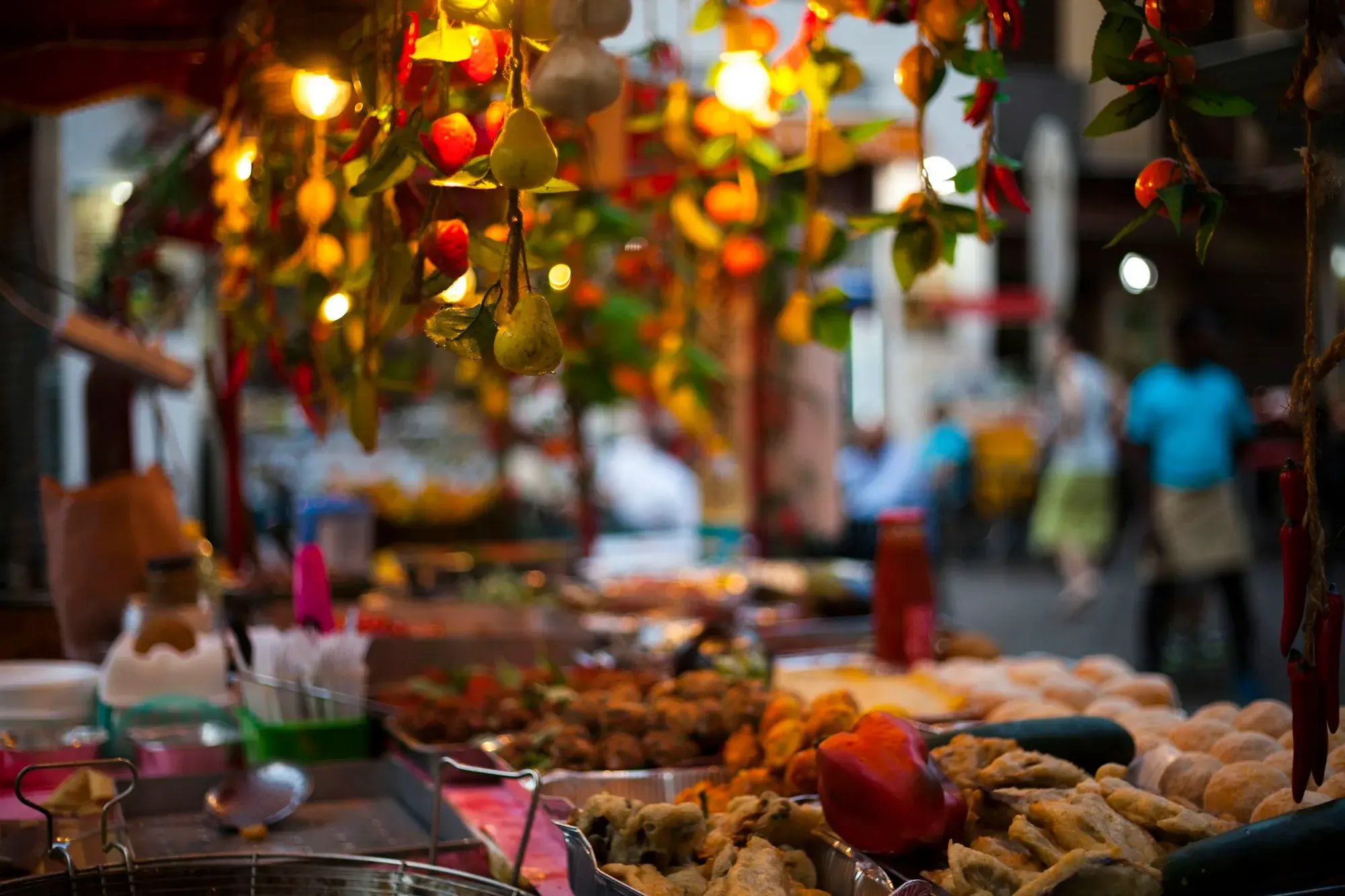
Sicily's capital has the island's most famous street-food culture, eaten standing up at market stalls, bakeries, friggitorie (fry shops) and kiosks. Our Palermo guide covers the city and its markets in detail; the essentials:
- Arancina — a round fried rice ball, typically filled with meat ragù (accarne) or with butter, ham and cheese (abburro). Palermitans eat arancine on 13 December, the feast of Santa Lucia.
- Panelle — thin chickpea-flour fritters, often in a sesame bun as pane e panelle.
- Crocchè — potato croquettes, also called cazzilli, often sold with panelle.
- Sfincione — a thick, soft bread topped with tomato, onion, anchovies, caciocavallo cheese and breadcrumbs.
- Pani ca' meusa — a bun filled with slow-cooked veal spleen and lung, served plain or with cheese.
- Pasta con le sarde — pasta with fresh sardines, wild fennel, pine nuts, raisins and toasted breadcrumbs.
- Anelletti al forno — baked ring-shaped pasta with ragù, a Sunday and holiday dish.
- Cassata and frutta martorana — the ricotta-and-marzipan cake and the painted marzipan fruit, both strongly associated with Palermo.
Palermo's historic markets — Ballarò, the Capo and the Vucciria — are the obvious places to see this food culture, and the city's Arab-Norman monuments, a UNESCO World Heritage Site since 2015, are a short walk away.
Catania
Sicily's second city sits at the foot of Mount Etna, which UNESCO describes as the highest Mediterranean island mountain and one of the world's most active stratovolcanoes. Volcanic soils around it support vineyards, orchards and pistachio groves.
- Pasta alla Norma — macaroni with tomato, fried aubergine, salted ricotta and basil. Visit Sicily, the regional tourism site, associates it with Catania and notes several competing stories behind the name; the most repeated links it to Bellini's opera Norma (Bellini was born in Catania), but the exact origin is uncertain.
- Arancino — in Catania and the east, usually masculine and often cone-shaped. The Accademia della Crusca, Italy's language authority, treats both arancina and arancino as correct regional forms.
- Granita and brioche — a classic breakfast, especially in summer (see below).
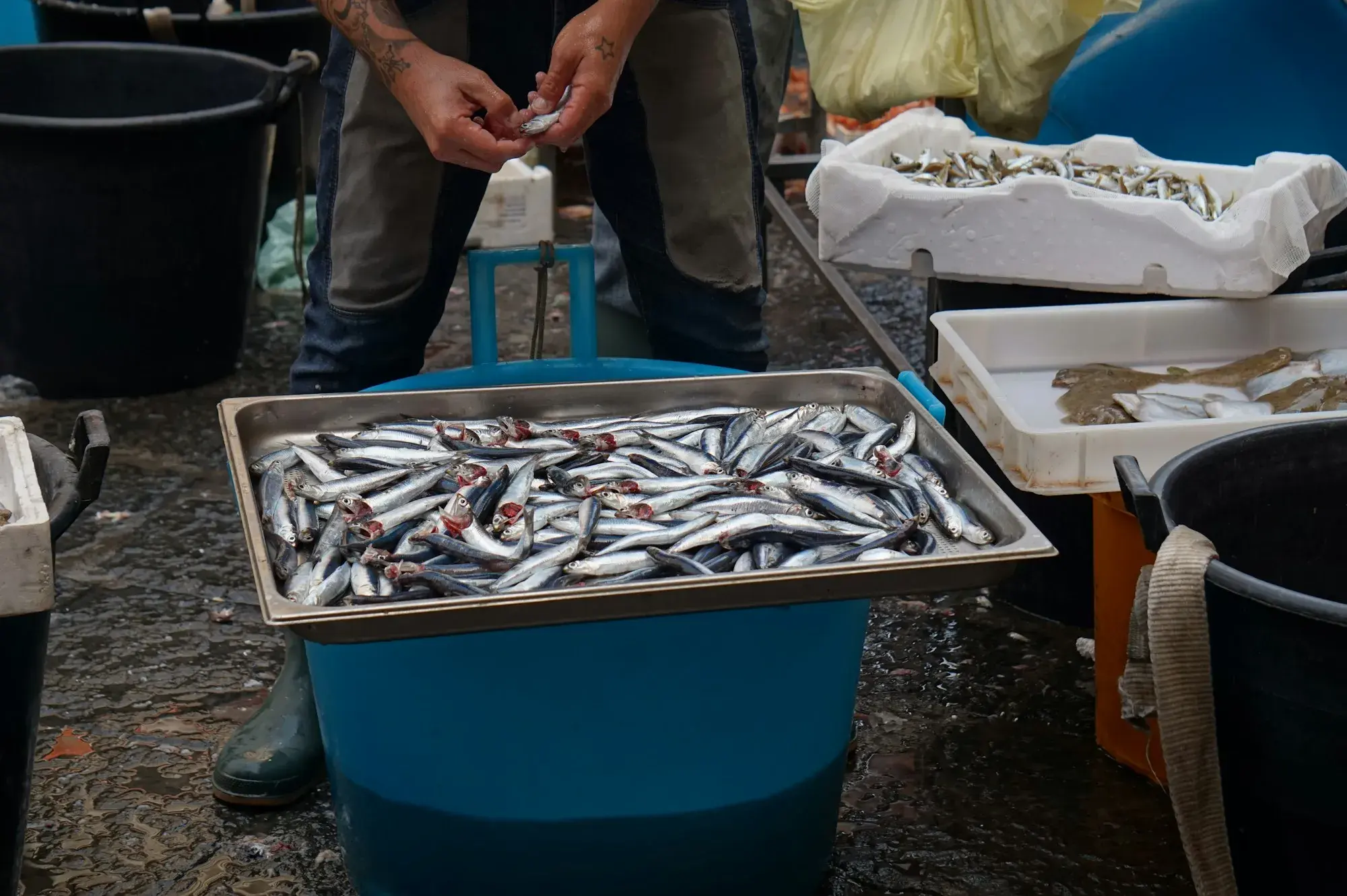
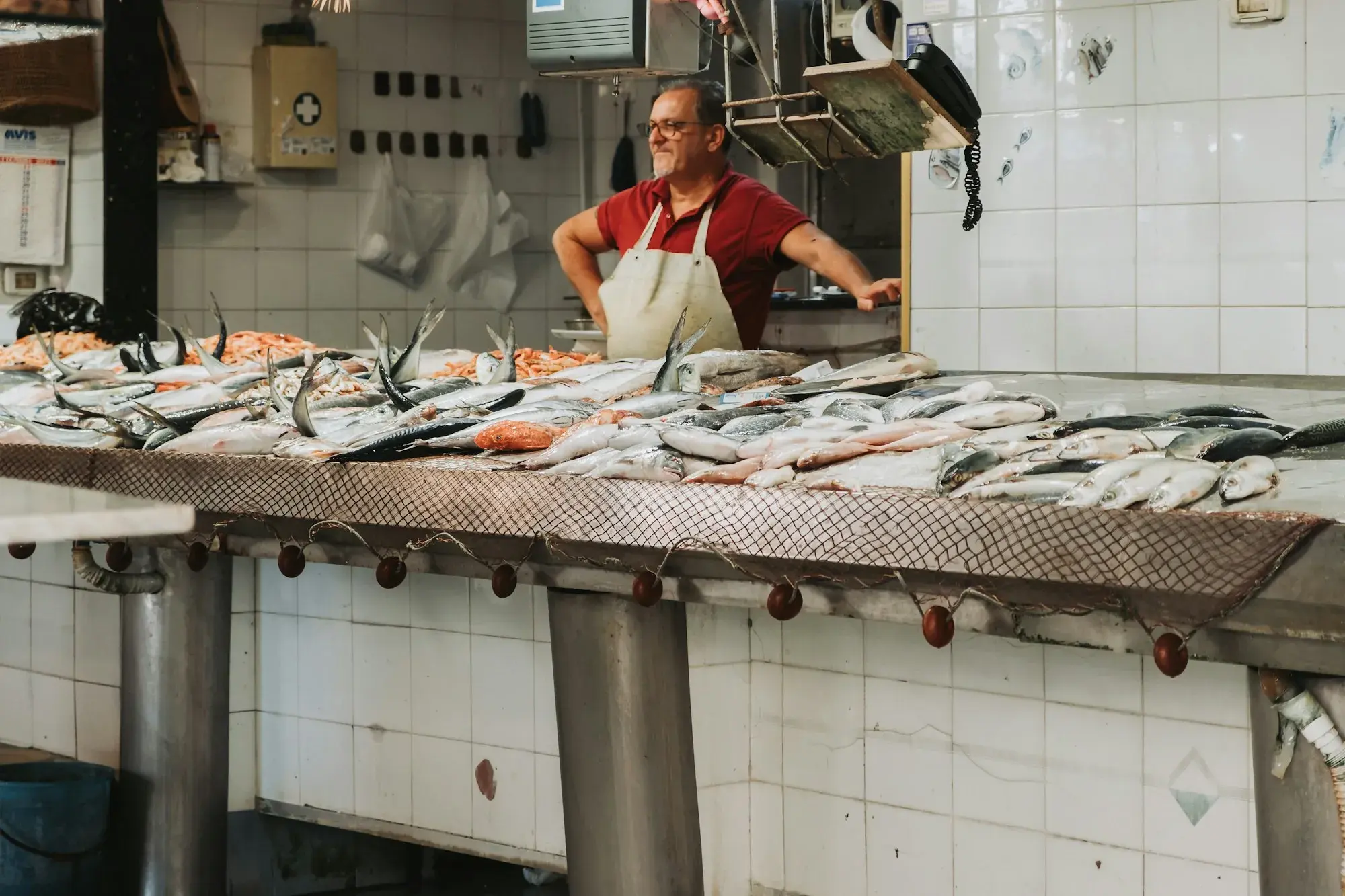
- Fish — the Pescheria, Catania's fish market behind the Cathedral, is one of the island's most atmospheric morning sights; the general market known as the Fera o' Luni fills Piazza Carlo Alberto.
Syracuse and the southeast
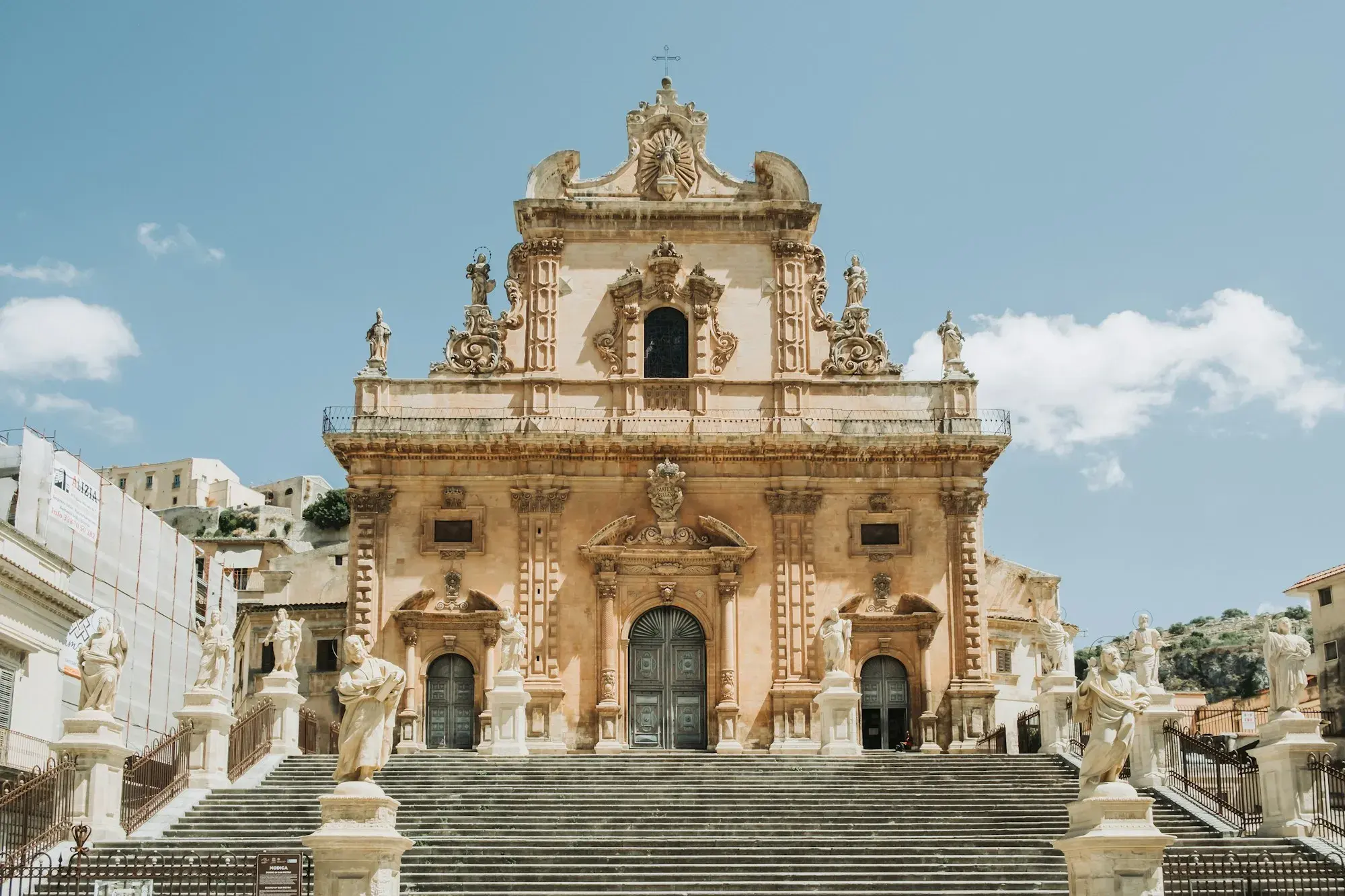
The southeast — the provinces of Syracuse and Ragusa — combines coastal cooking with the farms of the Iblei hills. Eight towns of the area, including Noto, Modica, Ragusa and Scicli, are listed by UNESCO as the Late Baroque Towns of the Val di Noto, rebuilt after the earthquake of 1693.
- Ortigia, Syracuse's old town, has a morning market with fish, produce and delicatessen stalls.
- Protected produce — Limone di Siracusa (PGI) lemons, Pomodoro di Pachino (PGI) tomatoes and Carota Novella di Ispica (PGI) early carrots all come from this corner of the island.
- Ragusano (PDO) — a large, rectangular stretched-curd cow's-milk cheese from the Iblei area.
- Monti Iblei (PDO) — one of Sicily's protected extra virgin olive oils.
Modica chocolate
Modica is known for a grainy, crumbly chocolate. Cioccolato di Modica has been a PGI since 2018 (Regulation (EU) 2018/1529), and the Italian Ministry of Agriculture describes it as the first chocolate to receive a PGI in Europe. According to its protection consortium, it is worked at low temperatures without conching, which keeps the sugar crystals intact, and archive documents record chocolate-makers in Modica in 1746. The consortium describes the working methods as being of Spanish derivation; it is best understood as a local tradition shaped by the period of Spanish rule, rather than as a surviving "original" recipe.
Trapani and the west
The far west faces North Africa across the Strait of Sicily, and its cooking reflects that closeness to the sea and to other shores.
- Couscous — around Trapani it is traditionally served with fish or a fish broth. San Vito Lo Capo holds the Cous Cous Fest every year; the 2026 edition ran from 18 to 27 September.
- Busiate with pesto alla trapanese — twisted pasta with a raw sauce of tomato, almonds, garlic and basil.
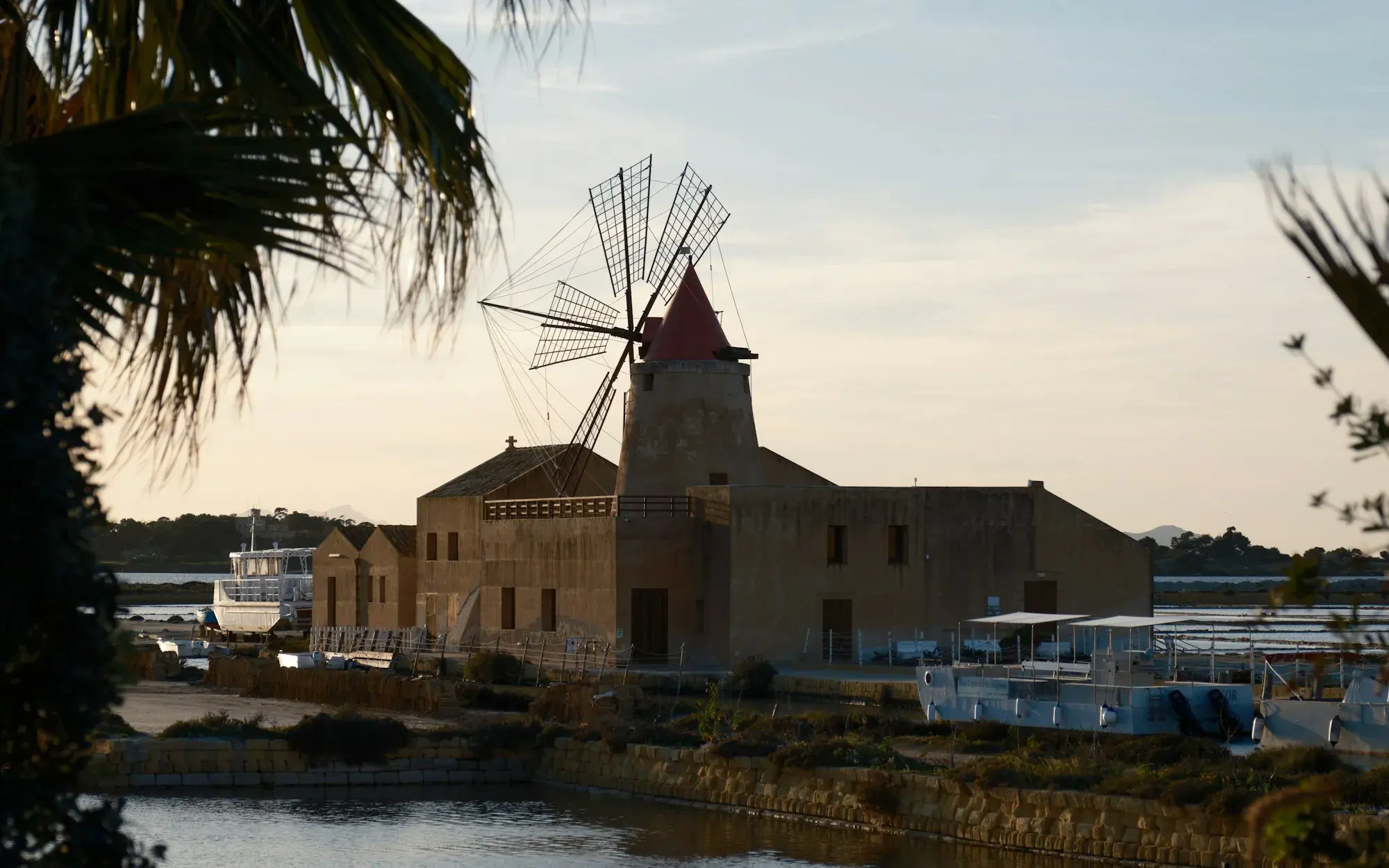
- Salt — the Saline di Trapani e Paceco nature reserve covers about 1,000 hectares of salt pans and is a Ramsar wetland; Sale Marino di Trapani is a PGI. Further south, the salt pans near Marsala and the Stagnone lagoon are another landmark.
- Tuna — on Favignana, the former Florio tuna-processing plant, one of the largest in the Mediterranean, is now a museum of the island's tuna-fishing tradition.
- Capers — Cappero di Pantelleria (PGI) from the island of Pantelleria.
- The Belice valley — Nocellara del Belice (PDO) olives, Valle del Belice (PDO) oil and Vastedda della valle del Belìce (PDO), a sheep's-milk stretched-curd cheese.
A regional comparison
| Area | Known for | Dishes to look for | Protected products |
|---|---|---|---|
| Palermo | Street food, markets, pastry | Arancina, panelle, sfincione, pasta con le sarde, cassata | — |
| Trapani and the west | Salt, tuna heritage, couscous | Couscous with fish, busiate alla trapanese | Sale Marino di Trapani PGI, Cappero di Pantelleria PGI, Nocellara del Belice PDO |
| Catania and Etna | Fish market, volcano farming | Pasta alla Norma, arancino, granita | Pistacchio Verde di Bronte PDO, Ficodindia dell'Etna PDO, Monte Etna PDO oil |
| Syracuse and Ragusa | Baroque towns, market produce | Fish, vegetables, Modica chocolate | Limone di Siracusa PGI, Pomodoro di Pachino PGI, Ragusano PDO, Cioccolato di Modica PGI |
| Messina and the Aeolians | The Strait, islands | Swordfish dishes, capers | Limone Interdonato Messina PGI, Cappero delle Isole Eolie PDO |
| Enna and the interior | Wheat, sheep, cheese | Hearty pasta and legume dishes | Piacentinu Ennese PDO, Pagnotta del Dittaino PDO |
Pasta
Sicilian pasta is built on durum wheat, and sauces lean on vegetables, fish, nuts and breadcrumbs more than on meat or butter. A few dishes to look for:
| Dish | What it is | Associated with |
|---|---|---|
| Pasta con le sarde | Sardines, wild fennel, pine nuts, raisins, toasted breadcrumbs | Palermo and the west |
| Pasta alla Norma | Tomato, fried aubergine, salted ricotta, basil | Catania |
| Busiate al pesto trapanese | Twisted pasta with tomato, almonds, garlic and basil | Trapani |
| Anelletti al forno | Baked ring pasta with ragù | Palermo |
| Pasta 'ncasciata | Baked pasta with aubergine and cheese | Eastern Sicily, especially Messina |
| Pasta with swordfish | Swordfish, often with tomato, aubergine or mint | Coasts, especially near Messina |
Seafood
With coastlines on three seas — the Tyrrhenian, the Ionian and the Strait of Sicily — seafood is central to Sicilian cooking. Sardines and anchovies are everyday fish; tuna has a long fishing history in the west; the Strait of Messina is known for its swordfish tradition. Sea urchins, prawns, octopus and mussels appear on coastal menus in season.
The best way to understand this side of the cuisine is at a morning fish market — Catania's Pescheria, Ortigia in Syracuse or the fish stalls of Palermo's markets — and at simple coastal trattorias. Menus should flag frozen products (surgelato or congelato), often with an asterisk — worth checking if fresh fish matters to you.
Street food
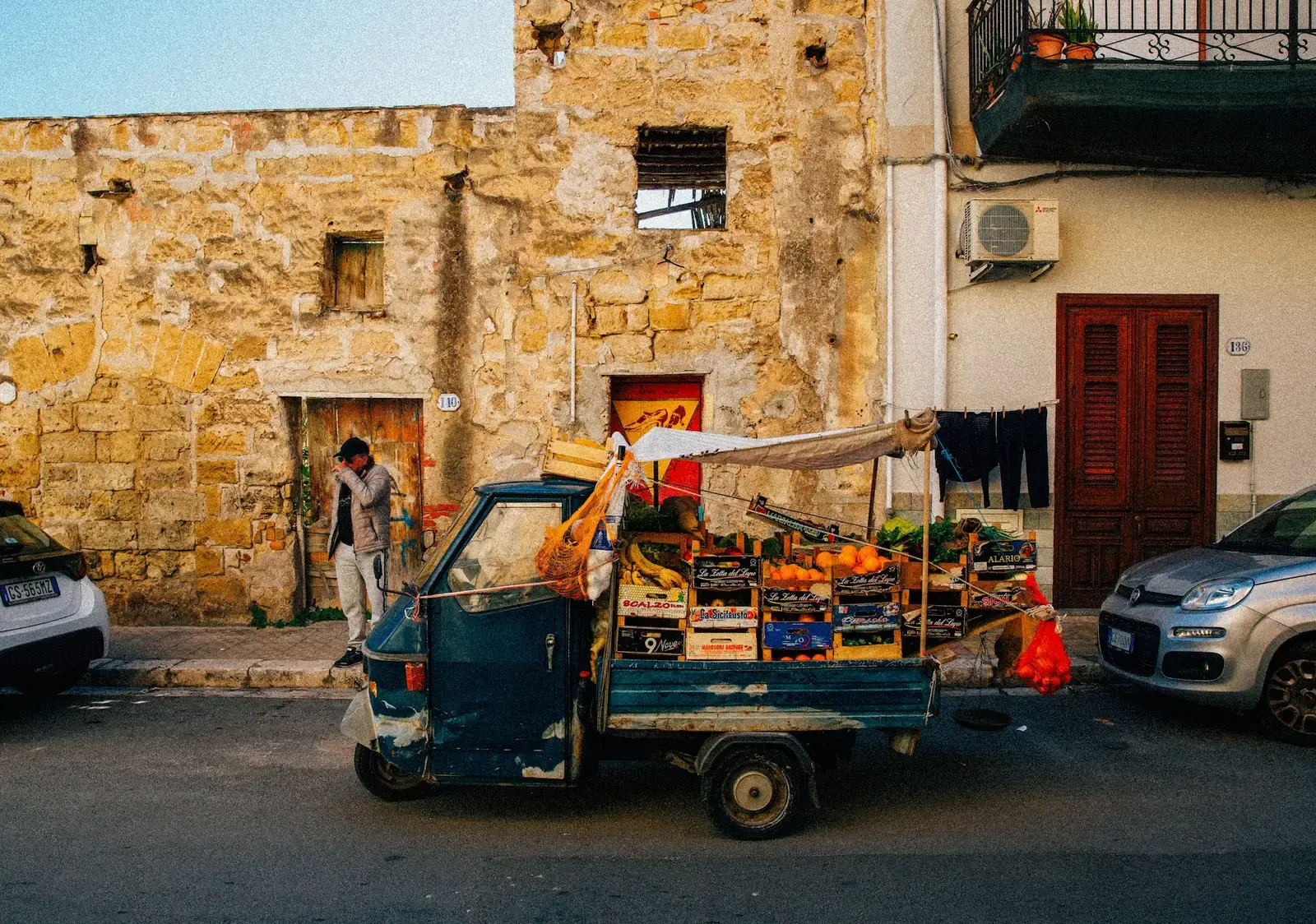
Street food in Sicily isn't a novelty or a tourist product: it's how many people have lunch or a snack. Palermo is the capital of it, but every city has its own.
| Food | What it is | Where you'll find it |
|---|---|---|
| Arancina / arancino | Fried stuffed rice ball | Everywhere; round in Palermo, often cone-shaped in the east |
| Panelle | Chickpea-flour fritters, often in a bun | Palermo |
| Crocchè / cazzilli | Potato croquettes | Palermo |
| Sfincione | Soft, thick topped bread | Palermo |
| Pani ca' meusa | Bun with veal spleen and lung | Palermo |
| Scacce | Folded, stuffed flatbread | Ragusa and the southeast |
| Brioche con gelato | Ice cream in a soft brioche | Across the island |
Bread
Sicilian bread is usually made with durum-wheat semolina (semola rimacinata), which gives it a yellow crumb. Loaves topped with sesame seeds are common, especially in Palermo. Pagnotta del Dittaino (PDO), a durum-wheat loaf from the Enna area, is protected by the EU. Bread appears at every meal, and breadcrumbs are an ingredient in their own right.
Cheeses
Sheep's milk dominates, although cow's-milk cheeses are important in the southeast. Five Sicilian cheeses are PDO:
- Pecorino Siciliano — a sheep's-milk cheese, aged.
- Ragusano — a stretched-curd cow's-milk cheese from the Ragusa and Syracuse area.
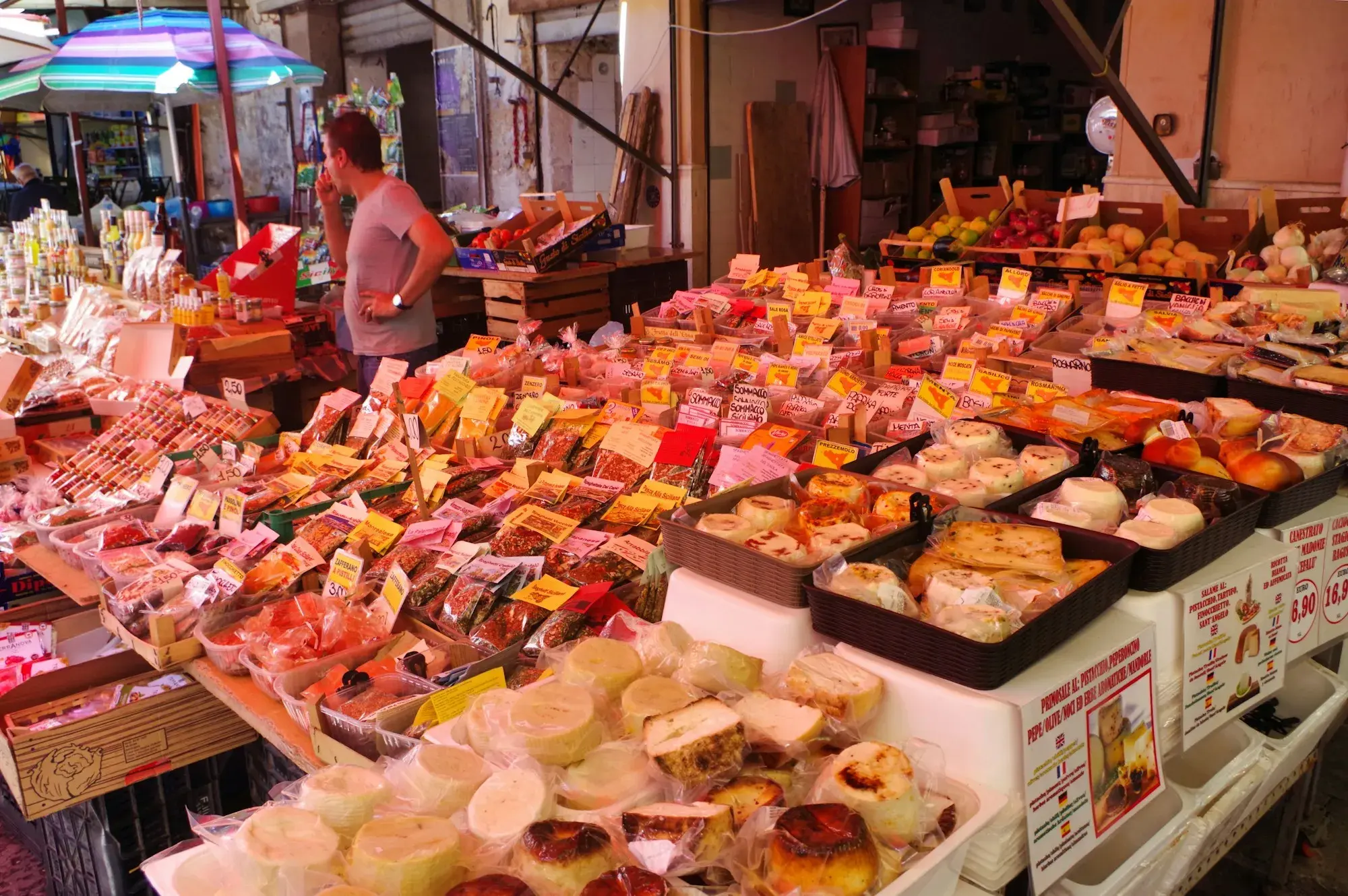
- Piacentinu Ennese — a sheep's-milk cheese from the Enna area, flavoured with saffron and pepper.
- Vastedda della valle del Belìce — a stretched-curd sheep's-milk cheese from the Belice valley.
- Provola dei Nebrodi — a stretched-curd cow's-milk cheese from the Nebrodi mountains.
Ricotta — fresh, from sheep's milk — is the basis of cannoli and cassata; salted and aged ricotta (ricotta salata) is grated over pasta alla Norma. Caciocavallo is used in cooking, including on sfincione.
Citrus and fruit
Citrus is one of the island's defining crops. EU-protected Sicilian names include Arancia Rossa di Sicilia (PGI), the blood orange grown in eastern Sicily; Arancia di Ribera (PDO), near Agrigento; and three lemons — Limone di Siracusa, Limone Interdonato Messina and Limone dell'Etna (all PGI).
Other protected fruit includes prickly pears (Ficodindia dell'Etna and Ficodindia di San Cono, both PDO), Ciliegia dell'Etna (PDO) cherries, Pesca di Leonforte (PGI) peaches and Uva da tavola di Canicattì (PGI) table grapes. Citrus season is roughly winter to spring; the others follow summer and autumn.
Pistachios and almonds
Pistacchio Verde di Bronte (PDO) is grown on the lava slopes of Etna around Bronte. According to the Regione Siciliana, it is harvested by hand and in alternate years. Pistacchio di Raffadali (PDO), from the Agrigento area, is also protected. Pistachio turns up in pesto, granita, gelato, cream-filled pastries and savoury dishes.
Almonds are just as important: in marzipan (pasta reale), biscuits, granita, milk-like almond drinks and pesto alla trapanese. In Agrigento, the Mandorlo in Fiore festival celebrates the almond blossom each spring, usually in March — the 2026 edition, the 78th, ran from 7 to 15 March — with an international folklore festival and a torch procession through the Valley of the Temples.
Sweets
Sicilian pastry is famous across Italy. Our traditional Italian desserts article covers Italy's sweets more broadly; these are the Sicilian ones to know.
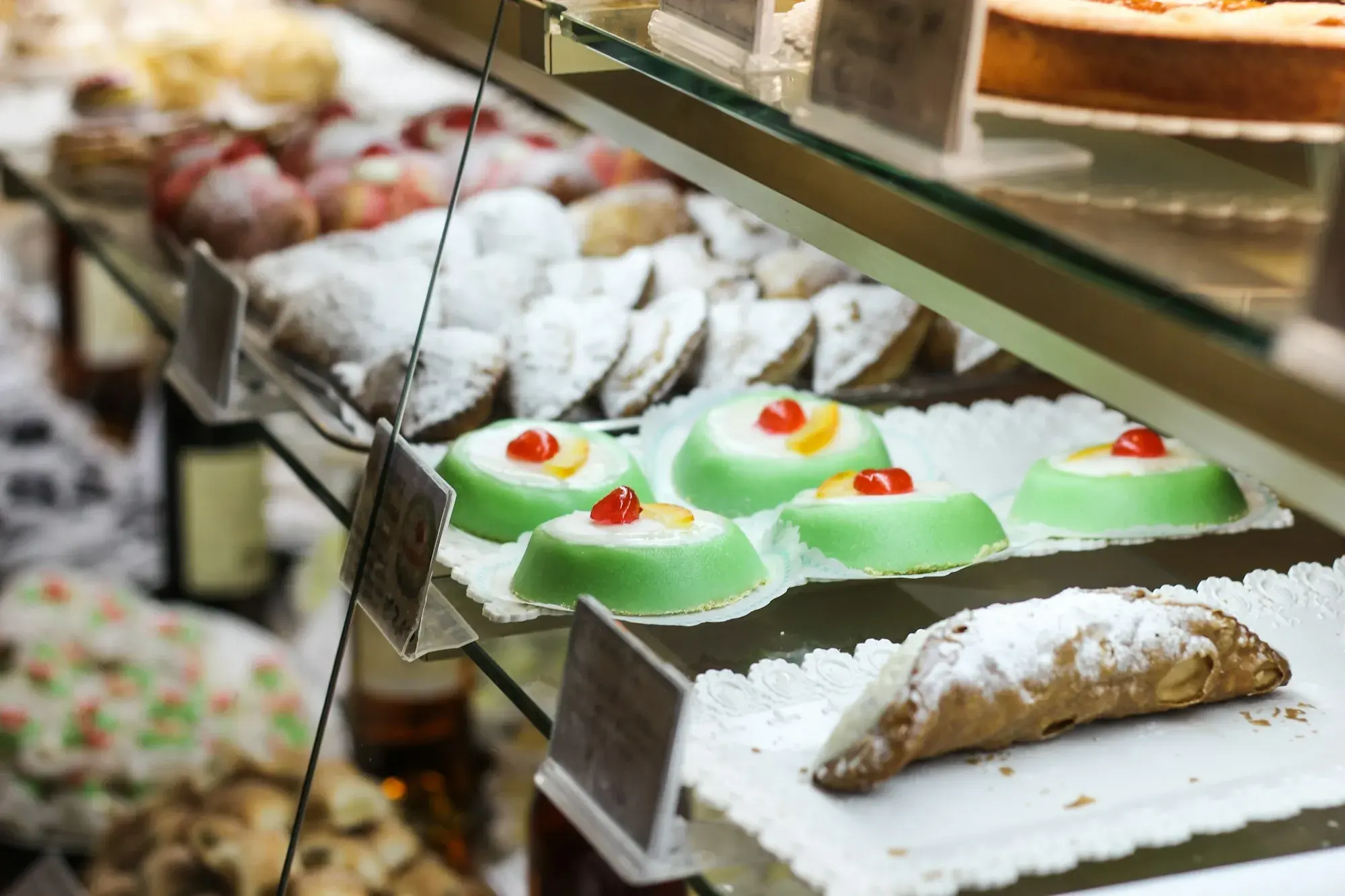
- Cannoli — crisp fried pastry tubes filled with sweetened sheep's-milk ricotta. The best are filled to order so the shell stays crisp.
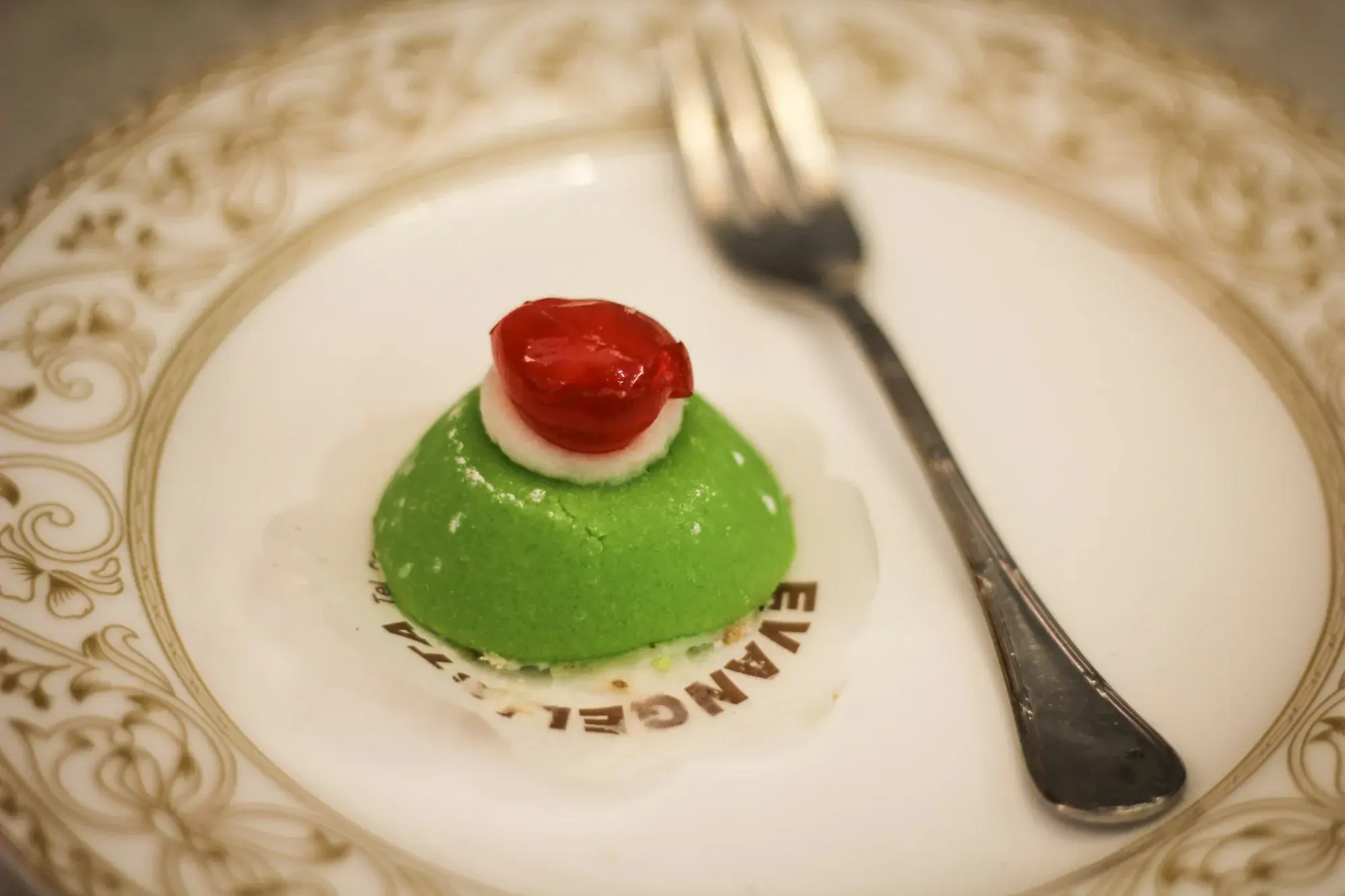
- Cassata siciliana — sponge and ricotta covered in marzipan and decorated with candied fruit, especially associated with Palermo and Easter.
- Cassatelle and cassatine — smaller versions and related pastries.
- Frutta martorana — marzipan shaped and painted like fruit, named after Palermo's Martorana convent and traditionally made for the Day of the Dead, 2 November.
- Almond biscuits — soft paste di mandorla, found in bakeries across the island.
- Cuccìa — cooked wheat berries with ricotta or cream, eaten in Palermo on the feast of Santa Lucia.
Many of these sweets are linked by tradition to convents and to religious feasts. Stories about who first made them are part of local culture but mostly can't be documented.
Granita and breakfast
In summer — and in eastern Sicily for much of the year — breakfast can be a granita with a brioche: a soft, semi-frozen ice, typically lemon, almond, coffee, pistachio, mulberry or chocolate, eaten with a spoon and a sweet bun (brioche col tuppo, named after its topknot) for dipping. Granita is smoother than a slush; texture varies by town and bar.
Otherwise, breakfast is the usual Italian one: a cappuccino or espresso with a cornetto at a bar. See Italian coffee culture for how bars work.
Wine
Sicily is one of Italy's largest wine regions. Two names to know: Etna, where vineyards on the volcano's slopes produce reds from Nerello Mascalese and whites from Carricante (Etna DOC dates from 1968 and is generally described as Sicily's first DOC), and Marsala, a fortified wine from the province of Trapani. Nero d'Avola and Grillo are widely planted grapes. For a fuller picture, see Italy's regional wines.
Olive oil
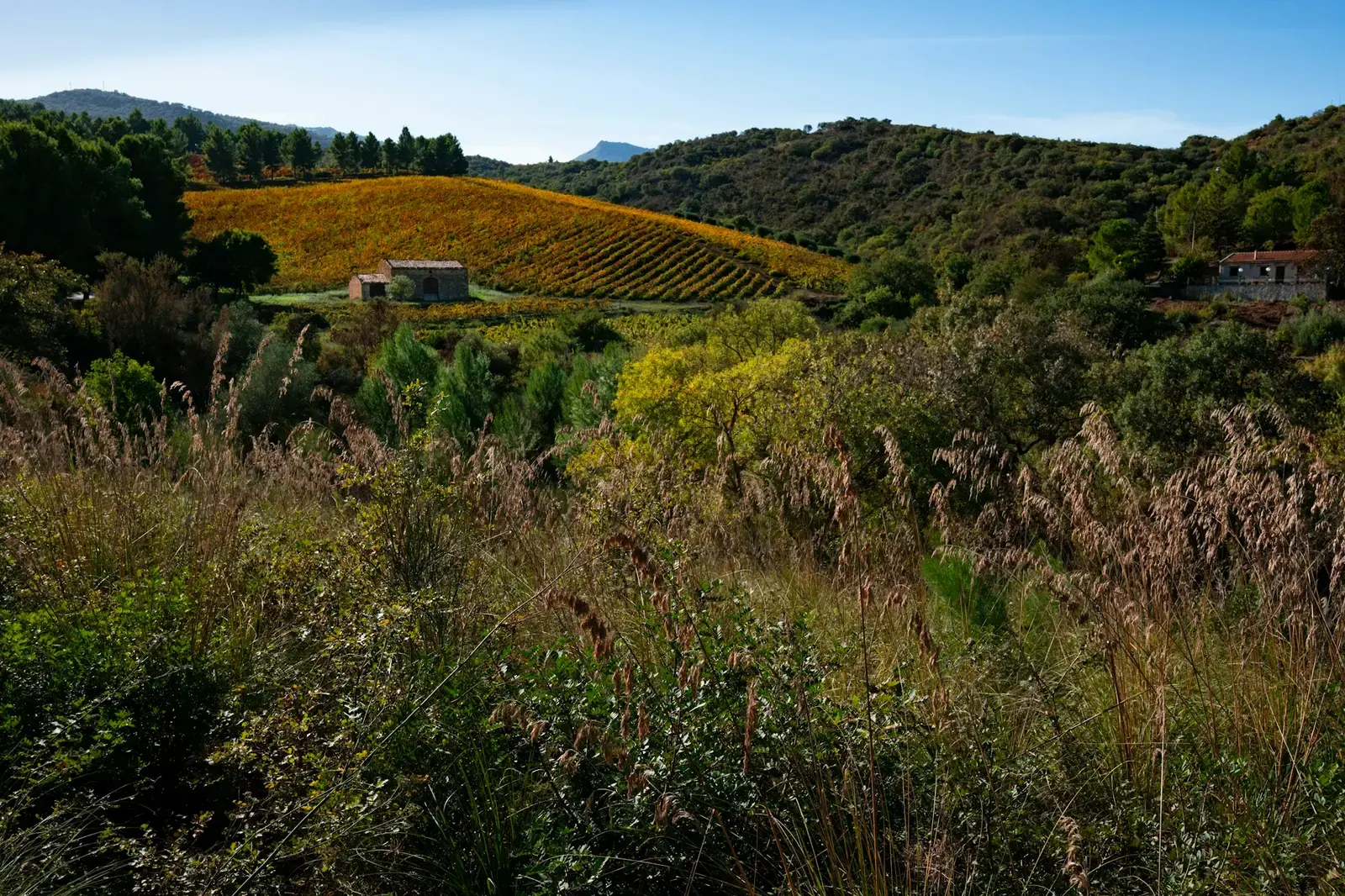
Olive oil is the island's main cooking fat. Sicily has a regional protected oil, Sicilia (PGI), plus several local PDOs: Val di Mazara, Valle del Belice, Monti Iblei and Monte Etna, among others. Look for the harvest date on the label: oil is best within about a year. Producers' shops and farm stays often offer tastings in autumn, after the harvest.
Markets
Markets are where Sicilian food culture is most visible. The big ones are busiest in the morning; afternoons and Sundays are quieter, and some stalls close.
| Market | City | What to expect |
|---|---|---|
| Ballarò | Palermo | Large, lively produce and street-food market in the Albergheria district |
| Capo | Palermo | Produce, fish and meat in narrow streets near the Cathedral |
| Vucciria | Palermo | Smaller by day; better known now for its evening atmosphere |
| Pescheria | Catania | Fish market behind the Cathedral |
| Fera o' Luni | Catania | General market in Piazza Carlo Alberto |
| Ortigia market | Syracuse | Fish, produce and delicatessen stalls in the old town |
Festivals and the food calendar
Religious feasts and harvests set Sicily's food calendar. Dates vary by year, so check official sites before you plan around an event.
- Santa Lucia, 13 December — in Palermo, many people avoid bread and pasta and eat arancine and cuccìa instead.
- Christmas — buccellati (fig-filled pastries) and other festive sweets.
- Easter — cassata and lambs made of marzipan (agnello pasquale).
- Mandorlo in Fiore, Agrigento — almond-blossom festival, usually in March.
- Cous Cous Fest, San Vito Lo Capo — international couscous festival, in September in 2026.
- Day of the Dead, 2 November — frutta martorana and other traditional sweets.
- Sagre — local food fairs dedicated to a single product, such as pistachios, prickly pears or ricotta, held in towns across the island.
Eating by season
| Season | What's at its best |
|---|---|
| Spring | Artichokes, broad beans, wild fennel, almond blossom, Easter sweets |
| Summer | Tomatoes, aubergines, peppers, stone fruit, melons, granita; the Bronte pistachio harvest in late summer |
| Autumn | Grapes and the wine harvest, prickly pears, new olive oil |
| Winter | Blood oranges, lemons, mandarins, cauliflower and broccoli, Christmas sweets |
How meals work
Meals follow the Italian pattern — antipasto, a primo of pasta, a secondo of fish or meat with a contorno, then fruit, dessert or coffee — but few people eat all of it every day. Lunch is often the main meal, dinner is eaten later than in northern Europe (often from 8:30 or 9pm, later in summer), and a street-food lunch is perfectly normal.
- Coperto — a per-person cover charge for bread and table service, which should be shown on the menu.
- Servizio — a service charge, sometimes added in tourist areas; also shown on the menu if applied.
- Tipping — not expected the way it is in some countries; rounding up for good service is appreciated.
- Bread — used to mop up sauce (fare la scarpetta), which is fine in informal places.
- Cheese on fish pasta — traditionally not added; toasted breadcrumbs take its place in many Sicilian dishes.
Common misconceptions
- "Sicilian food is just Italian food." It's part of Italy's food culture, but with its own dishes, words and ingredients.
- "It's spicy." Sicilian cooking is flavourful rather than hot; chilli plays a smaller role than in parts of Calabria.
- "Everything is Arab." Arab-period influence is an important part of the story, but only one part.
- "There's one correct recipe." Caponata, arancine and pasta con le sarde exist in many family and local versions.
- "Arancina or arancino — one is wrong." Both are correct regional forms, according to the Accademia della Crusca.
- "Cannoli are a dessert you order after dinner." They are eaten at any time, often from a pastry shop rather than a restaurant.
How to experience Sicilian food
- Go to a morning market — Ballarò or the Capo in Palermo, the Pescheria in Catania, Ortigia in Syracuse.
- Eat street food at lunch — arancine, panelle or sfincione from a busy bakery or fry shop.
- Have granita for breakfast — especially in the east, in summer.
- Buy sweets at a pastry shop — cannoli filled to order, marzipan, almond biscuits.
- Follow the seasons — ask what's in season (di stagione) and order it.
- Visit producers — wineries on Etna, olive-oil mills, salt pans near Trapani and Marsala.
- Take a class or tour — cooking classes and market tours are widely available; choose ones run by local cooks.
Sicilian food words
| Word | Meaning |
|---|---|
| Arancina / arancino | Fried stuffed rice ball |
| Accarne / abburro | Arancina fillings: meat ragù / butter, ham and cheese |
| Panelle | Chickpea-flour fritters |
| Cazzilli | Potato croquettes (Palermo) |
| Friggitoria | Fry shop |
| Agrodolce | Sweet and sour |
| Pasta reale | Marzipan |
| Muddica | Breadcrumbs (Sicilian) |
| Ricotta salata | Salted, aged ricotta |
| Brioche col tuppo | Brioche with a topknot, served with granita |
| Pesce spada | Swordfish |
| Coperto | Cover charge, per person |
For the rest of your trip, see our Palermo guide and the complete Italy travel guide.
Topics
Regions
Frequently asked questions
Editorial note
Information such as transport schedules, prices, opening hours and entry requirements can change. Check the relevant official source before making a booking or travelling. Read our editorial policy or report a correction.
Sources
- eAmbrosia — EU geographical indications register (opens in a new tab) — status of Sicilian PDO and PGI names
- Accademia della Crusca — Si dice arancino o arancina? (opens in a new tab) — in Italian
- Consorzio di Tutela del Cioccolato di Modica (opens in a new tab) — production method and history
- Commission Implementing Regulation (EU) 2018/1529 — Cioccolato di Modica PGI (opens in a new tab) — registration
- Visit Sicily — pasta alla Norma (opens in a new tab) — regional tourism site
- Regione Siciliana — Riserva Naturale Saline di Trapani e Paceco (opens in a new tab) — reserve and salt pans
- Comune di Agrigento — Mandorlo in Fiore (opens in a new tab) — 2026 edition
- Cous Cous Fest (opens in a new tab) — 2026 dates
- UNESCO — Arab-Norman Palermo (opens in a new tab) — 2015 inscription
- UNESCO — Late Baroque Towns of the Val di Noto (opens in a new tab) — south-eastern Sicily
- UNESCO — Mount Etna (opens in a new tab) — 2013 inscription
About the author
Editorial Team
Editorial Team
Researches, writes and updates stories and guides about Italy.
More from Editorial TeamWas this article useful?
Keep reading
Food & Drink
Italian Food Traditions: A Regional Guide to Eating in Italy
Why Italian food changes from region to region and town to town — and how to read menus, markets, seasons and festivals as a visitor.
Updated 18 min read
Cities
Palermo for First-Time Visitors: What to See, Eat and Know Before You Go
How long to stay, what to see, which markets to visit and what to eat — a practical first-time guide to Palermo, with day trips to Monreale and Cefalù.
Updated 23 min read
Food & Drink
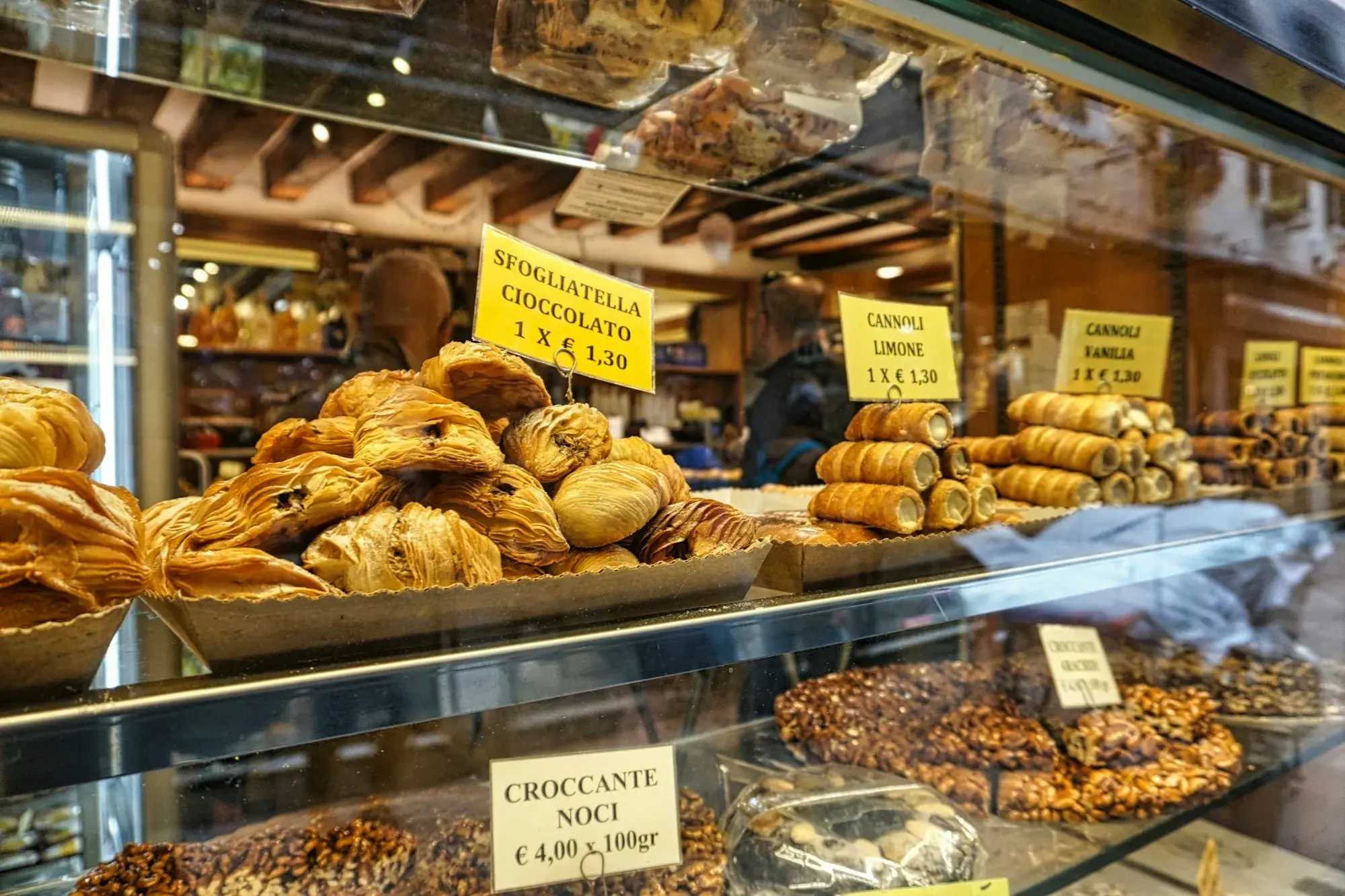
Traditional Italian Desserts: Regional Sweets and the Stories Behind Them
Why Italian sweets change from region to region — from Sicily's cannoli and Naples's sfogliatella to Siena's panforte, Turin's gianduiotti and Carnival fritters.
Updated 19 min read
Food & Drink
Regional Wines of Italy: Grapes, Places and Traditions
Why Italy has many wine cultures rather than one — the regions, local grapes and denominations, how classifications work, and how to taste and order wine in Italy.
Updated 19 min read
Transport
Ferries in Italy: A Practical Guide to Islands and Coastal Travel
Where ferries and boats are useful in Italy, how island crossings work, what happens at the port and how to plan around seasons and the weather.
Updated 17 min read

Food & Drink
Italian Coffee: How Coffee Became Part of Everyday Life
What Italians drink, how the bar works and why a small cup matters so much — from the counter espresso to the moka at home, Turin's bicerin and Trieste's own vocabulary.
Updated 18 min read
Explore more food & drink
More stories and guides from Life in Italia.