Getting Between Italian Cities: Trains, Buses, Cars and More
Trains, buses, flights, cars and ferries: how to choose the right way between Italian cities, with official journey times and a door-to-door way to compare.
Editorial Team
- Published
- Updated
- Reading time
- 18 min read
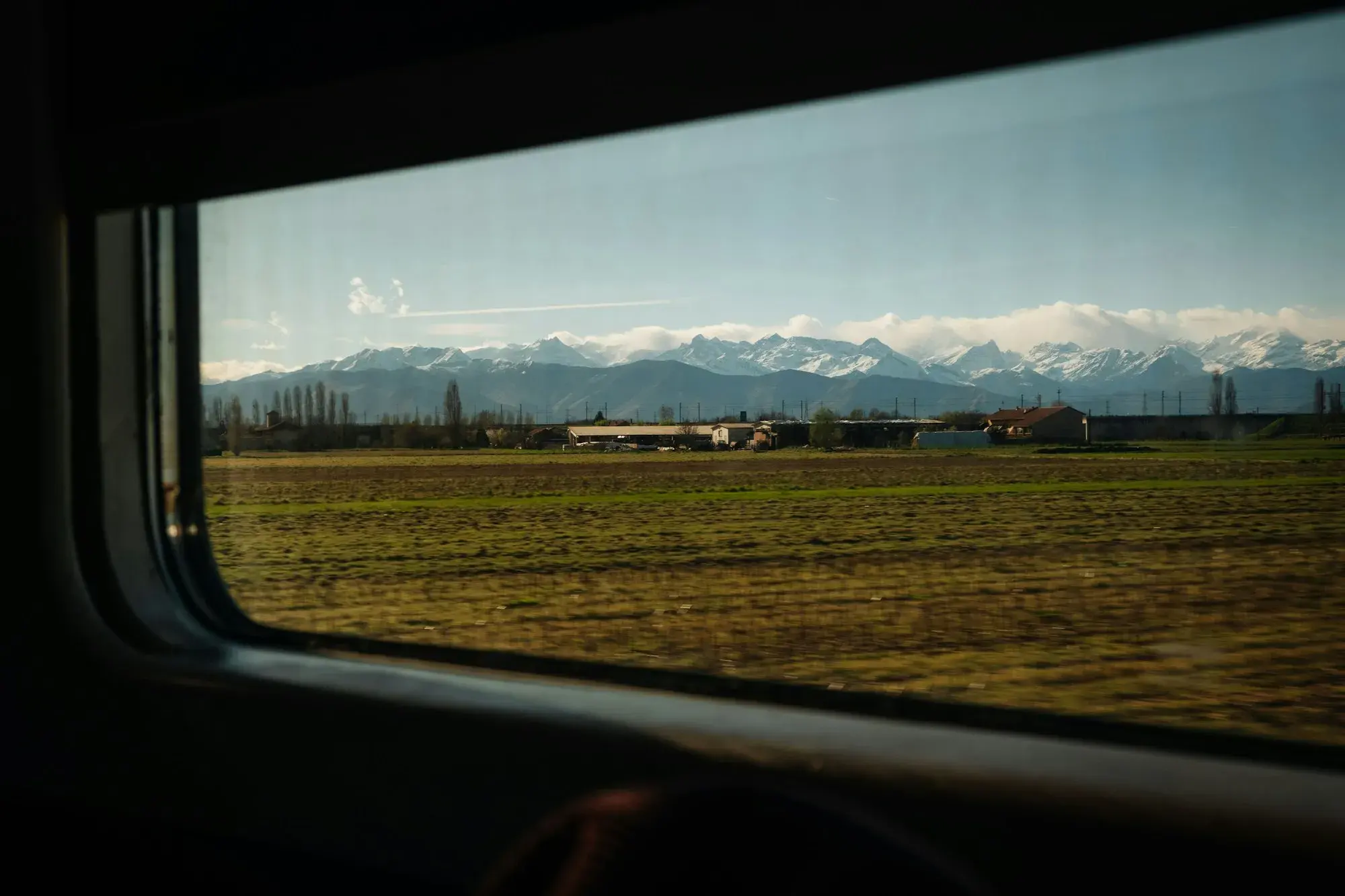
What's the best way to travel between Italian cities?
Short answer
There's no single best way: it depends on the distance, the route and where you're starting and finishing. Between the major cities on the main north–south and east–west lines — Turin, Milan, Venice, Bologna, Florence, Rome, Naples — high-speed trains are usually the most practical choice, running centre to centre. Regional trains and buses fill in the smaller towns. Flying can make sense for long journeys to the far south, Sicily or Sardinia. A car earns its place in the countryside, the mountains and anywhere with several rural stops. Ferries reach the islands. Compare journeys door to door, not just by departure and arrival times.
Italy is long and mountainous, and its transport reflects that. The high-speed network makes some big-city journeys remarkably quick; other trips that look short on a map take much longer because of mountains, coastlines or the sea. This guide is a planning framework: how each mode works, where it fits, how to compare them and how to build a multi-city trip without relying on out-of-date timetables. For tickets, stations and on-board rules, see our detailed guide to Italy by train.
The main ways to travel between cities
Each option has a clear role. None wins everywhere.
| Transport | Best suited to | Main advantages | Main limitations | Booking considerations |
|---|---|---|---|---|
| High-speed train | Major cities on the main lines | Centre-to-centre, fast, frequent on busy routes, assigned seats | Limited reach beyond the big cities; fares rise as trains fill | Book once dates are firm for the best choice of fares |
| Intercity train | Longer routes off the high-speed lines, overnight travel | Reaches coastal and southern routes; seats reserved | Slower than high-speed | Book ahead on busy dates and for sleeper berths |
| Regional train | Short hops, small towns, day trips | Fixed fares, no need to book ahead | Slower; no assigned seats; can be crowded | Buy any time; validate paper tickets |
| Coach / bus | Towns without convenient rail, budget travel, some overnight routes | Reaches places trains don't; often cheap | Traffic; less space; fewer departures | Book popular routes in advance |
| Domestic flight | Long distances, especially to Sicily, Sardinia and the far south | Fast in the air | Airport transfers, security and baggage add time | Compare total cost with baggage |
| Rental car | Countryside, mountains, several rural stops | Flexibility; reaches anywhere | ZTLs, parking, tolls, fuel, traffic | Book early for automatics and one-way hires |
| Ferry | Islands and some coastal routes | Often the only surface link | Weather disruption; seasonal timetables | Book vehicle spaces and cabins early in summer |
High-speed trains: Frecciarossa and Italo
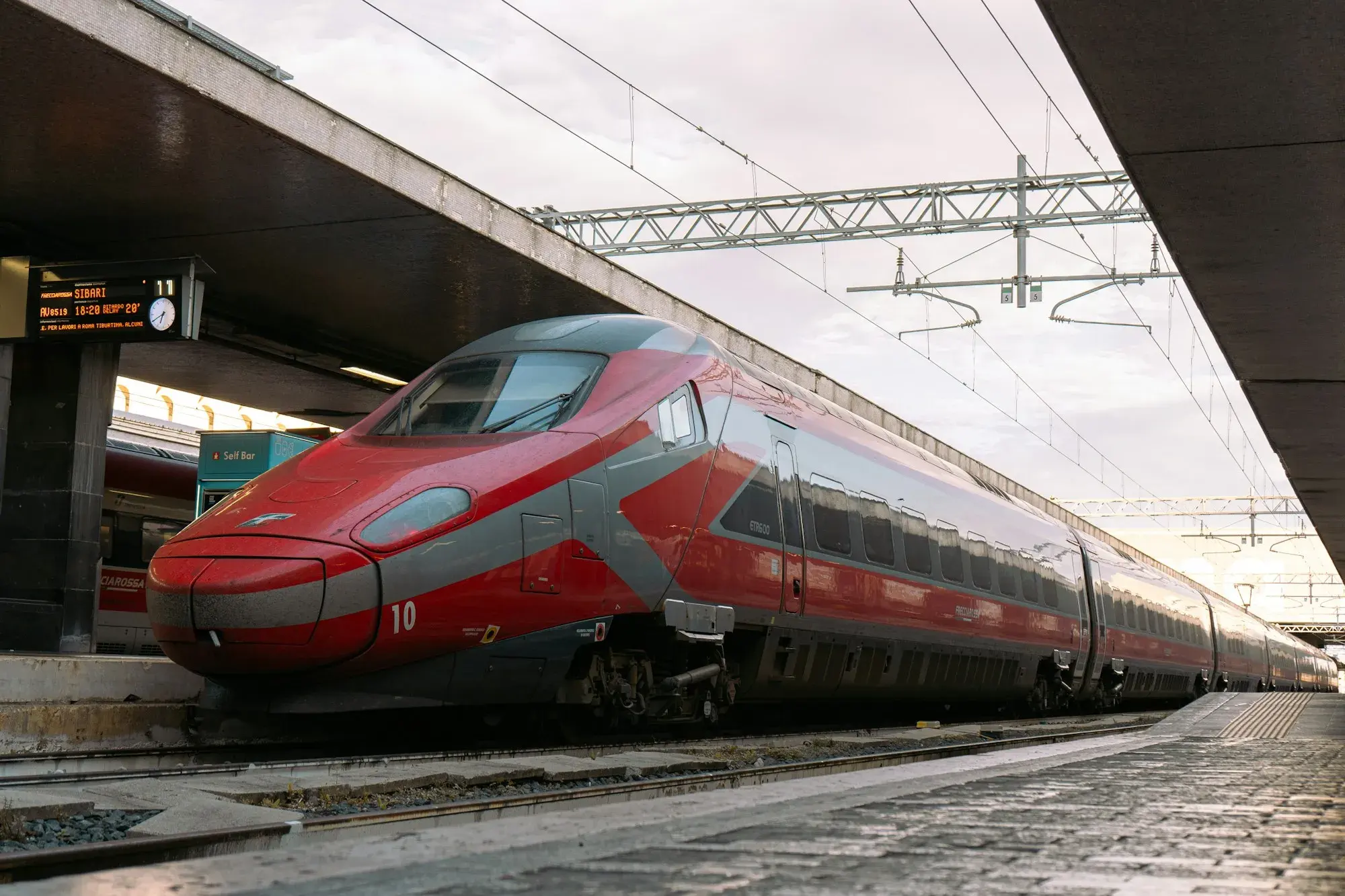
High-speed trains are the backbone of city-to-city travel in Italy. Two companies run them: Trenitalia, the national operator, under the Frecce brands — mainly Frecciarossa — and the private operator Italo. They serve the main corridor from Turin and Milan through Bologna and Florence to Rome, Naples and Salerno, the line east from Milan to Verona, Padua and Venice, and extensions such as the Adriatic line towards Bari and Lecce. Trenitalia's direct trains also link Naples with Bari.
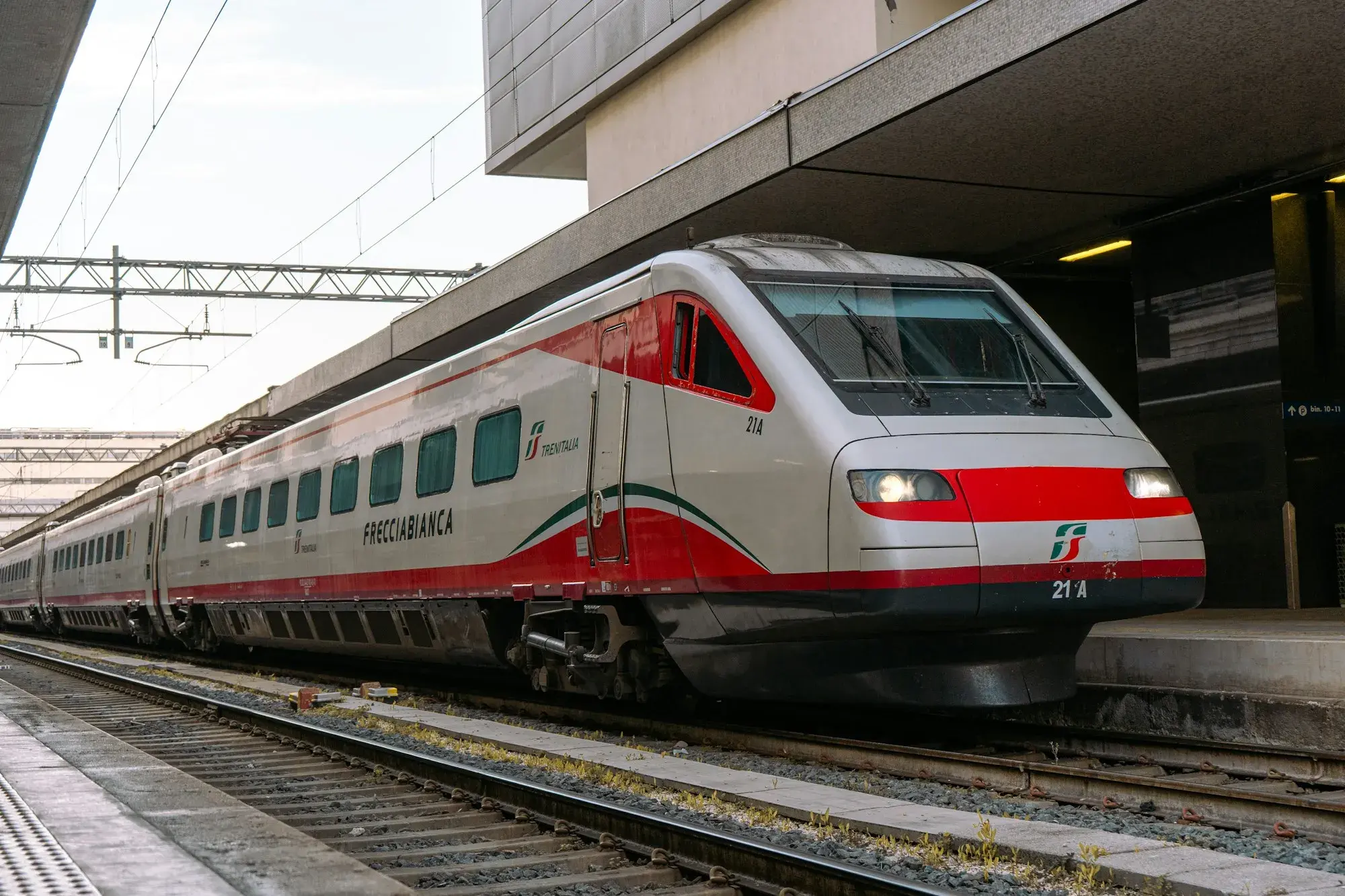
- Tickets and seats — you buy a ticket for a specific train and get an assigned carriage and seat. Boarding a different train from the one on your ticket isn't allowed.
- Operators aren't interchangeable — a Trenitalia ticket isn't valid on Italo, or vice versa, even on the same route and platform.
- Fares — work like airline fares: they depend on demand, how early you book and how flexible the ticket is. Flexible fares cost more but allow changes; cheaper fares have tighter conditions.
- Stations — high-speed trains serve central stations such as Milano Centrale, Firenze Santa Maria Novella and Roma Termini, but some also stop at secondary stations (Roma Tiburtina, Napoli Afragola). Check which station is on your ticket.
- Luggage — no check-in; you store your own bags on racks and in luggage spaces.
- Changes and refunds — depend on the fare conditions; make them before departure through the operator's website, app or ticket office.
Both companies are worth comparing for your route and date: their timetables, fares and conditions differ. See Italy by train for service levels, ticket details and how to board.
Intercity trains
Trenitalia's Intercity trains fill the gap between high-speed and regional services. They run on longer routes, many away from the high-speed lines — along the Tyrrhenian and Adriatic coasts and into the south — and stop at more places than the Frecce. Tickets are for a specific train, normally with a seat. Intercity Notte trains run overnight, including from Milan, Bologna, Florence, Rome and Naples to Sicily.
Sicily is a special case. According to Trenitalia, there are ten daily Intercity links to the island, six of them overnight, and the trains cross the Strait of Messina on a ferry — a crossing of about 30 minutes, during which you can leave the train and go out on deck. It's a memorable journey, but a long one: the fastest direct Intercity from Rome to Palermo on our sample day took about 11½ hours.
Regional trains
Regional trains (Regionale, and the faster Regionale Veloce) serve short journeys, smaller cities and day trips. Fares are fixed by distance and don't rise as the train fills, seats aren't assigned, and at busy times you may have to stand. In some regions, local companies run the services — Trenord in Lombardy, for example — and some tourist lines, such as the Circumvesuviana from Naples towards Pompeii and Sorrento, have their own tickets.
- Validation — according to Trenitalia, paper regional tickets must be validated at the station before boarding, while digital regional tickets activate automatically at the scheduled departure time of the train you chose. Rules can differ with other operators, so follow the instructions on your ticket.
- Platforms — the platform (binario) often appears on the board only shortly before departure.
- Connections — regional trains may not wait for a late connecting train; leave margin.
- Luggage — space is limited on busy commuter and coastal services.
| Train type | Typical role | Seats | Booking |
|---|---|---|---|
| High-speed (Frecciarossa, Italo) | Major city to major city | Assigned | Specific train; fares vary with demand |
| Intercity / Intercity Notte | Longer routes off the high-speed lines; overnight to the south and Sicily | Assigned | Specific train; book ahead for busy dates and sleepers |
| Regional (Regionale, Regionale Veloce) | Short trips, small towns, day trips | Not assigned | Fixed fare; buy any time |
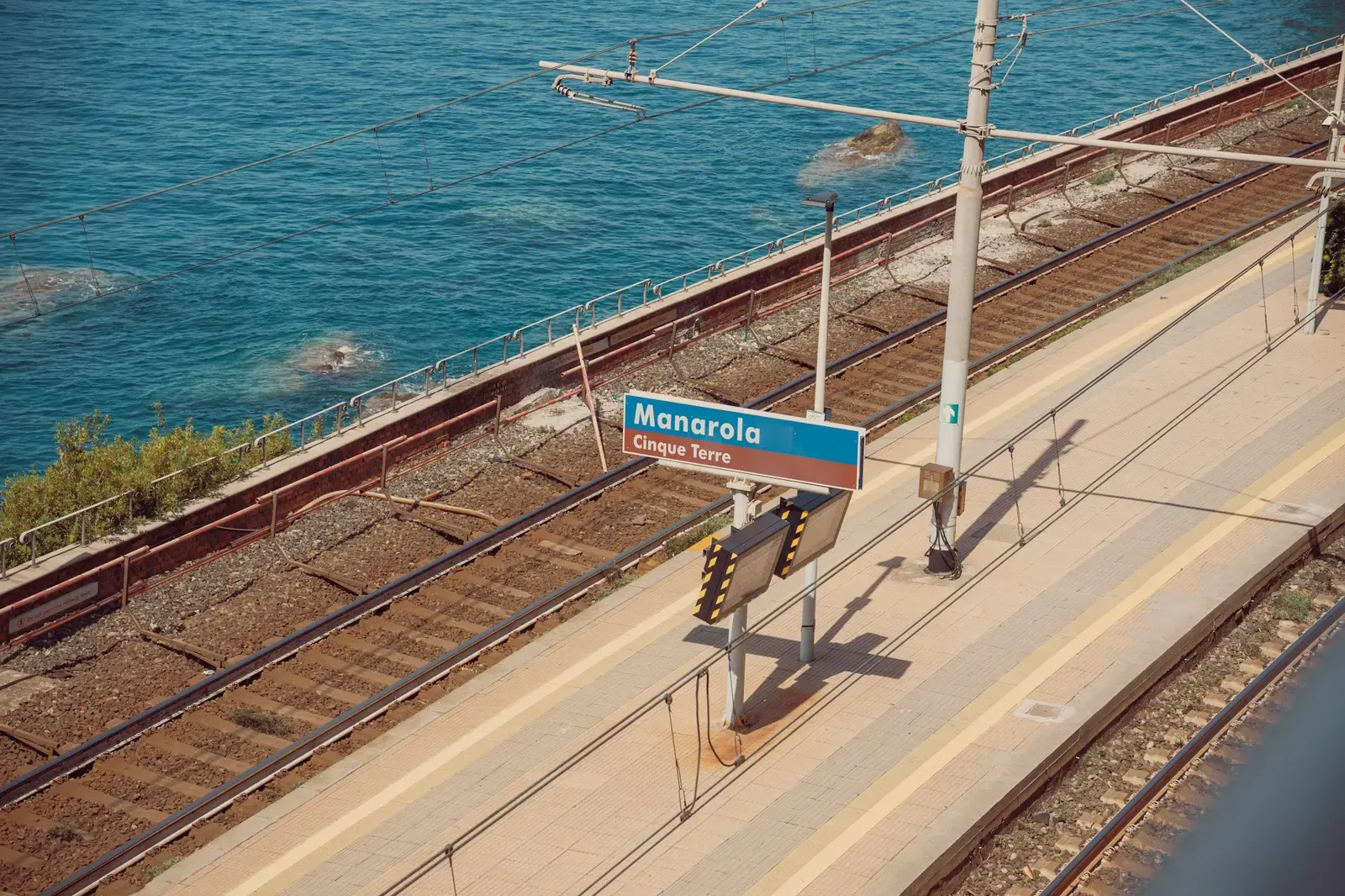
Major city-to-city routes
These are the fastest direct Trenitalia journeys on a sample weekday, 14 October 2026, from Trenitalia's own journey planner, checked in September 2026. Many trains take longer; Italo's times may differ; and timetables change, so check the train you're actually booking.
| Route | Common option | Fastest direct (sample day) | Planning note |
|---|---|---|---|
| Rome – Florence | High-speed train | 1 h 35 min | Rome trains use Termini or Tiburtina — check which |
| Rome – Naples | High-speed train | 1 h 13 min | Some trains stop at Napoli Afragola rather than Centrale |
| Rome – Milan | High-speed train; flights also operate | 2 h 55 min | Compare door to door before choosing a flight |
| Rome – Venice | High-speed train | 3 h 59 min | Stay on to Venezia Santa Lucia if you're staying in the city |
| Florence – Venice | High-speed train | 2 h 14 min | Bologna and Padua are on the way |
| Milan – Venice | High-speed train | 2 h 29 min | Verona is an easy stop on the way |
| Milan – Florence | High-speed train | 1 h 54 min | Many trains continue to Rome |
| Milan – Verona | High-speed or regional train | 1 h 13 min | Regional trains are slower and cheaper |
| Milan – Turin | High-speed or regional train | 1 h 1 min | Check Porta Nuova or Porta Susa |
| Bologna – Florence | High-speed train | 37 min | Regional trains take a slower historic line |
| Naples – Florence | High-speed train | 2 h 56 min | Direct trains run via Rome |
| Milan – Naples | High-speed train | 4 h 33 min | Long but direct; consider breaking in Rome or Florence |
| Rome – Bari | High-speed or Intercity train | 4 h 14 min | Fewer direct trains than on the main corridor |
| Rome – Lecce | High-speed train | 5 h 41 min | A long day; flying is an alternative |
Our city guides cover what to do on arrival: Rome, Florence, Venice, Milan, Naples, Bologna, Turin and Verona.
Reaching smaller cities and towns
Beyond the main lines, most journeys combine two modes. That's normal, and usually straightforward if you plan the change.
- High-speed plus regional train — for example, to Lucca via Florence, or to Lake Como towns via Milan.
- Train plus bus — Siena is often easier by bus from Florence, because Siena's station is below the walled centre; San Gimignano is reached by train and bus via Poggibonsi.
- Train and bus on one ticket — Trenitalia's FrecciaLink combines a Frecciarossa with a connecting bus, for example to Salerno and then Matera; Italo sells train and Itabus connections to places such as Cortina, Aosta, Courmayeur, Lake Garda and towns in Puglia, Calabria and Sicily.
- Train plus local taxi — useful for farm stays and hotels outside town.
- Train plus ferry — to Capri or Ischia via Naples, or along the Amalfi Coast from Salerno in season.
- Airport plus bus — for mountain resorts, such as the Dolomites from Venice airport.
Some regions are simply easier by car: much of rural Tuscany, Puglia beyond the main towns, Sicily's interior and the Dolomite valleys outside the main seasons. See our guides to the Dolomites, Lake Como and Palermo for local detail.
Compare journeys door to door
The most useful habit in Italian trip planning is to compare the whole journey: from your hotel to the station or airport, the journey itself, and from the arrival point to your next hotel. A short flight can take longer overall than a train, and a cheap train can cost more once you add a taxi at each end.
Example: Rome to Milan
| Step | By train | By air |
|---|---|---|
| Getting there | To Roma Termini, in the centre | To Fiumicino: the Leonardo Express from Termini takes 32 minutes, plus waiting time |
| Before departure | Arrive a few minutes early to find the platform | Time your airline asks you to allow for check-in and security |
| The journey | Fastest direct train 2 h 55 min on our sample day | Flight time, then taxiing and disembarking |
| On arrival | Milano Centrale, with metro lines M2 and M3 | Baggage reclaim, then to the city — from Linate, metro M4 to San Babila in about 12 minutes, according to the airport |
| Luggage | Carry it on board; no fees | Check the airline's baggage allowance and fees |
Neither option wins every time: it depends on where your hotels are, which airports you use and how early you'd need to leave. On long routes such as Milan to Sicily, a flight is often quicker overall; on routes under about three hours by fast train, the train usually compares well.
When flying makes sense
Domestic flights are most useful for long distances where rail is slow or involves a ferry: northern Italy to Sicily, Sardinia or the far south of Puglia and Calabria. On shorter routes, the time added at both airports often cancels out the speed in the air.
- Airport transfers — some airports are well outside the city; add the transfer at each end. See Italian airport transfers.
- Check-in and security — follow your airline's advice on when to arrive.
- Baggage — low-cost fares often exclude checked bags.
- Delays — a late flight affects the rest of your day, just as a late train does.
- Which airport — Milan has three and Rome two, in very different places.
Buses and coaches
Long-distance coaches are useful where rail is slow or indirect, for some airport links and for budget travel. National coach companies such as FlixBus and Itabus run intercity routes, including some overnight services. Regional buses reach hill towns and villages trains don't — in Tuscany, the Amalfi Coast and much of the south, they're often the only public transport.
- Where they help — hill towns, coastal villages, airports without rail, and routes such as Rome to parts of the south.
- Tickets — online, at stations and kiosks, or on board, depending on the operator; some regional buses sell tickets at tobacconists (tabacchi) or through an app rather than on board.
- Timing — road traffic affects journey times, and services thin out on Sundays and holidays.
- Luggage — usually in the hold on coaches; limited on local buses.
Ferries and island travel
Ferries are part of many Italian itineraries, from short hops across the Bay of Naples to overnight crossings to Sardinia.
- Sicily — trains cross the Strait of Messina on ferries, and fast passenger ferries link Villa San Giovanni with Messina. Trenitalia sells tickets for Blu Jet fast ferries together with train tickets.
- Sardinia — day and overnight ferries sail from mainland ports including Genoa and Civitavecchia, according to operators GNV and Tirrenia. Some routes are seasonal: GNV's Genoa–Olbia service, for example, runs from May to October.
- Bay of Naples — ferries and hydrofoils run from Naples (Molo Beverello and Calata Porta di Massa) to Capri, Ischia, Procida and Sorrento, and in season to the Amalfi Coast.
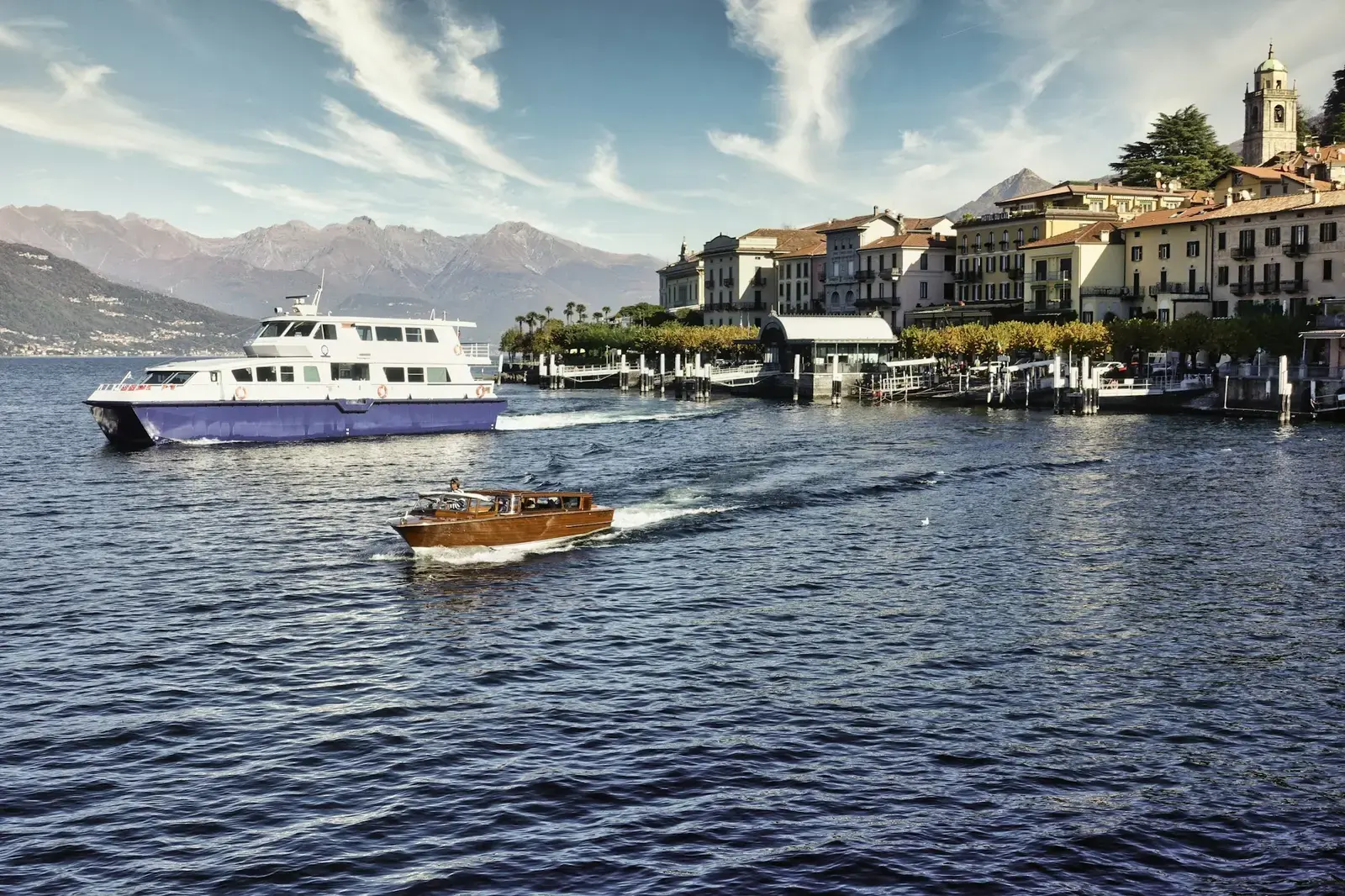
- Lakes — boats connect the towns on Lake Como, Lake Garda and Lake Maggiore.
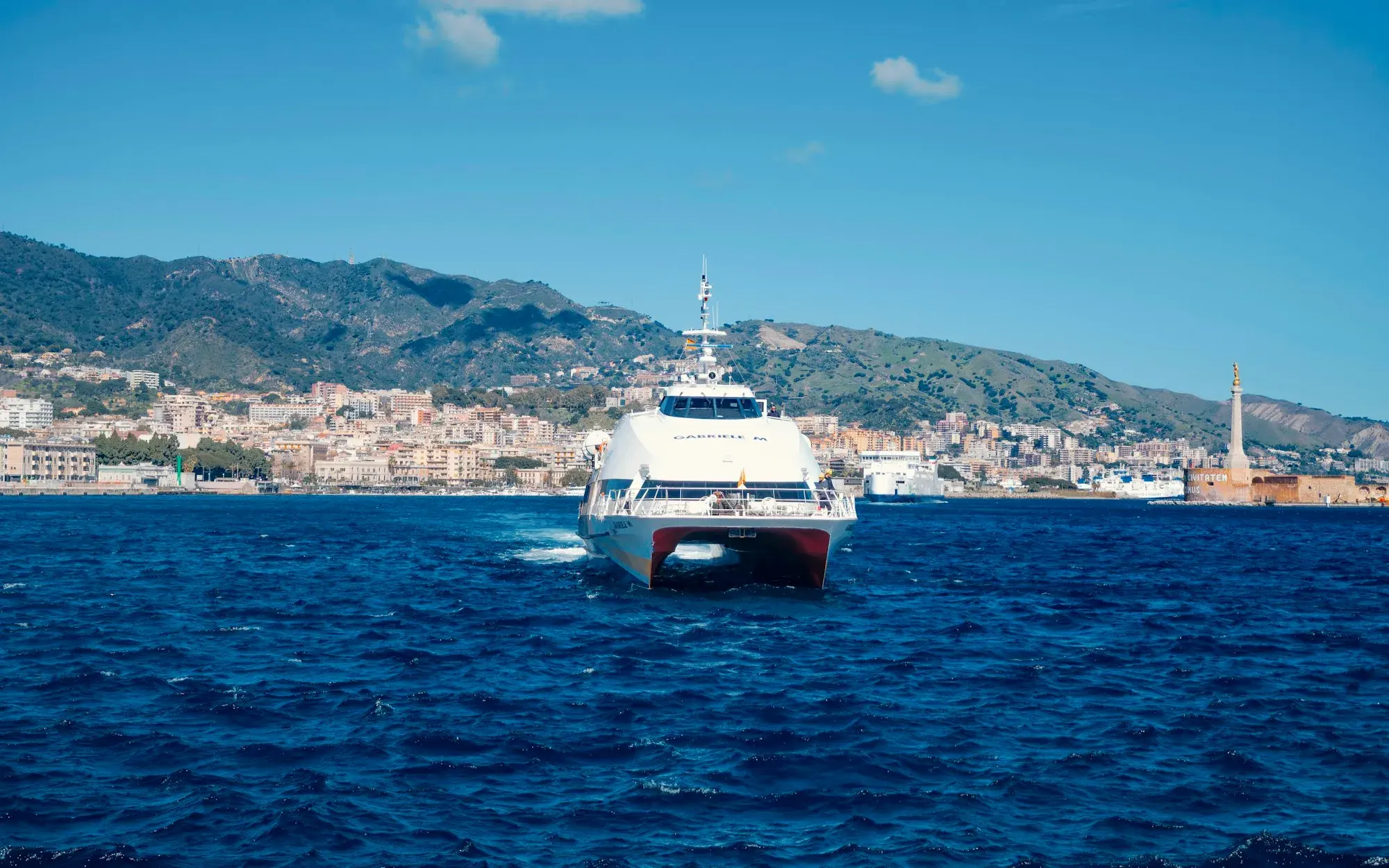
Passenger ferries and vehicle ferries book differently: a car space or cabin on a long route in summer needs booking well ahead, while short passenger hops can often be bought nearer the time. Timetables change with the season, and wind or rough seas can cancel sailings, especially hydrofoils — keep a buffer before a flight or train. Arrive at the port with time to find the right pier. Our guide to ferries in Italy covers the main routes.
Renting a car
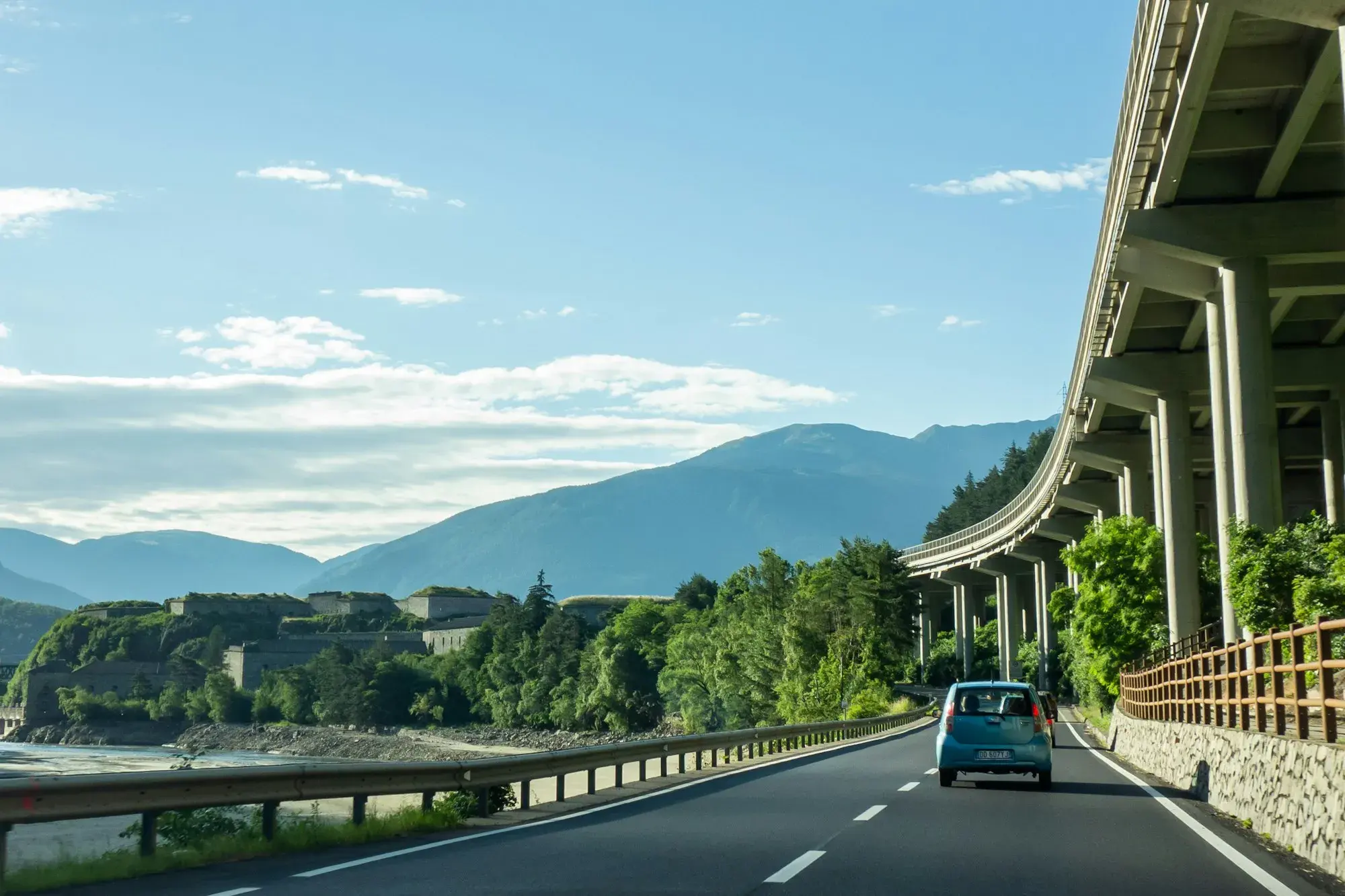
A car makes sense when your trip is mostly rural: Tuscan hill towns, Puglia's masserie, the Dolomite valleys, Sicily's interior or several small places in a day. It's usually a burden in the big cities.
- Documents — a licence issued in the EU or EEA is recognised in Italy. Under Italy's Highway Code, licences from other countries normally need an International Driving Permit or an official translation, though international agreements vary by country; rental companies may require an IDP anyway.
- Tolls — most motorways (autostrade) charge tolls.
- Fuel and parking — budget for both; city parking is limited and often expensive.
- One-way rentals — returning the car elsewhere usually costs extra.
- Transmission — manual cars are common in rental fleets; book an automatic specifically and early.
- Insurance — read what's included and the excess before you sign.
- Roads — mountain passes and coastal roads such as the Amalfi Coast's are narrow and slow.
A common pattern is trains for the cities and a car for a few days in between — pick it up as you leave one city and drop it before you enter the next. Read driving in Italy for rules, tolls and rental advice.
ZTLs: the rule that catches drivers out
A ZTL (zona a traffico limitato) is a limited traffic zone, usually covering a historic centre. Rome, Florence, Milan, Bologna, Naples, Pisa, Siena and Verona all have them, along with countless smaller towns. Entry is restricted during set hours, and gates are camera-controlled: driving past an active gate without authorisation leads to a fine, which a rental company will pass on with a fee — sometimes months later. Each separate entry can be a separate fine.
Hotel access doesn't mean free access. Some cities let guests drive to a hotel inside the zone if the hotel registers the car's number plate in time, but rental cars aren't authorised by default. Ask your hotel before you arrive, follow its instructions exactly, and look for the "varco attivo" sign, which means the gate is active.
Train or car?
| Factor | Train | Car |
|---|---|---|
| City centres | Stations are usually central | ZTLs, traffic and scarce parking |
| Major city-to-city trips | Fast and frequent on the main lines | Tolls, fuel and parking often cost more for one or two people |
| Rural areas and small villages | Limited | Much more flexible |
| Several stops in a day | Difficult | Easy |
| Luggage | You carry it on and off | Stays in the car — but not in a parked car in a city |
| Cost for a group | Per person | Per car, which can suit families |
| Stress | No driving; watch connections | Unfamiliar rules, narrow roads, ZTL fines |
How to book Italian trains
- Official websites and apps — Trenitalia and Italo both sell tickets in English, with digital tickets and live updates.
- Station machines — self-service machines take cards; the two operators have separate machines.
- Ticket offices — at larger stations, for complex journeys, changes and passes.
- Your booking reference — keep the ticket code or QR code on your phone and ideally offline.
- The right station — check the departure and arrival stations, not just the city.
Buying directly from the operator keeps changes, refunds and delay claims simple. Third-party sites can be convenient for comparing operators, but may add fees and handle changes themselves.
Understanding Italian train stations
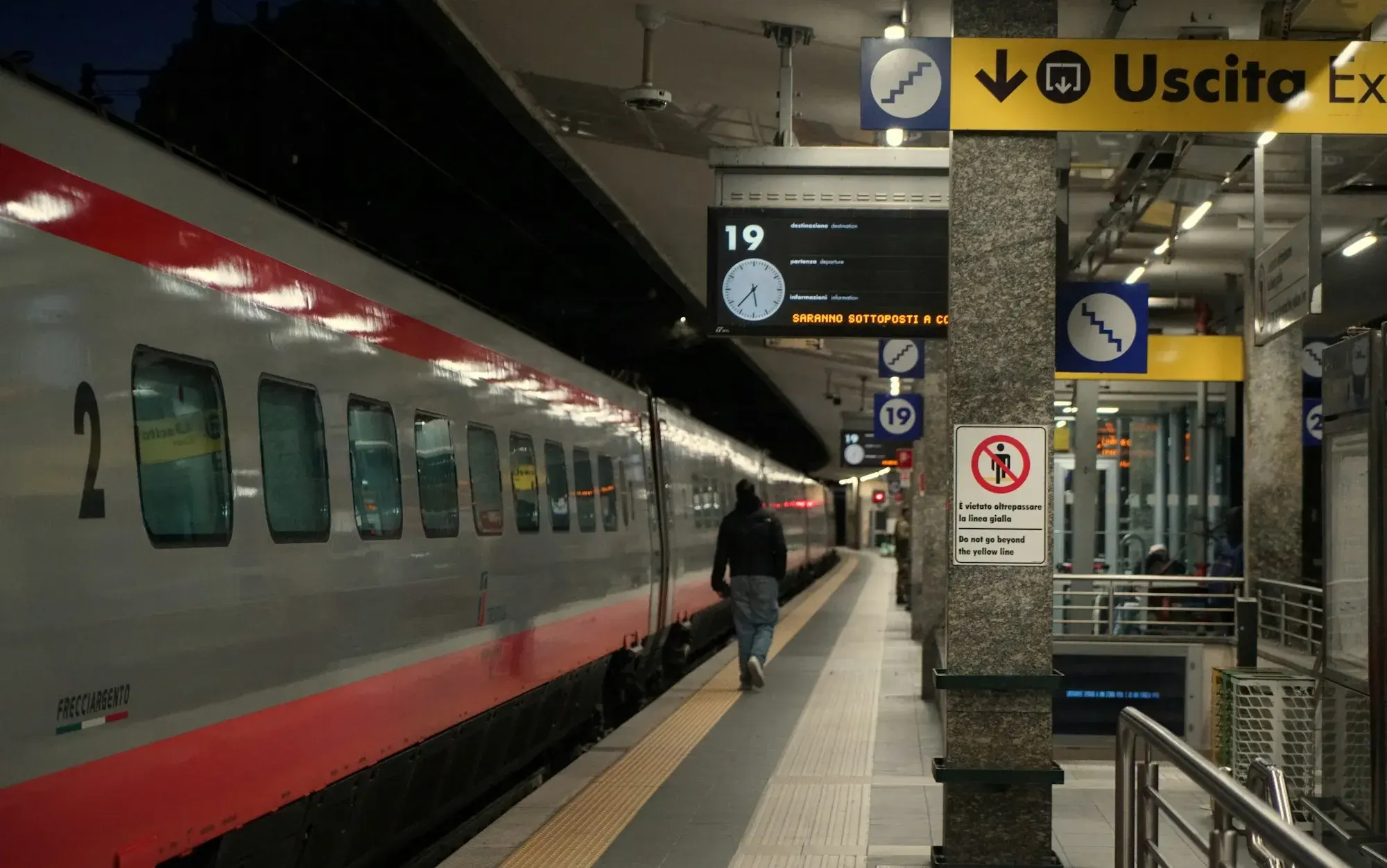
Departure boards list trains by number, final destination and time — the destination may be beyond your stop. These words cover most of what you'll see.
| Italian | Meaning |
|---|---|
| Partenze | Departures |
| Arrivi | Arrivals |
| Binario | Platform |
| Ritardo | Delay |
| Cancellato / Soppresso | Cancelled |
| Carrozza | Carriage |
| Posto | Seat |
| Coincidenza | Connection |
| Biglietteria | Ticket office |
| Uscita | Exit |
Changing trains
Many journeys involve a change, and a few precautions make them smooth.
- Don't assume a train will wait for a late connection.
- Allow a realistic margin — more at large stations such as Roma Termini, Milano Centrale or Bologna Centrale, where high-speed platforms can be a long walk or deep underground.
- Prefer one booking — under EU rail passenger rights, protection for missed connections applies when the journey is on a single through-ticket. With separate tickets, a delay on the first train doesn't automatically protect the second.
- Check platforms — they can change; keep watching the board.
- Mixed operators — a Trenitalia and an Italo train are separate tickets by definition.
Luggage
There's no luggage check-in on Italian trains: you lift your bags on board and store them yourself, in overhead racks or luggage areas. Space varies by train and fills up at busy times. Italo's published rules limit luggage in its Smart environment to 75 × 53 × 30 cm; Trenitalia asks passengers to keep luggage in the spaces provided without obstructing others. Coaches usually carry cases in the hold, and ferries have their own rules. Check the operator's conditions before travelling with bikes, skis, instruments or other oversized items — and pack so you can carry your case up train steps.
Travelling with children
- Seats together — book reserved seats in a single booking on high-speed trains.
- Fares — Trenitalia and Italo both offer reduced fares for children; rules for infants and age limits vary by operator and fare, so check when booking.
- Strollers — a compact, foldable one is easiest; Italo treats strollers as luggage.
- Car seats — in private cars, Italian law requires child restraints; bring or rent them if you're driving.
- Timing — avoid tight connections and plan around meals and naps.
Accessibility
Rete Ferroviaria Italiana (RFI), which manages the rail network, runs a free Sala Blu assistance service for passengers with disabilities or reduced mobility at many stations. Request it in advance online, through the Sala Blu+ app or at a Sala Blu office — how much notice is needed depends on the station and time of day. When booking a ticket, reserve an accessible seat or wheelchair space with the operator. Not every station is step-free, and buses, ferries and taxis vary: confirm accessible vehicles and boarding arrangements with each operator before you travel.
How many cities should you combine?
Every move costs more than the journey: packing, checking out, getting to the station, finding the new hotel and settling in usually take half a day. A few principles help:
- Give each base at least two nights, and three for large cities like Rome.
- Use day trips from a base instead of moving hotels — Bologna, Florence and Naples all make good hubs.
- Follow the lines — cities on the same high-speed corridor are easy to combine; zigzagging across the country isn't.
- Keep one quieter stretch — a few countryside or lake days balance a city-heavy trip.
Sample multi-city trips
These combinations work because they follow the main transport lines. They're starting points, not fixed itineraries.
| Trip | Route | Why it works | Main transport |
|---|---|---|---|
| Northern Italy | Milan → Verona → Venice | Three very different cities on one fast line | High-speed and regional trains |
| Classic Italy | Rome → Florence → Venice | The most visited cities, linked directly | High-speed trains |
| Central and southern | Rome → Naples → Puglia | Rome and Naples by fast train, then the south | High-speed train; car or trains in Puglia |
| North to centre | Milan → Florence → Rome | Straight down the main corridor | High-speed trains; optional car for Tuscany |
| With the mountains | Venice → Dolomites → Verona | City, mountains and city | Train and bus, or car in the mountains |
For suggested itineraries by trip length, see the complete Italy travel guide.
Booking ahead or buying on the day?
It depends on the kind of transport, the route and how flexible you need to be.
| Transport | Book ahead? | Why |
|---|---|---|
| High-speed trains | Usually, once dates are firm | Cheaper fares are limited and sell out; popular trains fill at busy times |
| Intercity and sleepers | On busy dates | Seats and berths are limited |
| Regional trains | Not necessary | Fixed fares; buy when you travel |
| Coaches | For popular routes and dates | Seats can sell out |
| Ferries with a vehicle | Yes, in summer | Car spaces and cabins fill early |
| Short passenger ferries | Often not | But check in peak season and on weekends |
| Flights | Usually | Fares generally rise as flights fill |
Peak periods
Demand rises on Friday evenings and Sunday afternoons, around public holidays and in summer. Plan earlier for Easter, the "bridges" (ponti) around holidays such as 25 April, 1 May and 2 June, August — especially around Ferragosto on 15 August — and Christmas and New Year. Big events, such as trade fairs in Milan or festivals in smaller cities, can fill trains and hotels locally. Check our guide to the best time to visit Italy for seasonal patterns.
Common mistakes
- Booking the wrong station — Rome, Milan, Venice, Naples and Turin all have more than one.
- Confusing airports — Milan's three and Rome's two are far apart.
- Assuming every train is high-speed — a regional train on the same route can take much longer.
- Not checking whether a journey is direct.
- Leaving too little time for a change, or assuming a delayed train will be waited for.
- Misunderstanding ticket conditions — cheap fares may not allow changes.
- Driving into a ZTL.
- Ignoring ferry weather disruption before a flight or train.
- Booking too many cities for the time you have.
- Comparing ticket prices instead of total journey time and cost.
- Relying on old timetables from blogs — check the operator for your date.
Planning checklist
Use this for each leg of your trip. Tick items off as you go; your progress is saved on this device.
0 of 12 done
Journey times and rules in this guide were checked on official sources in September 2026. Timetables change, so always check the operator for your travel date. For the rest of your planning, see the Italy travel planning checklist and how much a trip to Italy costs.
Topics
Frequently asked questions
Editorial note
Information such as transport schedules, prices, opening hours and entry requirements can change. Check the relevant official source before making a booking or travelling. Read our editorial policy or report a correction.
Official sources
- Trenitalia (opens in a new tab) — timetables, tickets and journey planner
- Italo (opens in a new tab) — high-speed trains
- Trenitalia — trains to Sicily (opens in a new tab) — Intercity services and the Strait crossing
- Trenitalia — FrecciaLink Matera (opens in a new tab) — train and bus on one ticket
- Italo — Itabus connections (opens in a new tab) — train and bus connections
- Trenitalia — travelling on regional trains (opens in a new tab) — ticket validation
- RFI — assistance for persons with disability (opens in a new tab) — Sala Blu service
- Your Europe — rail passenger rights (opens in a new tab) — delays and connections
- GNV — ferries to Sardinia (opens in a new tab) — routes and seasons
- Tirrenia — ferries to Sardinia (opens in a new tab) — routes
- Italo — luggage rules (opens in a new tab) — luggage size in Smart
About the author
Editorial Team
Editorial Team
Researches, writes and updates stories and guides about Italy.
More from Editorial TeamWas this guide useful?
Keep reading
Guide
Traveling Around Italy by Train: Routes, Tickets and Tips
How Italy's rail network works, which trains to choose, how tickets work and what first-time travellers should know.
Updated 20 min read
Guide
Driving in Italy: Rules, Costs, Documents and Tips
What international visitors should know about licenses, road rules, ZTL zones, tolls, parking and renting a car in Italy.
Updated 30 min read
Guide
How Italian Airport Transfers Work: A Practical Guide
Taxis, fixed fares, private transfers, trains and buses: how to choose the right way out of Italy's main airports, and what to check before you book.
Updated 21 min read
Guide
The Complete Italy Travel Guide: How to Plan Your First Trip
How many days you need, which places to combine, when to go, what it costs and how to get around — a step-by-step framework for planning a first trip to Italy.
Updated 22 min read
Guide
Italy Travel Planning Checklist: Everything to Prepare Before You Go
Everything to arrange for an Italy trip, in the order that matters — from route and documents to trains, timed tickets, packing and arrival day.
Updated 15 min read
Transport
Ferries in Italy: A Practical Guide to Islands and Coastal Travel
Where ferries and boats are useful in Italy, how island crossings work, what happens at the port and how to plan around seasons and the weather.
Updated 17 min read
Explore more transport
More stories and guides from Life in Italia.