Regional Wines of Italy: Grapes, Places and Traditions
Why Italy has many wine cultures rather than one — the regions, local grapes and denominations, how classifications work, and how to taste and order wine in Italy.
Editorial Team
- Published
- Updated
- Reading time
- 19 min read
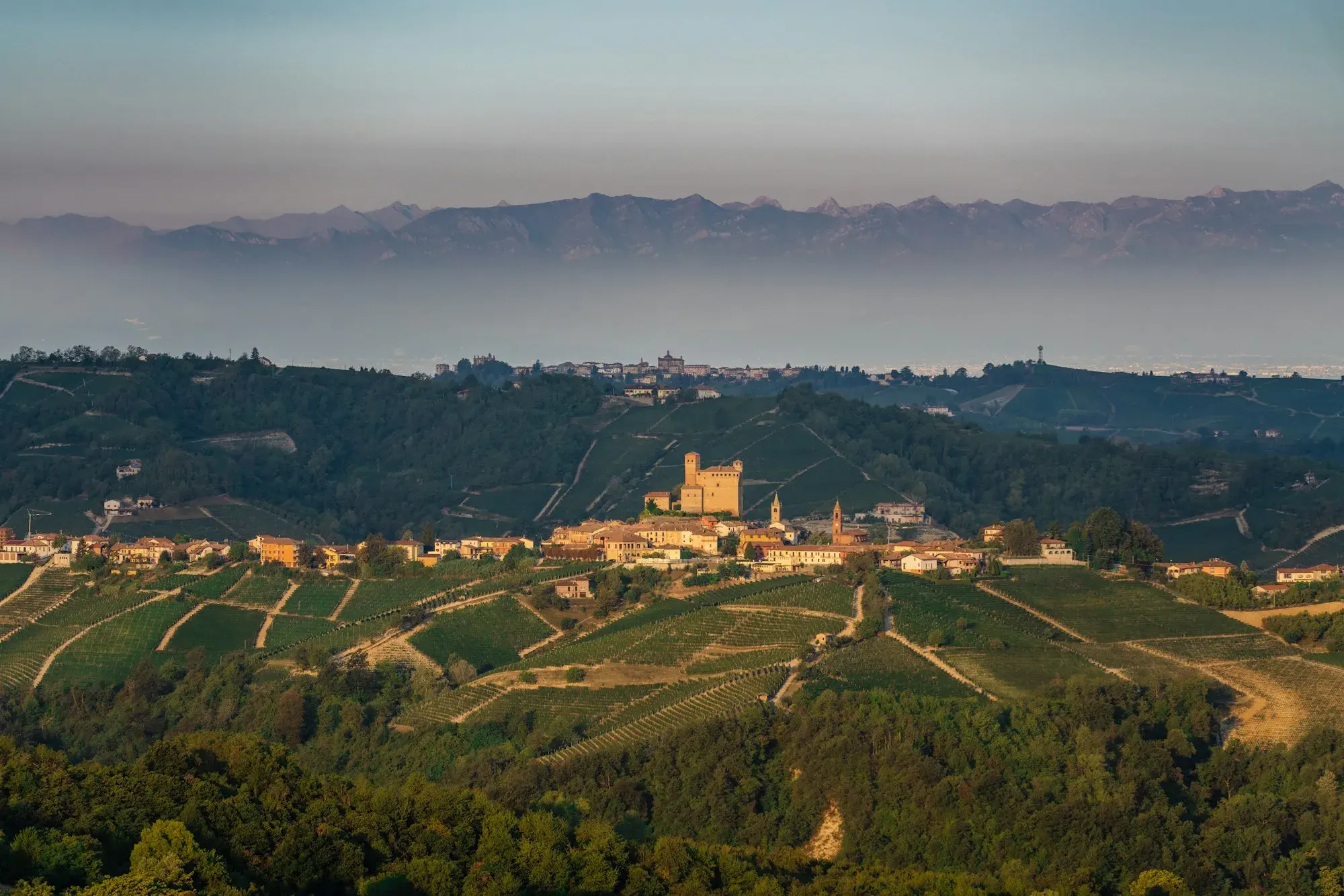
Why Italian wine is so regional
Short answer
Italy doesn't have one wine culture; it has many regional ones. Every one of its 20 regions makes wine, from Alpine valleys to volcanic islands, and most rely heavily on local grape varieties that are rarely grown elsewhere. Geography, climate, centuries of separate states and local food traditions mean that a Nebbiolo from Piedmont, a Sangiovese from Tuscany and a Nerello Mascalese from Etna have little in common except the country on the label.
A few forces explain most of the variety:
- Mountains and hills — the Alps and the Apennines give altitude, slopes and cooler nights; much of Italy's quality viticulture is on hillsides rather than plains.
- The sea and the islands — long coastlines, Sicily, Sardinia and many small islands bring maritime air and very different conditions from inland valleys.
- Soils — from the clays and marls of the Langhe to volcanic soils on Etna, Vesuvius and Monte Vulture.
- Local varieties — Italy's national register lists hundreds of wine grape varieties, and many regions have kept their own.
- History — until 1861 the peninsula was divided among many states; trade routes, rulers and local markets shaped what was planted.
- Food — wine grew up alongside regional cooking, and local pairings still reflect that.
Terroir — the French word Italians also use — simply means the combination of place factors (soil, slope, altitude, climate) and human choices (grapes, methods, traditions) that make a wine taste of where it comes from. It explains a lot, but it isn't magic, and no soil guarantees a good wine.
This article is about wine. For Italy's food culture, see Italian food traditions; for Sicily, Sicilian food traditions.
Italian wine at a glance
- Regions
- All 20 regions produce wine
- Classifications
- DOCG and DOC (EU: PDO), IGT (EU: PGI), and plain Vino
- Denominations
- More than 500 protected wine names in the EU register
- Key red grapes
- Sangiovese, Nebbiolo, Barbera, Montepulciano, Aglianico, Nero d'Avola, Primitivo
- Key white grapes
- Glera, Garganega, Verdicchio, Fiano, Vermentino, Trebbiano, Friulano
- Sparkling
- Tank-method (Prosecco, Asti) and bottle-fermented (Franciacorta, Trento, Alta Langa)
How Italian wine is classified
Italian wine law — today Law 238/2016, the Testo Unico del Vino — works within the EU system of protected designations. In practice you'll see four levels on labels:
| Label term | EU equivalent | What it tells you |
|---|---|---|
| DOCG — Denominazione di Origine Controllata e Garantita | PDO | A protected origin with the strictest rules; must first have been a DOC (for at least seven years under the 2016 law); bottles carry a numbered state band |
| DOC — Denominazione di Origine Controllata | PDO | A protected origin with a defined area, permitted grapes, yields and methods set out in its production rules (disciplinare) |
| IGT — Indicazione Geografica Tipica | PGI | A broader geographical indication with looser rules, often a whole region (e.g. Toscana, Terre Siciliane) |
| Vino | — | Wine without a geographical indication; may still show grape and vintage in some cases |
These categories describe origin and rules, not a tasting score. DOCG rules are stricter and include tasting checks, but a DOC or IGT wine can be every bit as good — some famous Tuscan wines were first sold outside the DOC system entirely. The EU register lists more than 500 Italian wine names; the Ministry's list shows more than 70 DOCGs, over 300 DOCs and over 100 IGTs.
A region-by-region overview
| Region | Representative denominations | Important grapes | Typical styles |
|---|---|---|---|
| Valle d'Aosta | Valle d'Aosta | Petit Rouge, Fumin, Prié Blanc | Mountain reds and whites |
| Piedmont | Barolo, Barbaresco, Barbera d'Asti, Asti, Roero | Nebbiolo, Barbera, Dolcetto, Moscato, Arneis | Structured reds, sweet sparkling |
| Lombardy | Franciacorta, Valtellina Superiore, Oltrepò Pavese | Chardonnay, Pinot Nero, Nebbiolo (Chiavennasca) | Bottle-fermented sparkling, mountain reds |
| Trentino-Alto Adige | Trento, Trentino, Alto Adige, Teroldego Rotaliano | Lagrein, Schiava, Teroldego, Gewürztraminer, Pinot Grigio | Alpine whites and reds, sparkling |
| Veneto | Prosecco, Conegliano Valdobbiadene, Valpolicella, Amarone, Soave | Glera, Corvina, Garganega | Sparkling, dried-grape reds, whites |
| Friuli Venezia Giulia | Collio, Friuli Colli Orientali, Carso | Friulano, Ribolla Gialla, Pinot Grigio, Refosco | Whites, sweet Picolit and Ramandolo |
| Liguria | Cinque Terre, Riviera Ligure di Ponente, Colli di Luni | Vermentino, Pigato, Bosco | Coastal whites, sweet Sciacchetrà |
| Emilia-Romagna | Lambrusco di Sorbara, Romagna, Romagna Albana | Lambrusco, Sangiovese, Albana, Pignoletto | Sparkling reds, still reds and whites |
| Tuscany | Chianti Classico, Chianti, Brunello di Montalcino, Vino Nobile di Montepulciano, Bolgheri | Sangiovese, Vernaccia, international varieties on the coast | Reds, Vin Santo |
| Umbria | Montefalco Sagrantino, Orvieto, Torgiano | Sagrantino, Sangiovese, Grechetto | Powerful reds, whites |
| Marche | Verdicchio dei Castelli di Jesi, Rosso Cònero, Offida | Verdicchio, Montepulciano, Pecorino | Whites, reds |
| Lazio | Frascati, Cesanese del Piglio, Est! Est!! Est!!! di Montefiascone | Malvasia, Trebbiano, Cesanese | Whites, reds |
| Abruzzo | Montepulciano d'Abruzzo, Cerasuolo d'Abruzzo, Trebbiano d'Abruzzo | Montepulciano, Trebbiano, Pecorino | Reds, rosé, whites |
| Molise | Molise, Tintilia del Molise | Tintilia, Montepulciano | Reds |
| Campania | Taurasi, Fiano di Avellino, Greco di Tufo, Falanghina del Sannio, Vesuvio | Aglianico, Fiano, Greco, Falanghina | Reds and whites, some volcanic |
| Puglia | Primitivo di Manduria, Salice Salentino, Castel del Monte | Primitivo, Negroamaro, Nero di Troia | Reds, rosé |
| Basilicata | Aglianico del Vulture | Aglianico | Volcanic reds |
| Calabria | Cirò, Greco di Bianco | Gaglioppo, Greco | Reds, sweet whites |
| Sicily | Sicilia, Etna, Cerasuolo di Vittoria, Marsala, Pantelleria | Nero d'Avola, Nerello Mascalese, Grillo, Carricante, Zibibbo | Reds, whites, fortified, sweet |
| Sardinia | Cannonau di Sardegna, Vermentino di Gallura, Carignano del Sulcis | Cannonau, Vermentino, Carignano | Reds, whites, oxidative Vernaccia |
Piedmont
Piedmont's best-known wines come from the hills of the Langhe, Roero and Monferrato, whose vineyard landscapes were inscribed on UNESCO's World Heritage List in 2014.
- Nebbiolo — the grape of Barolo and Barbaresco (both DOCG), which are made entirely from it and aged for longer than most Italian reds. Nebbiolo also makes Roero (DOCG), Nebbiolo d'Alba and, in the north of the region, Gattinara and Ghemme.
- Barbera — Piedmont's most widely planted red, with fresh acidity; Barbera d'Asti and Nizza are DOCGs.
- Dolcetto — softer, earlier-drinking reds from Alba, Dogliani and Ovada.
- Moscato — the grape of the Asti DOCG, which includes both sparkling Asti and the lightly sparkling, sweet Moscato d'Asti.
- Whites — Arneis in the Roero, Cortese for Gavi, Erbaluce di Caluso.
Piedmontese cooking — egg-rich tajarin, agnolotti, braised meats, autumn truffles — has grown up with these wines. See our Turin guide for the region's capital.
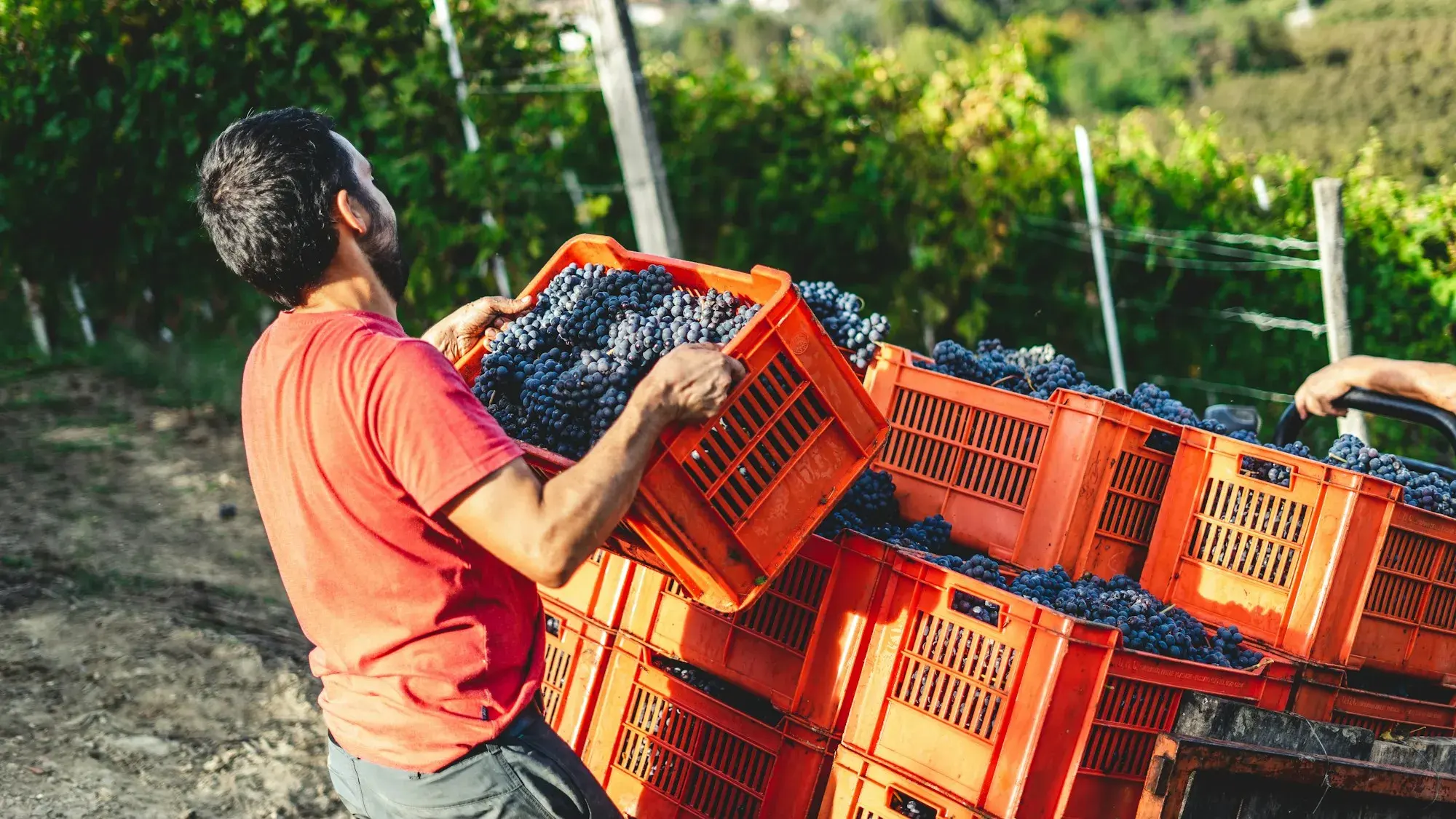
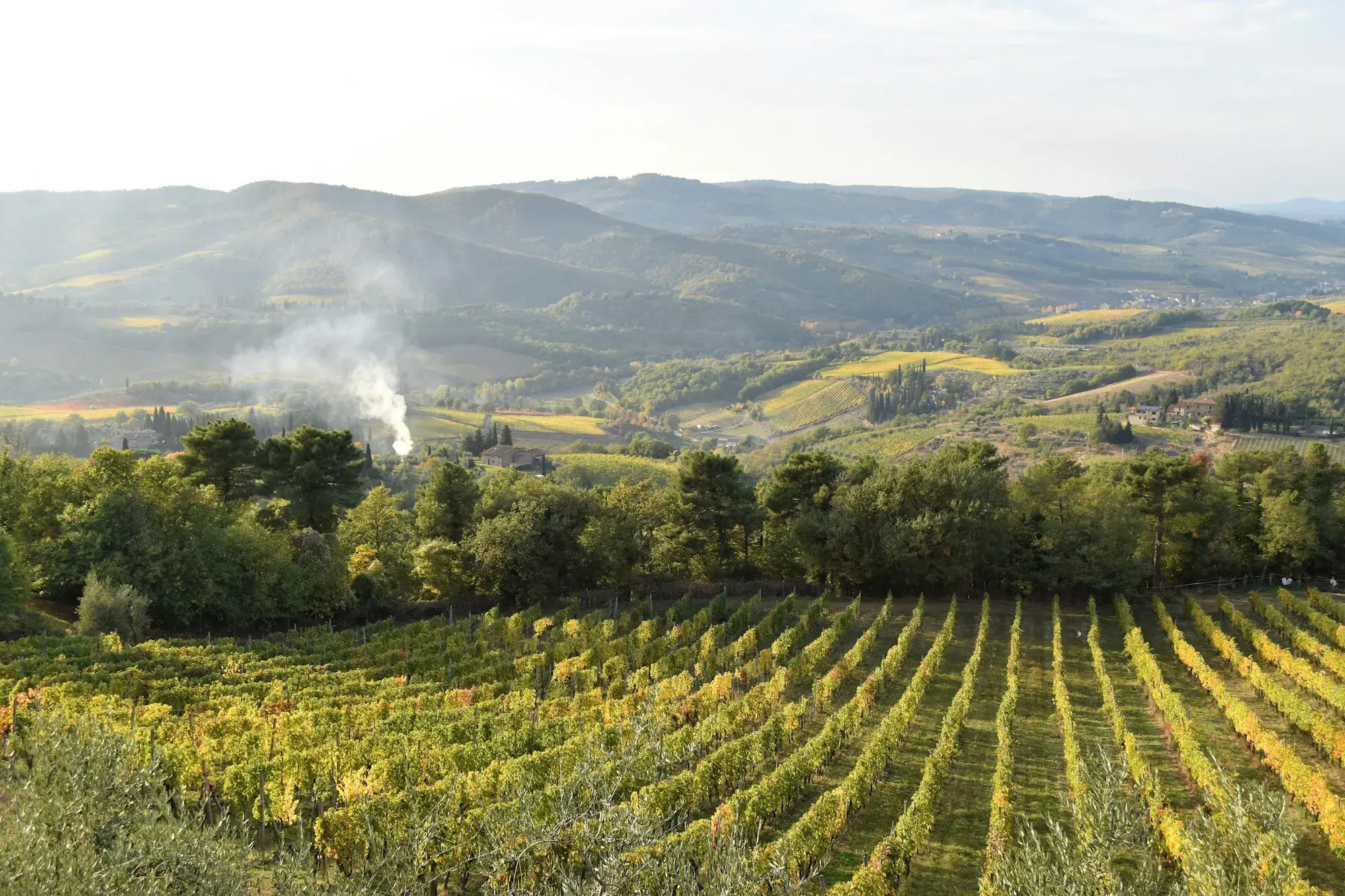
Tuscany
Tuscany is Sangiovese country, but the grape gives very different wines depending on where it grows and how it's made.
- Chianti Classico (DOCG) — from the historic zone between Florence and Siena, whose boundaries were set by a decree of 1932; it is a separate denomination from Chianti.
- Chianti (DOCG) — a larger area around the Classico zone, with sub-zones such as Rufina and Colli Senesi. Under Italian law, vineyards in the Classico zone can't be used for Chianti DOCG.
- Brunello di Montalcino (DOCG) — Sangiovese from the hill town of Montalcino, with long ageing before release; Rosso di Montalcino is its younger DOC sibling.
- Vino Nobile di Montepulciano (DOCG) — Sangiovese-based red from the town of Montepulciano, in southern Tuscany.
- Vernaccia di San Gimignano (DOCG) — a white from the towered town near Siena.
- Bolgheri and the coast — from the late 1960s and 1970s some producers made wines outside the DOC rules, often with Cabernet Sauvignon and Merlot, soon nicknamed "Super Tuscans". Several are now inside denominations: Bolgheri is a DOC, and Bolgheri Sassicaia has its own DOC.
Tuscany also makes Vin Santo, a sweet wine from dried grapes, with its own DOCs. For the city, see Florence for first-timers.
Veneto
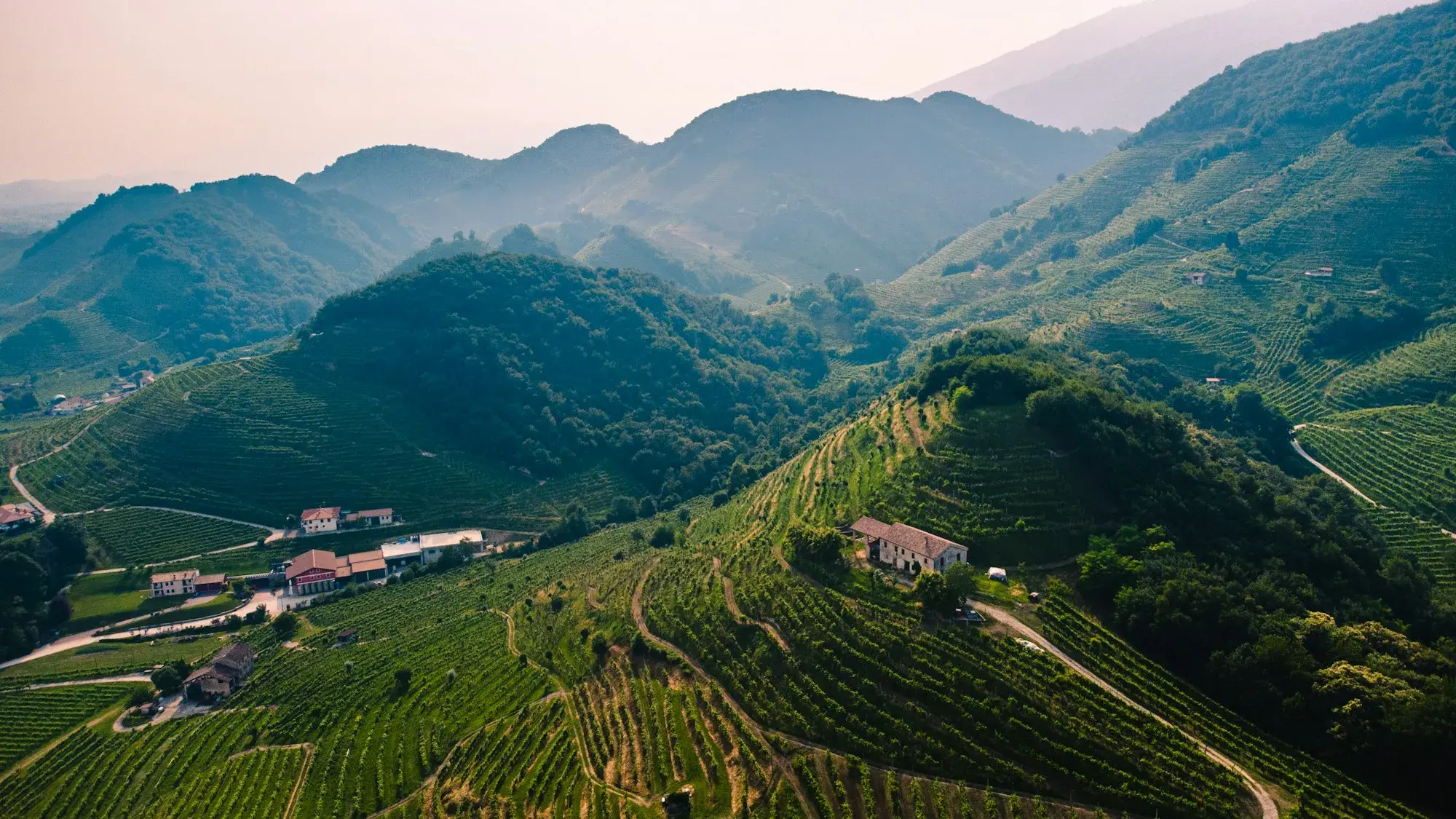
- Prosecco — sparkling wine made mainly from the Glera grape. The Prosecco DOC covers a wide area of the Veneto and Friuli Venezia Giulia; the hillside Conegliano Valdobbiadene and Asolo zones are DOCGs. Most Prosecco is made by the tank (Martinotti or Charmat) method, and it comes in several levels of sweetness and fizz. The Prosecco hills of Conegliano and Valdobbiadene are a UNESCO World Heritage Site (2019).
- Valpolicella — the hills north of Verona, where Corvina and related grapes make light reds (Valpolicella), fuller Ripasso, and wines from dried grapes.
- Amarone della Valpolicella (DOCG) — made from grapes dried for months before fermentation (appassimento) and fermented to a dry, concentrated red. Recioto della Valpolicella (DOCG) is its sweet counterpart.
- Soave — white wine from the Garganega grape, east of Verona; Recioto di Soave is the sweet version.
- Bardolino — light reds and rosés from the shores of Lake Garda.
See our Verona guide for Valpolicella and Soave, and our Venice guide for the city's wine bars.
Friuli Venezia Giulia
Italy's north-eastern corner is known above all for white wines. Friulano (the grape once labelled Tocai friulano), Ribolla Gialla, Pinot Grigio and Sauvignon are widely grown in the Collio and Friuli Colli Orientali DOCs, near the Slovenian border; Refosco and Schioppettino are local reds; and Picolit and Ramandolo are sweet whites with DOCG status. The Carso DOC, on the limestone plateau near Trieste, has Terrano and Vitovska. Winemaking traditions here are shared across the border with Slovenia, and some producers are known for long-macerated "orange" whites.
Trentino-Alto Adige
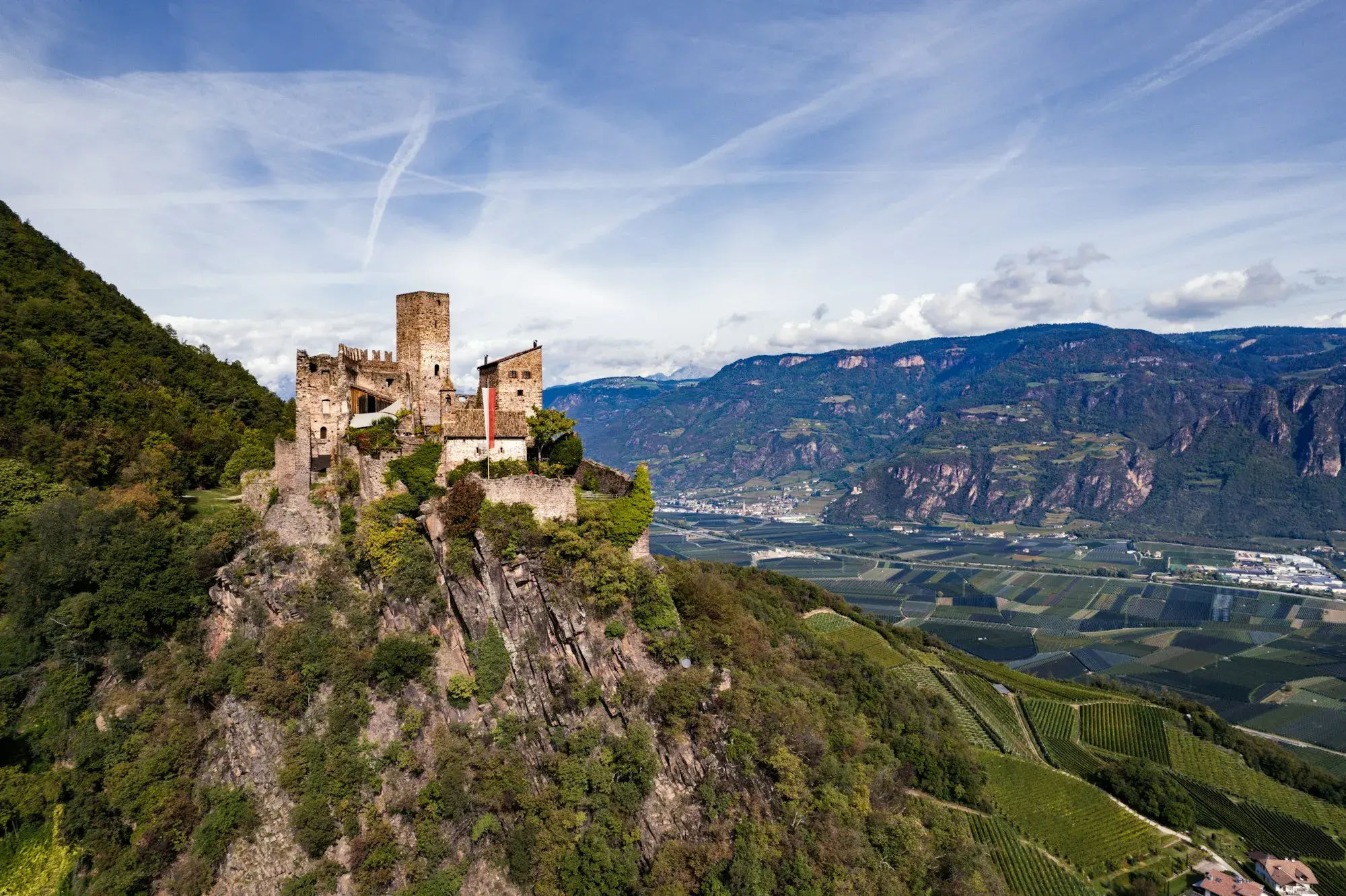
These are two autonomous provinces with distinct wine identities. Alto Adige / Südtirol (Bolzano), bilingual Italian and German, has its own DOC — labels may say Südtirol — and mountain vineyards producing Gewürztraminer, Pinot Grigio, Pinot Bianco, Sauvignon and the local reds Lagrein and Schiava (Vernatsch). Trentino (Trento) has the Trentino DOC, the Teroldego Rotaliano DOC for the Teroldego grape, and Trento DOC, a bottle-fermented sparkling wine promoted collectively as Trentodoc.
Lombardy
- Franciacorta (DOCG) — bottle-fermented sparkling wine from the hills south of Lake Iseo, mainly from Chardonnay and Pinot Nero.
- Valtellina — steep terraced vineyards in the Alpine valley of the Adda, where Nebbiolo is called Chiavennasca; Valtellina Superiore and Sforzato (Sfursat, from dried grapes) di Valtellina are DOCGs.
- Oltrepò Pavese — the hills south of Pavia, with Pinot Nero, Croatina (for Bonarda) and a metodo classico DOCG.
- Lugana — white wines from the southern shore of Lake Garda, shared with the Veneto.
See Milan beyond the Duomo for the city's wine bars.
Liguria
Liguria's vineyards cling to terraces between mountains and sea, which keeps production small. Vermentino and Pigato are the main whites of the Riviera Ligure di Ponente; the Colli di Luni DOC, near the Tuscan border, also focuses on Vermentino. The Cinque Terre DOC includes dry whites and Sciacchetrà, a sweet wine from dried grapes grown on steep terraces above the sea.
Emilia-Romagna
Lambrusco is a family of grapes and several DOCs rather than one wine — Lambrusco di Sorbara, Lambrusco Grasparossa di Castelvetro and Lambrusco Salamino di Santa Croce among them — and styles range from dry to sweet, pale to deep red, usually sparkling. It's the traditional partner of the region's cured meats and rich pasta. Romagna has Sangiovese (Romagna DOC), Albana (Romagna Albana, DOCG) and, near Bologna, Colli Bolognesi Pignoletto (DOCG). See Bologna in two days.
Central Italy: Marche, Umbria, Lazio
Marche
On the Adriatic side, Verdicchio is the signature white: Verdicchio dei Castelli di Jesi and Verdicchio di Matelica, with DOCG status for their Riserva versions. The coast near Ancona grows Montepulciano for Rosso Cònero (DOC) and Cònero (DOCG); Rosso Piceno blends Montepulciano and Sangiovese; and the Offida DOCG includes whites from the Pecorino grape.
Umbria
Sagrantino makes dense, tannic reds in the Montefalco Sagrantino DOCG; Sangiovese is important around Torgiano and Montefalco; and Orvieto, based on Grechetto and Trebbiano, is Umbria's best-known white. The wines suit a cuisine of pork, legumes, truffles and grilled meats.
Lazio
The hills south-east of Rome make Frascati, a white from Malvasia and Trebbiano, with Frascati Superiore and the sweet Cannellino di Frascati as DOCGs. Cesanese is the local red grape, with the Cesanese del Piglio DOCG. North of Rome, Est! Est!! Est!!! di Montefiascone takes its unusual name from a legend about a travelling bishop's servant marking good inns — a story, not a documented fact. See Rome in three days.
Abruzzo and Molise
Montepulciano d'Abruzzo is a red wine made from the Montepulciano grape. It has nothing to do with Vino Nobile di Montepulciano, which is made mainly from Sangiovese around the town of Montepulciano in Tuscany. Abruzzo also makes Cerasuolo d'Abruzzo, a deep-pink rosé from Montepulciano grapes, and Trebbiano d'Abruzzo; the Colline Teramane area has DOCG status. Neighbouring Molise has its own grape, Tintilia, with a dedicated DOC.
Campania
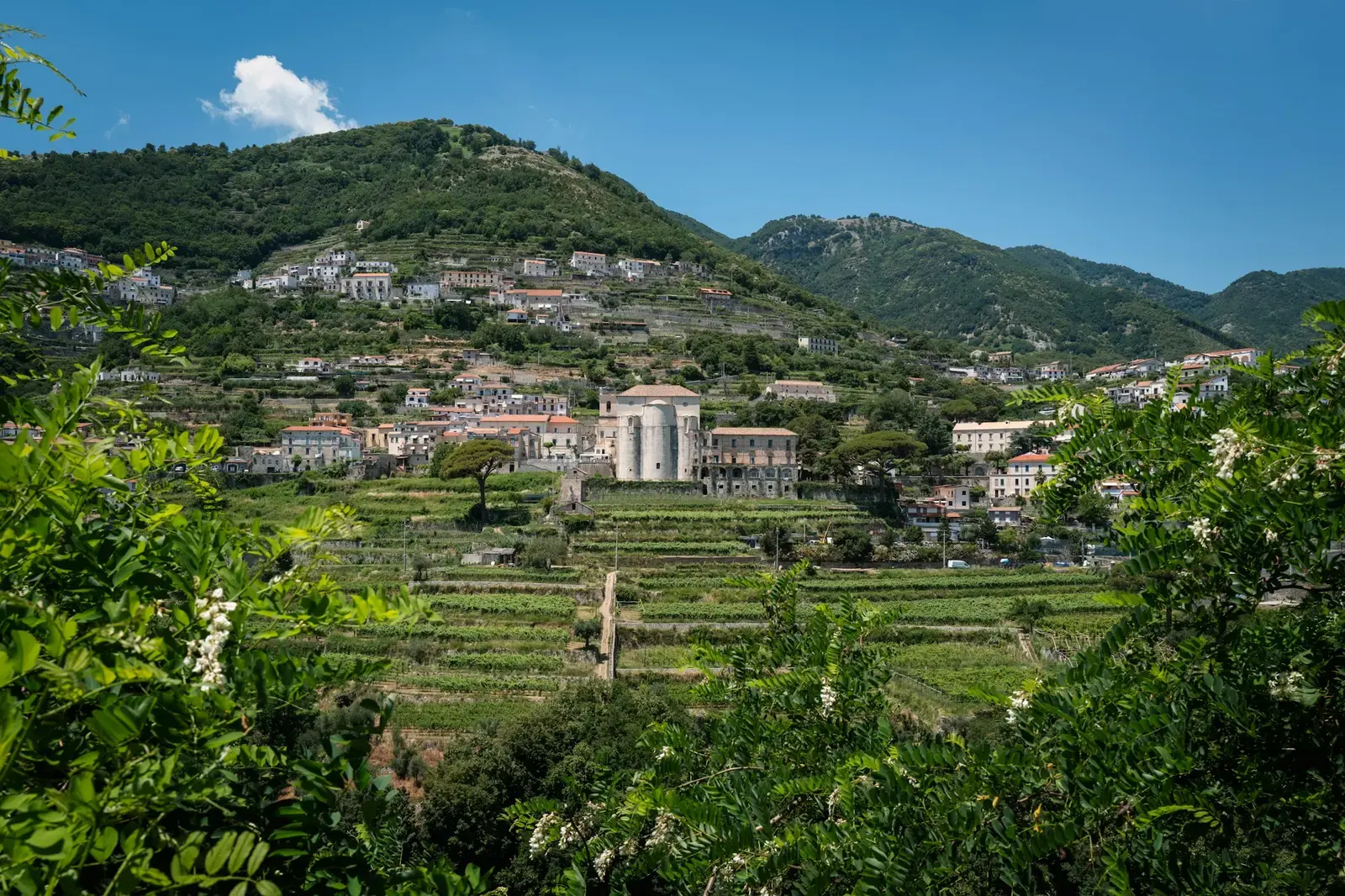
Campania has some of southern Italy's most distinctive wines. Aglianico makes Taurasi and Aglianico del Taburno (both DOCG), inland in Irpinia and the Sannio; the whites Fiano di Avellino and Greco di Tufo are DOCGs; and Falanghina is widely grown, notably in the Sannio. Volcanic soils matter here too: the Vesuvio DOC grows on the slopes of the volcano, and Campi Flegrei on the volcanic fields west of Naples. On the Amalfi Coast, small terraced vineyards grow local varieties. See Naples for first-time visitors.
Puglia, Basilicata and Calabria
Puglia
Puglia's hot, flat south and cooler, higher north make different wines. Primitivo, which DNA studies have shown to be the same variety as California's Zinfandel, is central to Primitivo di Manduria (DOC) and Gioia del Colle; Negroamaro dominates the Salento, including Salice Salentino; and Nero di Troia is grown in the north, around Castel del Monte, which has three DOCGs. Rosé has a long tradition here, and Verdeca is a local white grape. Production ranges from large cooperatives to small estates.
Basilicata
Basilicata's key wine is Aglianico del Vulture, grown on the slopes of Monte Vulture, an extinct volcano; its Superiore version is a DOCG.
Calabria
Calabria's best-known red is Cirò, made mainly from the Gaglioppo grape on the Ionian coast; Greco di Bianco is a sweet white from the far south.
Sicily
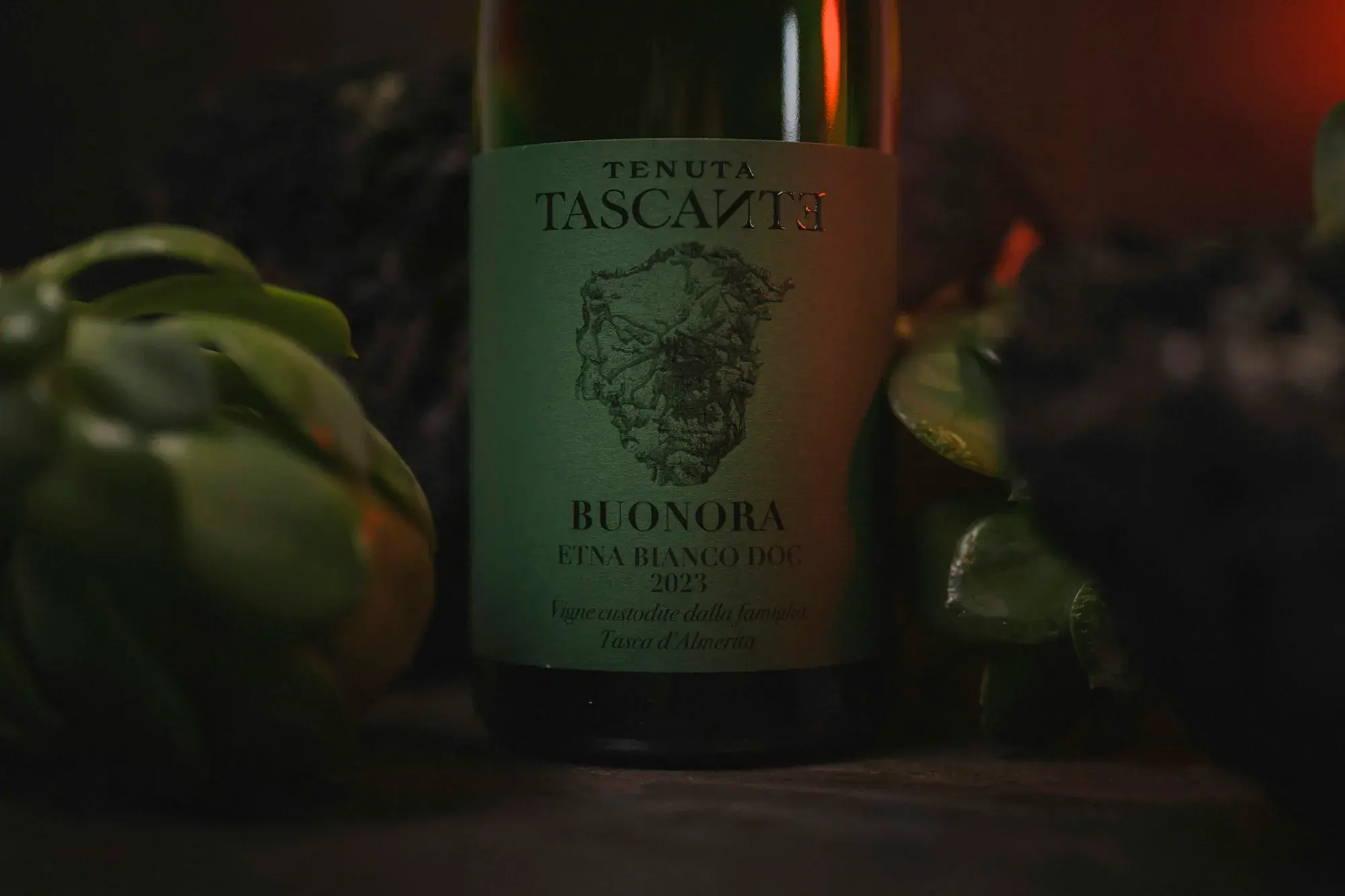
Sicily is one of Italy's largest wine regions, and its island geography gives it everything from coastal plains to high volcanic slopes. Key names include the island-wide Sicilia DOC and Terre Siciliane IGT; Nero d'Avola, the most widely grown red; Grillo and Catarratto among the whites; Cerasuolo di Vittoria, a blend of Nero d'Avola and Frappato and Sicily's only DOCG; and Etna, where Nerello Mascalese reds and Carricante whites grow on the volcano's slopes. Marsala is a fortified wine from the province of Trapani, and on Pantelleria the Zibibbo grape (Moscato d'Alessandria) makes sweet passito wines; the island's traditional head-trained bush vines (vite ad alberello) were inscribed by UNESCO as intangible cultural heritage in 2014. For food, see Sicilian food traditions and our Palermo guide.
Sardinia
Sardinia has its own set of grapes. Cannonau (Cannonau di Sardegna DOC) is genetically the same variety as Grenache; where it originated is debated. Vermentino makes crisp whites across the island, and Vermentino di Gallura in the north-east is Sardinia's only DOCG. Carignano del Sulcis comes from the south-west, and Vernaccia di Oristano is a distinctive wine aged in wood, where it develops oxidative flavours. Claims linking Cannonau to Sardinian longevity are popular but not established by evidence.
Valle d'Aosta
Italy's smallest region has a single DOC, Valle d'Aosta / Vallée d'Aoste, with sub-zones and local grapes such as Petit Rouge, Fumin and Prié Blanc. Some of Italy's highest vineyards grow here, on the steep slopes of the Alpine valley.
Sparkling wine
Italian sparkling wine isn't one thing. It differs in method, grape and tradition:
| Wine | Where | Main grapes | Method |
|---|---|---|---|
| Prosecco | Veneto and Friuli Venezia Giulia | Glera | Mostly tank (Martinotti/Charmat) |
| Franciacorta | Lombardy | Chardonnay, Pinot Nero | Bottle fermentation (metodo classico) |
| Trento DOC (Trentodoc) | Trentino | Chardonnay, Pinot Nero | Bottle fermentation |
| Alta Langa | Piedmont | Pinot Nero, Chardonnay | Bottle fermentation |
| Oltrepò Pavese Metodo Classico | Lombardy | Pinot Nero | Bottle fermentation |
| Asti / Moscato d'Asti | Piedmont | Moscato bianco | Tank; sweet and aromatic |
| Lambrusco | Emilia-Romagna, Lombardy | Lambrusco varieties | Mostly tank; also bottle-refermented |
Sweet, passito and fortified wines
- Sweet — wine with residual sugar, whatever the method.
- Passito — made from grapes dried after harvest (or on the vine) to concentrate sugar: Vin Santo in Tuscany, Recioto in the Veneto, Passito di Pantelleria in Sicily, Sciacchetrà in the Cinque Terre.
- Sweet sparkling — Moscato d'Asti and Asti in Piedmont.
- Fortified — wine with added alcohol, above all Marsala in Sicily.
- Sweet whites — Picolit and Ramandolo in Friuli, Greco di Bianco in Calabria, Cannellino di Frascati in Lazio.
Many of these are traditional with desserts and biscuits — Vin Santo with cantucci is a Tuscan classic. See traditional Italian desserts.
Italy's local grape varieties
An indigenous or native variety (vitigno autoctono) is one historically grown in a particular area, as opposed to international varieties such as Chardonnay or Merlot. "Indigenous" doesn't mean ancient or unchanged, and the origins of many grapes are uncertain or disputed; DNA studies have overturned several traditional stories.
| Grape | Colour | Mainly associated with |
|---|---|---|
| Nebbiolo | Red | Piedmont, Valtellina |
| Sangiovese | Red | Tuscany, Romagna, Umbria, Marche |
| Barbera | Red | Piedmont |
| Montepulciano | Red | Abruzzo, Marche |
| Aglianico | Red | Campania, Basilicata |
| Nerello Mascalese | Red | Etna |
| Nero d'Avola | Red | Sicily |
| Negroamaro | Red | Puglia |
| Cannonau | Red | Sardinia |
| Fiano | White | Campania |
| Greco | White | Campania, Calabria |
| Verdicchio | White | Marche |
| Vermentino | White | Sardinia, Liguria, coastal Tuscany |
| Ribolla Gialla | White | Friuli Venezia Giulia |
| Garganega | White | Veneto (Soave) |
Wine and Italian food
Italians rarely think of pairing as a science; wine is part of the meal, and the local wine usually goes with the local food. A few broad principles help:
Seafood
Crisp, unoaked whites from coastal areas — Vermentino, Verdicchio, Falanghina, Etna Bianco — are common with fish, though light reds and rosés also appear.
Pasta
Follow the sauce: tomato and acidity suit fresher reds such as Barbera or Chianti; butter and cheese suit richer whites or Lambrusco; seafood pasta suits whites.
Cheese and cured meats
Regional pairings are the easiest guide: Lambrusco with Emilia's cured meats and Parmigiano Reggiano, Sagrantino with aged pecorino, sweet wines with blue cheese.
Red meat and game
Fuller reds — Barolo, Brunello, Taurasi, Aglianico del Vulture, Amarone — are traditional with braised and roasted meats.
Desserts
Sweet wine with a sweet dish: Vin Santo, Moscato d'Asti, Passito di Pantelleria or Recioto. More in Italian food traditions.
Visiting wine regions
Wine tourism is well established in Italy, and since 2019 a ministerial decree has set basic standards for wine-tourism activities. Ways visitors encounter wine:
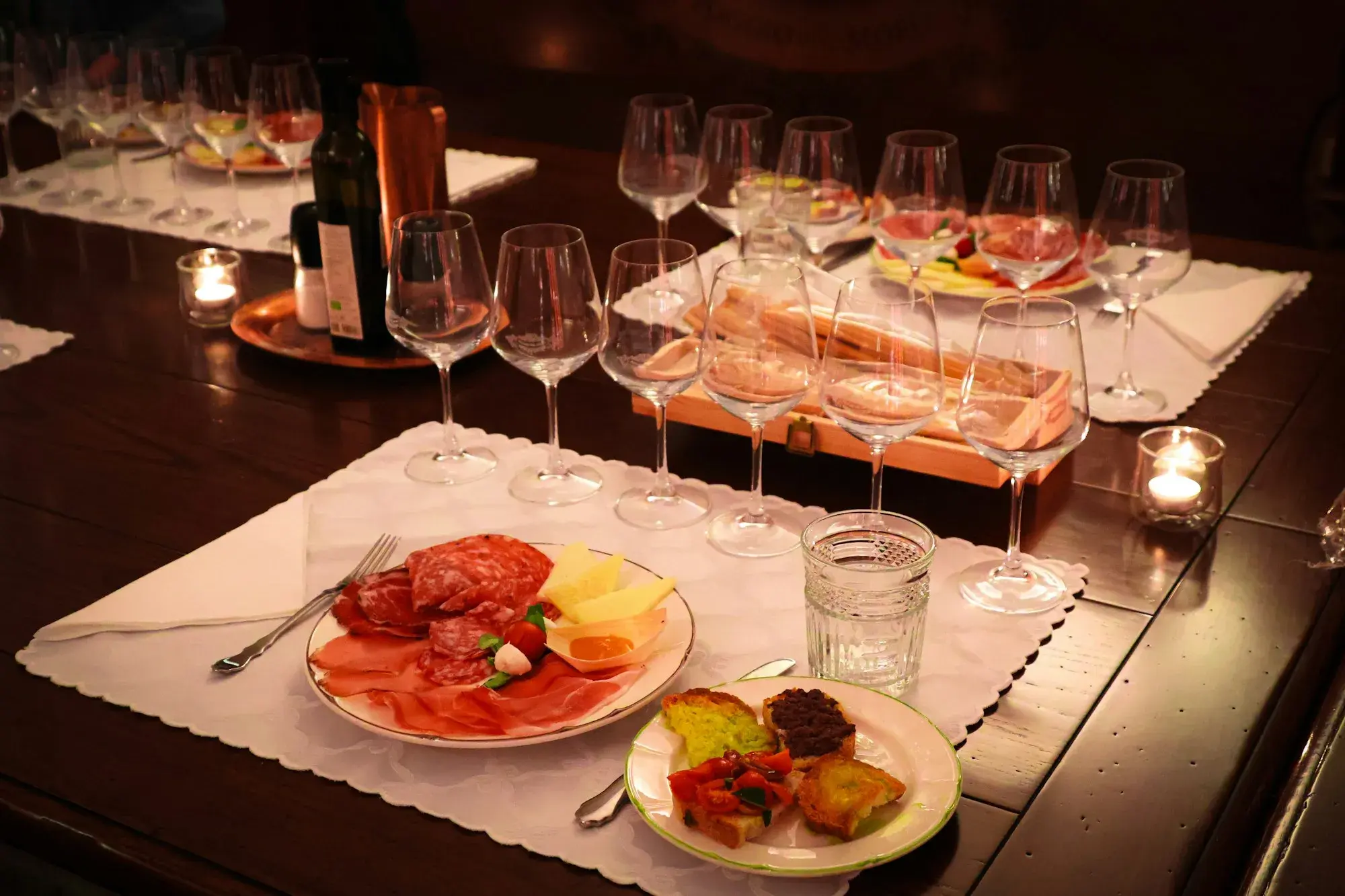
- Wineries (cantine) — many offer tastings and cellar visits, usually by appointment.
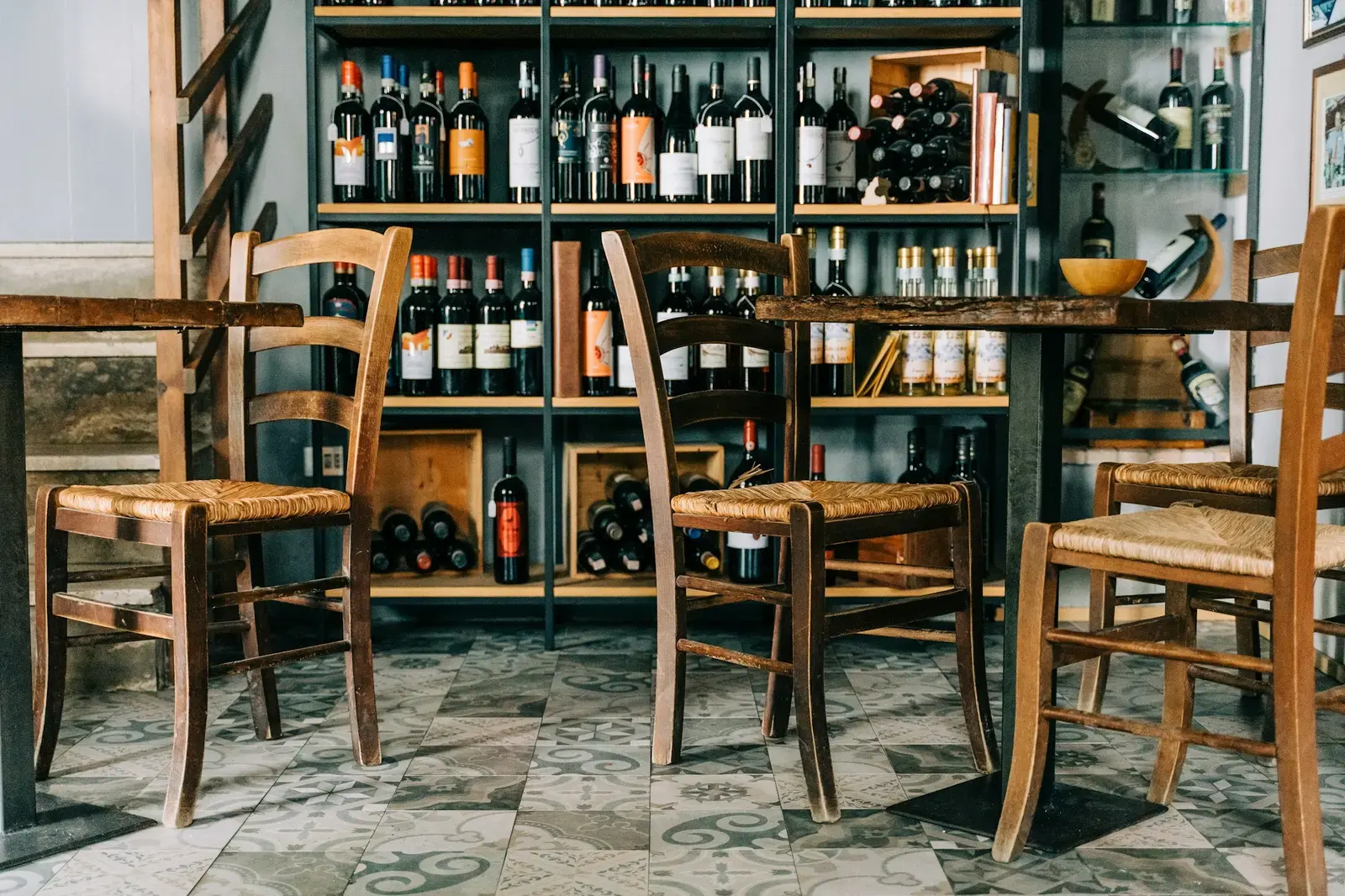
- Enoteche — wine shops and wine bars, often with tastings by the glass.
- Wine roads (strade del vino) — signposted routes linking wineries, restaurants and villages.
- Agriturismi — farm stays, many producing their own wine.
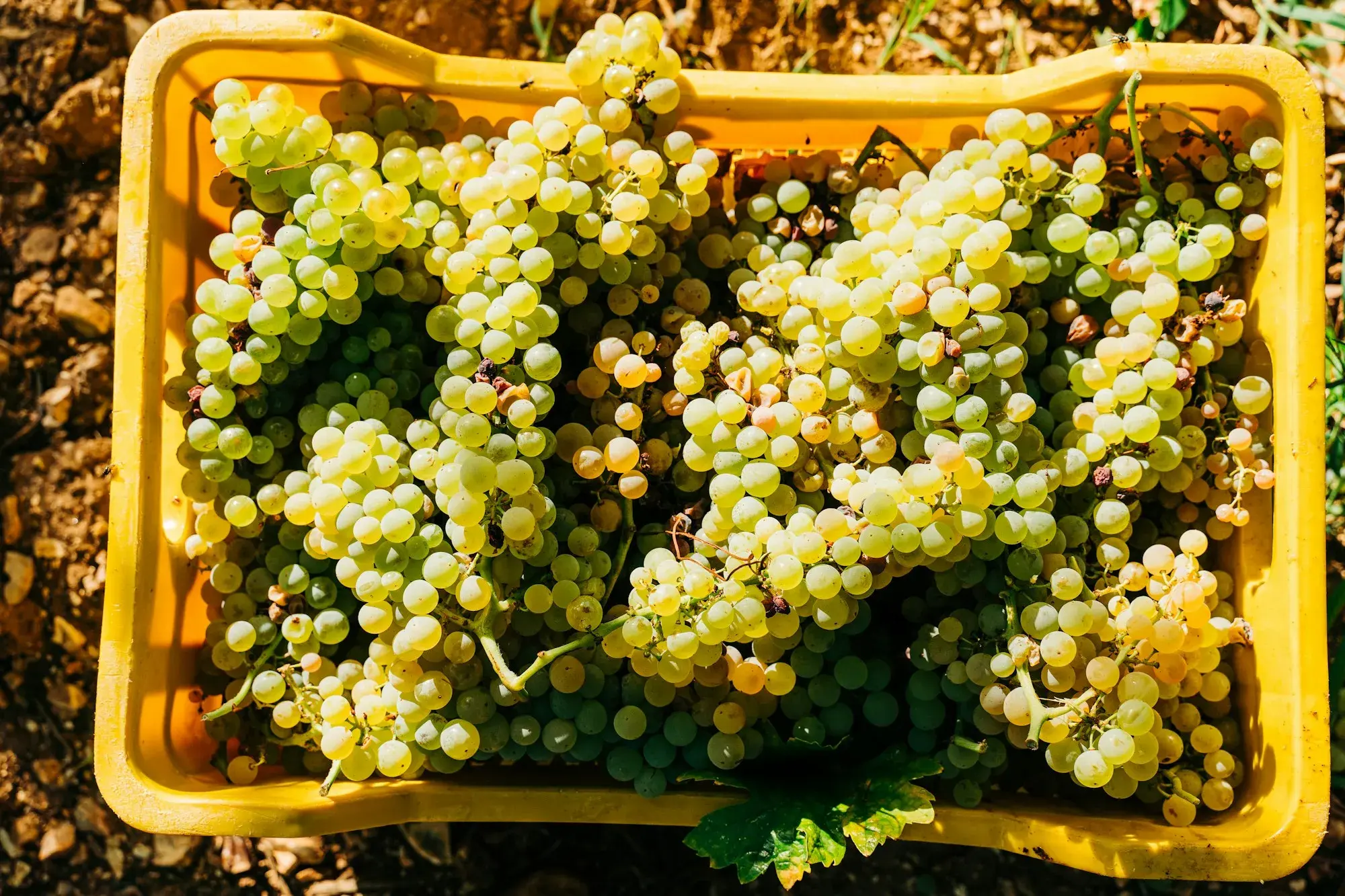
- Harvest season — roughly August to October, depending on region and grape; some wineries welcome visitors, others are too busy.
- Organised tours — the simplest way to taste without driving.
How wine tasting works
You don't need any training to enjoy a tasting. A host will usually guide you through a few simple steps:
- Appearance — colour and depth: pale or deep, young or older.
- Aroma — swirl and smell: fruit, flowers, herbs, spice, wood.
- Taste — sweetness, and acidity, the freshness that makes your mouth water.
- Tannin — the drying grip in red wines, from grape skins and wood.
- Body — how light or full the wine feels.
- Finish — how long the flavour lasts after you swallow.
Spitting is normal at tastings, especially if you're tasting several wines.
Reading an Italian wine label
- Producer or bottler — the name and location of whoever made or bottled the wine.
- Denomination — the protected name (e.g. Chianti Classico) and its category (DOCG, DOC, IGT, or DOP/IGP).
- Vintage (annata) — the harvest year, when stated.
- Grape variety (vitigno) — sometimes stated, sometimes implied by the denomination.
- Alcohol — in % vol.
- Volume — e.g. 750 ml.
- Origin — the country, and any further geographical detail.
- Lot number — for traceability; DOCG wines also carry a numbered state band on the neck.
- Ingredients and nutrition — for wines produced since 8 December 2023, EU rules require this information; much of it may be given via a QR code, with the energy value on the label.
- Other terms — riserva, superiore, classico or vigna, each regulated (see below).
How to order wine
| Italian | Meaning |
|---|---|
| "Un calice di…" | A glass of… |
| "Una bottiglia di…" | A bottle of… |
| "Quali vini avete al calice?" | Which wines do you have by the glass? |
| "È fermo o frizzante?" | Is it still or sparkling? |
| "È secco o dolce?" | Is it dry or sweet? |
| "Da quale regione viene?" | Which region is it from? |
| Vino della casa | House wine, often local and sold by the carafe |
| Carta dei vini | Wine list |
| Enoteca / mescita | Wine shop or bar / a place pouring wine by the glass |
Responsible drinking
Alcohol carries health risks; the World Health Organization notes that no level of drinking is safe for health. You don't need to drink to experience Italian food culture — many Italians drink little or not at all, and water, soft drinks and non-alcoholic aperitifs are always available. Never drive after drinking; use taxis, public transport or organised tours when visiting wine areas.
Common misconceptions
- "DOCG means better." It means stricter rules and checks, not a guaranteed better bottle.
- "Montepulciano d'Abruzzo and Vino Nobile di Montepulciano are the same." One is a grape in Abruzzo, the other a town in Tuscany.
- "Prosecco is all the same." It varies by zone (DOC or DOCG), sweetness level and method.
- "Chianti and Chianti Classico are the same." They are separate DOCGs with separate areas.
- "Italian wine is mostly red." Italy makes a great deal of white, rosé, sparkling and sweet wine.
- "There's an Italian style." There are many regional styles.
- "Indigenous means ancient." Many local grapes have uncertain or disputed histories.
Italian wine words
| Term | Meaning |
|---|---|
| DOCG / DOC | Italian terms for protected designations of origin (EU: PDO) |
| IGT | Italian term for a protected geographical indication (EU: PGI) |
| Denominazione | Protected wine name |
| Disciplinare | Production rules for a denomination |
| Vitigno | Grape variety |
| Vendemmia | Harvest |
| Cantina | Winery or cellar |
| Annata | Vintage |
| Classico | Wine from the oldest, historic zone of a denomination |
| Riserva | Aged longer: under Law 238/2016, at least two years for reds and one for whites, unless older rules differ |
| Superiore | Stricter rules: lower yields and at least 0.5% higher alcohol |
| Gran Selezione | A top tier reserved for DOCG wines meeting extra conditions |
| Passito | Wine from dried grapes |
| Spumante / frizzante | Fully sparkling / lightly sparkling |
| Secco / amabile / dolce | Dry / off-dry / sweet |
| Tannino / acidità | Tannin / acidity |
| Calice | Glass (of wine) |
For planning your trip, see the complete Italy travel guide.
Frequently asked questions
Editorial note
Information such as transport schedules, prices, opening hours and entry requirements can change. Check the relevant official source before making a booking or travelling. Read our editorial policy or report a correction.
Sources
- Normattiva — Law 12 December 2016, no. 238 (Testo Unico del Vino) (opens in a new tab) — classifications and label terms (in Italian)
- eAmbrosia — EU geographical indications register (opens in a new tab) — Italian wine PDOs and PGIs
- Ministry of Agriculture — National register of vine varieties: DOCG, DOC, IGT (opens in a new tab) — in Italian
- Ministry of Agriculture — Wine DOP and IGP lists and production rules (opens in a new tab) — in Italian
- UNESCO — Vineyard Landscape of Piedmont: Langhe-Roero and Monferrato (opens in a new tab) — 2014
- UNESCO — Le Colline del Prosecco di Conegliano e Valdobbiadene (opens in a new tab) — 2019
- UNESCO — Traditional agricultural practice of cultivating the 'vite ad alberello' of Pantelleria (opens in a new tab) — 2014
- European Commission — Wine labelling (opens in a new tab) — ingredients and nutrition information
- WHO Europe — No level of alcohol consumption is safe for our health (opens in a new tab) — 2023
- ACI — Highway Code, art. 186 (alcohol) (opens in a new tab) — drink-driving limits
About the author
Editorial Team
Editorial Team
Researches, writes and updates stories and guides about Italy.
More from Editorial TeamWas this article useful?
Keep reading
Food & Drink
Italian Food Traditions: A Regional Guide to Eating in Italy
Why Italian food changes from region to region and town to town — and how to read menus, markets, seasons and festivals as a visitor.
Updated 18 min read
Food & Drink
Sicilian Food Traditions: What to Eat and Why It Matters
What to eat in Sicily and why it tastes the way it does — from Palermo's street food to Catania's fish market, Trapani's couscous and a granita breakfast.
Updated 18 min read
Food & Drink
Traditional Italian Desserts: Regional Sweets and the Stories Behind Them
Why Italian sweets change from region to region — from Sicily's cannoli and Naples's sfogliatella to Siena's panforte, Turin's gianduiotti and Carnival fritters.
Updated 19 min read
Cities
Turin for First-Time Visitors: What to See, Eat and Know Before You Go
How long to stay, which museums to book, what to eat and drink and how to add Piedmont — a practical first-time guide to Turin.
Updated 19 min read
Cities
Verona for First-Time Visitors: What to See, Eat and Know Before You Go
How long to stay, what to see beyond Juliet's balcony, what to eat and drink and how to add Lake Garda — a practical first-time guide to Verona.
Updated 19 min read
Transport
Ferries in Italy: A Practical Guide to Islands and Coastal Travel
Where ferries and boats are useful in Italy, how island crossings work, what happens at the port and how to plan around seasons and the weather.
Updated 17 min read
Explore more food & drink
More stories and guides from Life in Italia.