Italian Aperitivo: Drinks, Food and the Culture of Pre-Dinner Time
Why Italians meet for a drink before dinner, what they order and eat, how Milan, Turin, Venice and Rome do it differently, and how to join in.
Editorial Team
- Published
- Updated
- Reading time
- 17 min read
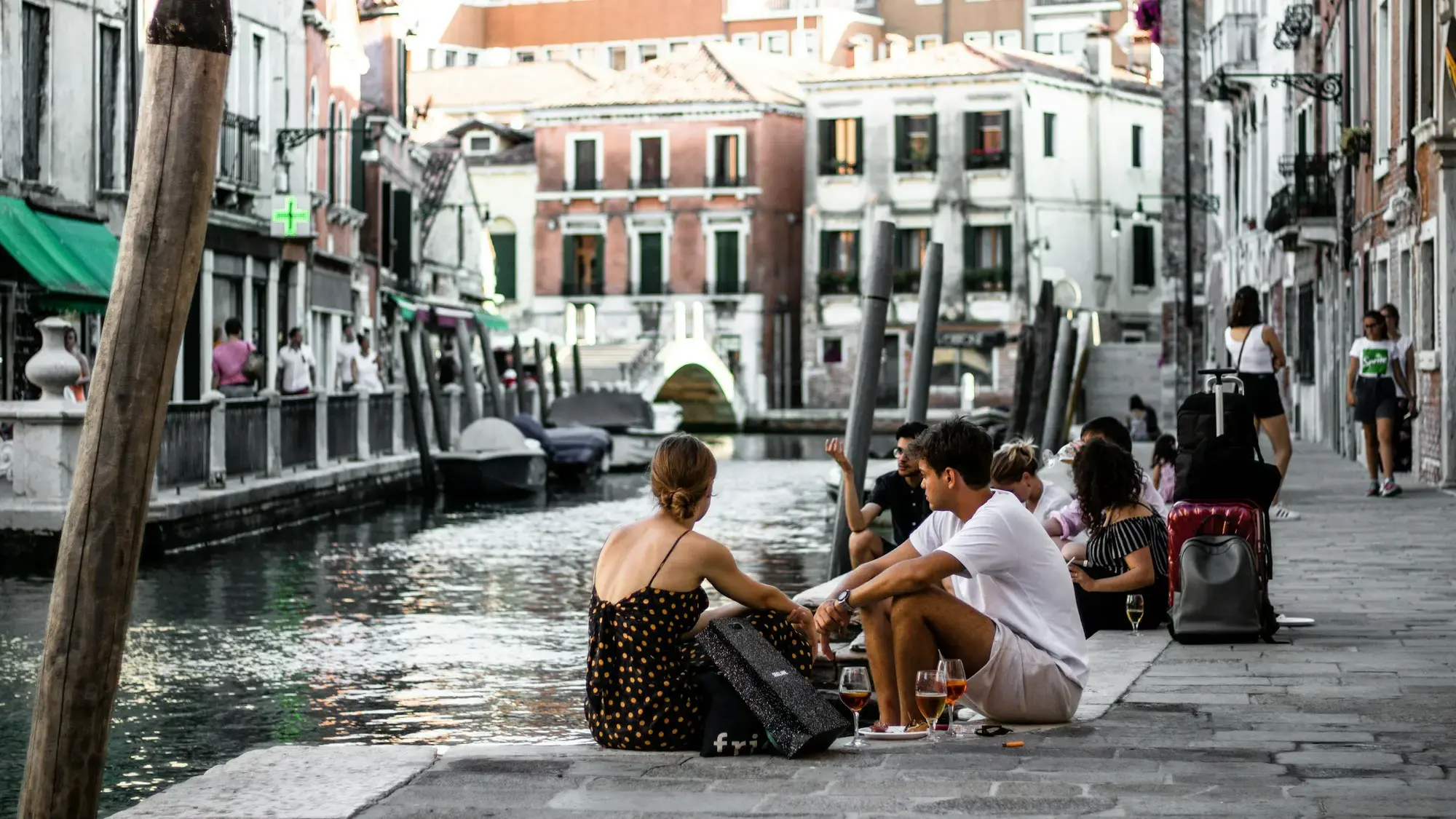
What is aperitivo in Italy?
Short answer
Aperitivo is the Italian custom of meeting for a drink and something small to eat in the early evening, before dinner. The word can mean the drink itself — a spritz, a vermouth, a glass of wine or a non-alcoholic bitter — or the whole occasion: the hour when bars fill up, friends meet after work and plates of olives, crisps or something more substantial arrive with the glasses.
The word comes from the Latin aperire, "to open": an aperitif was originally something taken to open the appetite before a meal, and the classic Italian aperitivo drinks — vermouth and bitter liqueurs — grew out of that idea. Today aperitivo is as much social as it is about appetite. It's a way to mark the end of the working day, meet people without committing to a whole dinner, and spend an hour in a square or a bar before going home or on to eat.
Not every Italian has aperitivo every evening, and it looks different from city to city: a vermouth at a historic café counter in Turin, a spritz and a few cicchetti in a Venetian bacaro, a crowded canal-side bar in Milan, a glass of local wine with taralli in the south. What follows explains the drinks, the food, the regional versions and how to take part.
Italian aperitivo at a glance
- When
- Early evening, before dinner — often roughly 6 to 8 pm, later in summer
- Classic drinks
- Spritz, vermouth, Campari-based drinks, the Americano and Negroni, wine and Prosecco
- Non-alcoholic
- Analcolici (non-alcoholic bitters), alcohol-free spritzes, juices, soft drinks
- Food
- From a bowl of crisps to a full buffet; varies widely by bar
- Apericena
- A heavier aperitivo that can replace dinner
- Venice
- Its own tradition of bacari, cicchetti and the ombra
Aperitivo vs happy hour
Bars in tourist areas sometimes advertise "happy hour", and the two can overlap. But they aren't the same idea.
| Aperitivo | Happy hour |
|---|---|
| An Italian food-and-drink custom with regional forms | A promotional pricing idea found in many countries |
| Happens before dinner | Can happen at any time the bar chooses |
| Usually includes something to eat with the drink | Centred on cheaper drinks; food varies |
| About meeting people and the time of day | About the price |
| Strongly tied to Italian cities and regions | Not specifically Italian |
In practice, many Italian bars price their aperitivo drinks a little higher than at other times of day because snacks or a buffet come with them. That's the opposite of a discount: you're paying for the drink and the food together.
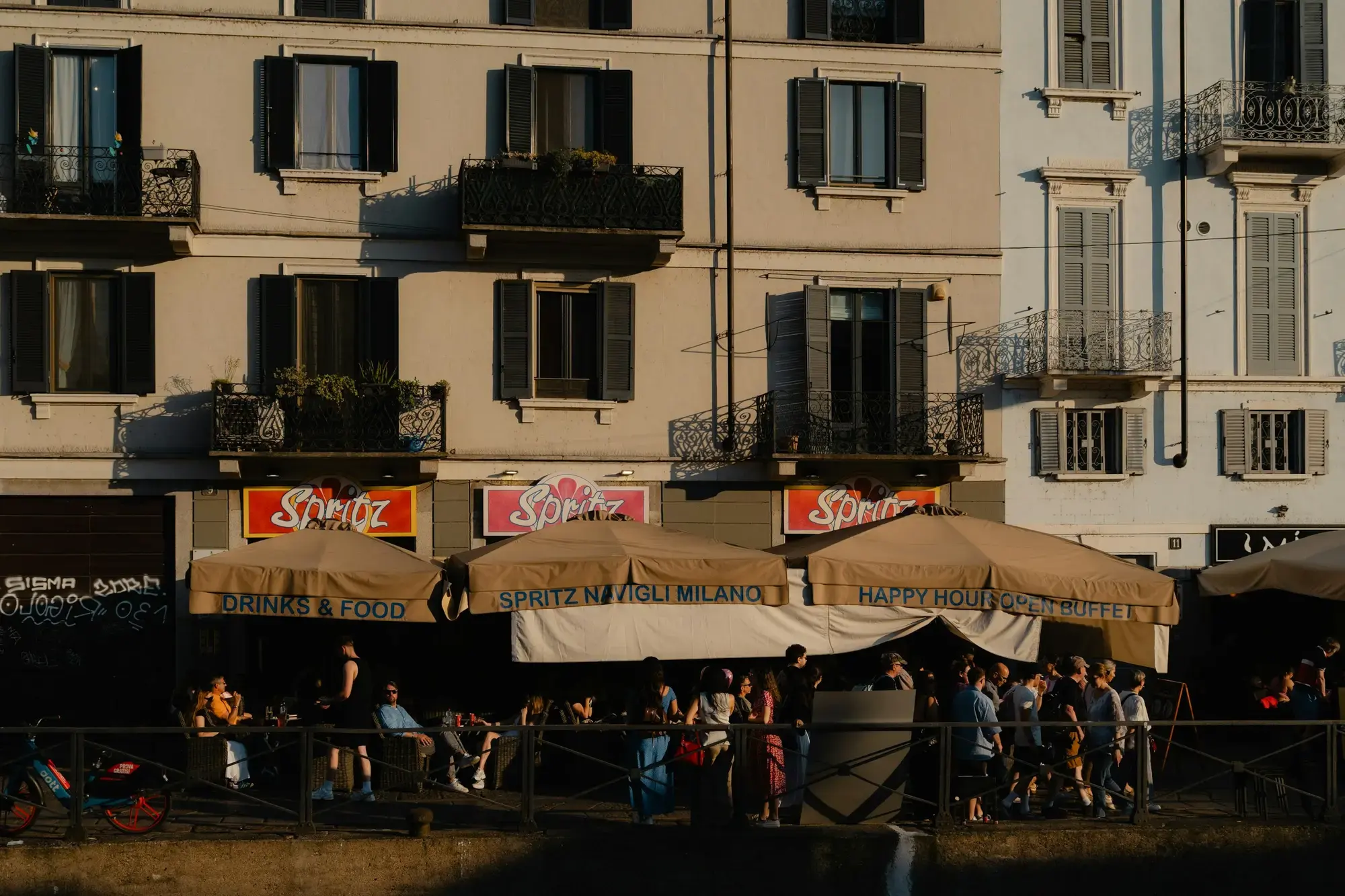
When Italians have aperitivo
There's no national timetable. Aperitivo generally happens in the early evening, between the end of the working day and dinner. In many northern cities that means roughly 6 to 8 pm; in summer, in the south and in holiday places, the whole evening shifts later, because dinner does too. Weekends are busier, and on warm evenings squares and canal-sides fill earlier.
Bars set their own hours, and some only put out food at certain times. If the food matters to you, it's worth arriving early in the aperitivo period rather than at the end, when plates may already have been cleared.
A short history of aperitivo
Nobody invented aperitivo. It grew out of an old European habit of taking something bitter or aromatic before a meal to stimulate the appetite — the original sense of the word — and out of the café culture of nineteenth-century Italian cities.
- Herbal wines and bitters. Wines and spirits flavoured with herbs, roots and barks were long taken for health and digestion. In the late eighteenth and nineteenth centuries, producers in Turin and Milan turned them into commercial products: vermouth in Turin, bitters and amari in Milan.
- The café era. In the nineteenth century, cafés in city centres — under Turin's arcades, in Milan's new Galleria — became the places where the urban middle class met before dinner, and the pre-dinner vermouth or bitter became a habit of city life.
- Cocktails. In the early twentieth century, bitter-based mixed drinks such as the Americano and the Negroni joined the straight vermouth and the bitter with soda.
- The postwar city. As Italy's cities grew and changed after the war, the evening drink with friends became a broader social custom, and in 1980s Milan Milano da bere turned it into an image of the city itself.
- Buffets and apericena. From the late 1990s, Milanese bars competed with ever larger buffets, giving rise to the apericena.
- The spritz everywhere. In the twenty-first century the orange spritz spread from the Veneto across Italy and abroad, and aperitivo became one of the best-known Italian habits in the world.
Many of the dates attached to individual drinks come from the companies that make them, and some popular origin stories are better documented than others. We've noted the difference below.
The drinks behind Italian aperitivo
Italian aperitivo drinks fall into a few families: aromatised wines such as vermouth, bitter liqueurs (bitter), the cocktails built from them, and wine. Some are historic, some modern favourites, and some strongly regional. Many are made by well-known Italian companies; their histories below are told as the companies tell them, which isn't always the same as independent evidence.
Vermouth and Turin
Vermouth is wine flavoured with herbs and spices — above all wormwood, Artemisia — sweetened and strengthened with added alcohol. Turin is its Italian home: the city's tradition credits the distiller Antonio Benedetto Carpano with launching commercial vermouth there in the late eighteenth century, and by the nineteenth century several Turin producers were making it. Vermouth di Torino has been a protected geographical indication in EU law since 1991, and in 2017 a ministerial decree set its production rules: an aromatised wine made in Piedmont, flavoured mainly with Artemisia.
A vermouth on its own, on ice with a slice of citrus, is one of the oldest Italian aperitivi, and it's the base of several classic cocktails. See Turin for first-time visitors for the city's cafés.
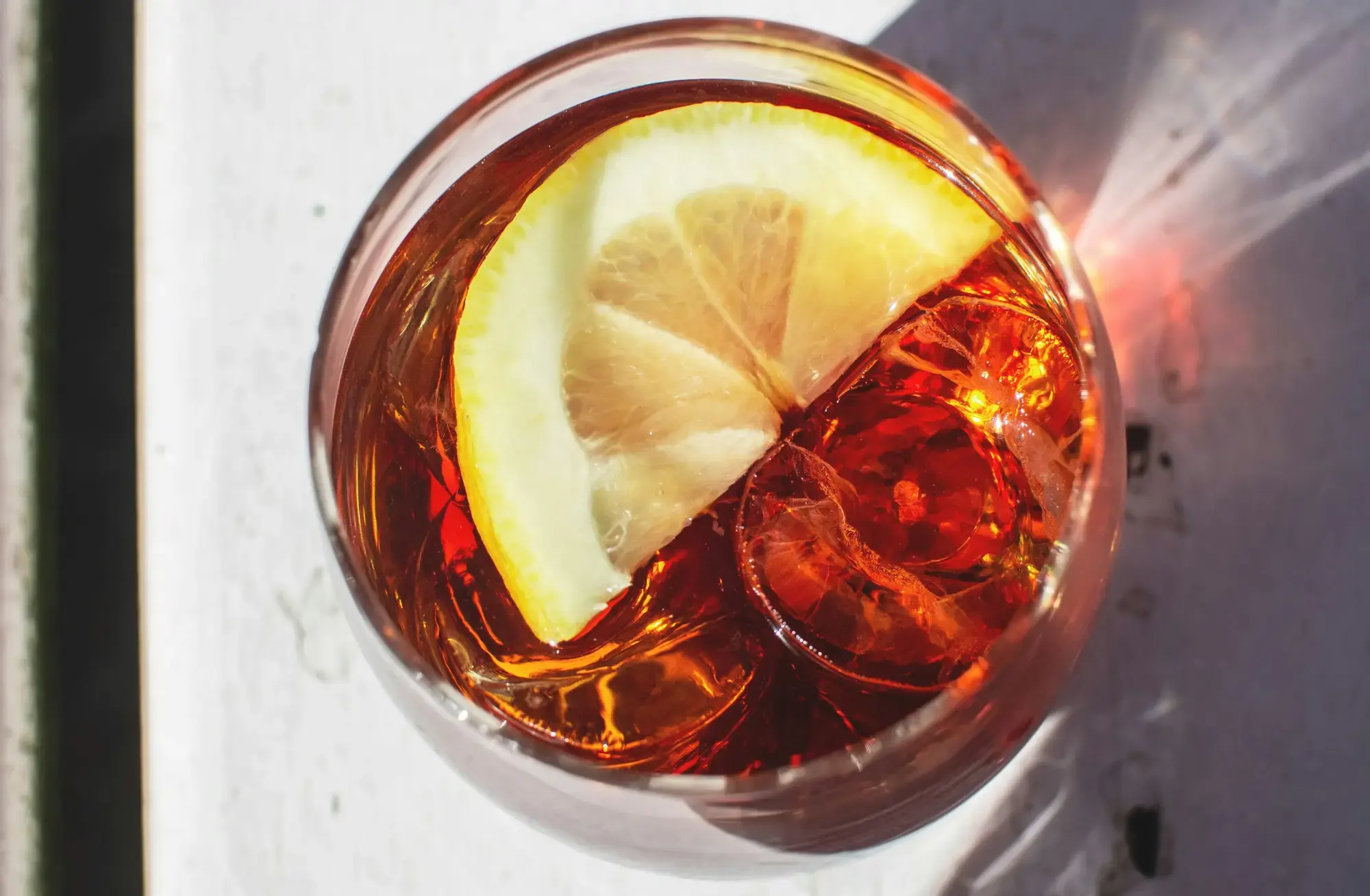
Campari and Milan's bitters
Milan's contribution is the bitter. Campari dates its red bitter to 1860, when Gaspare Campari was working in Novara; in 1867 he opened the Caffè Campari in Milan's newly built Galleria Vittorio Emanuele II, and in 1915 his son Davide opened a second bar next door, the Camparino, with soda water piped from the cellars for Campari and soda. Milan has other historic bitter and amaro makers too — Milan's tourist board traces Ramazzotti to 1815 — and the city's own advertising slogan Milano da bere ("Milan to drink"), coined for an amaro in the 1980s, came to stand for the whole era.
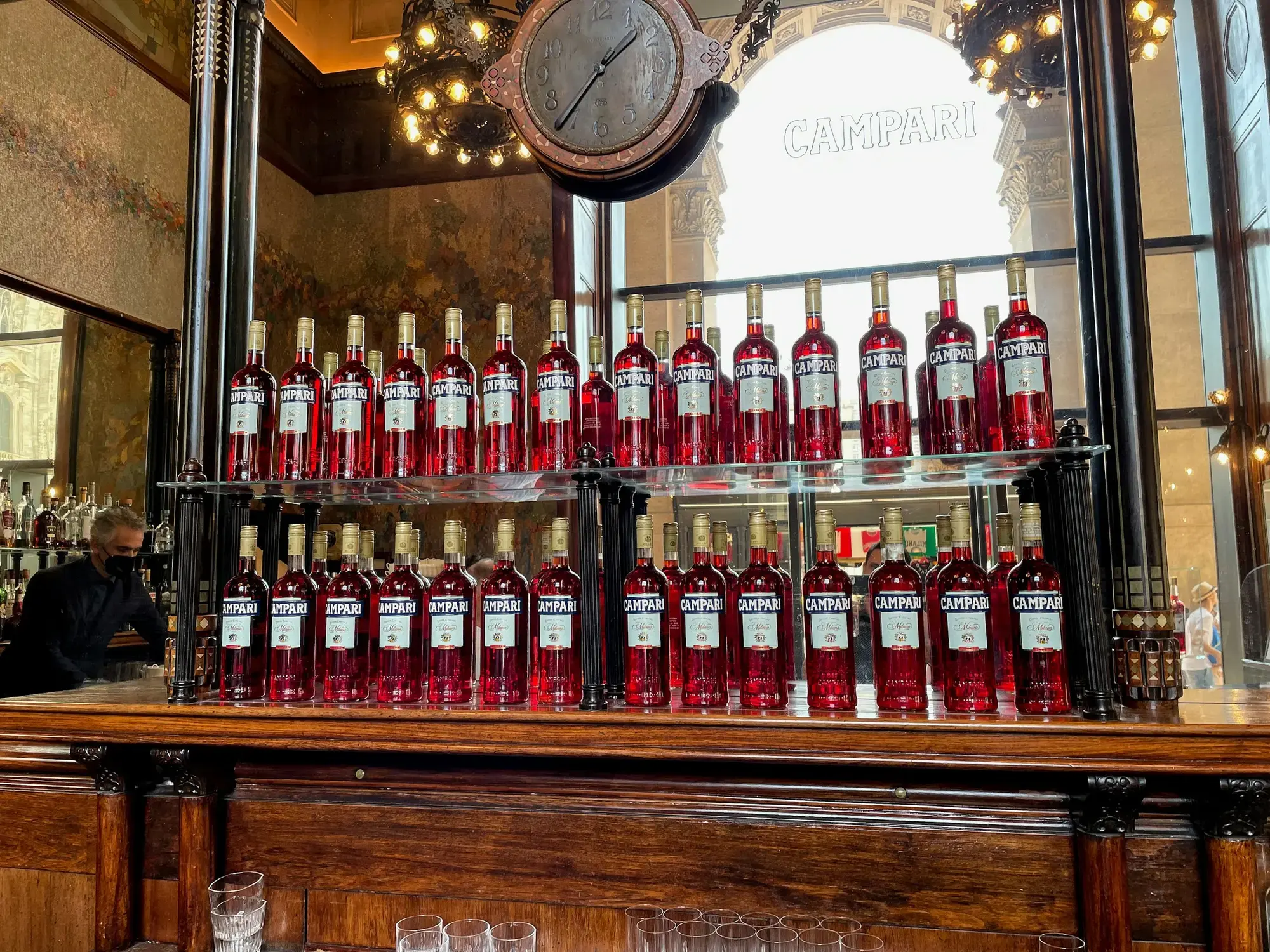
The spritz
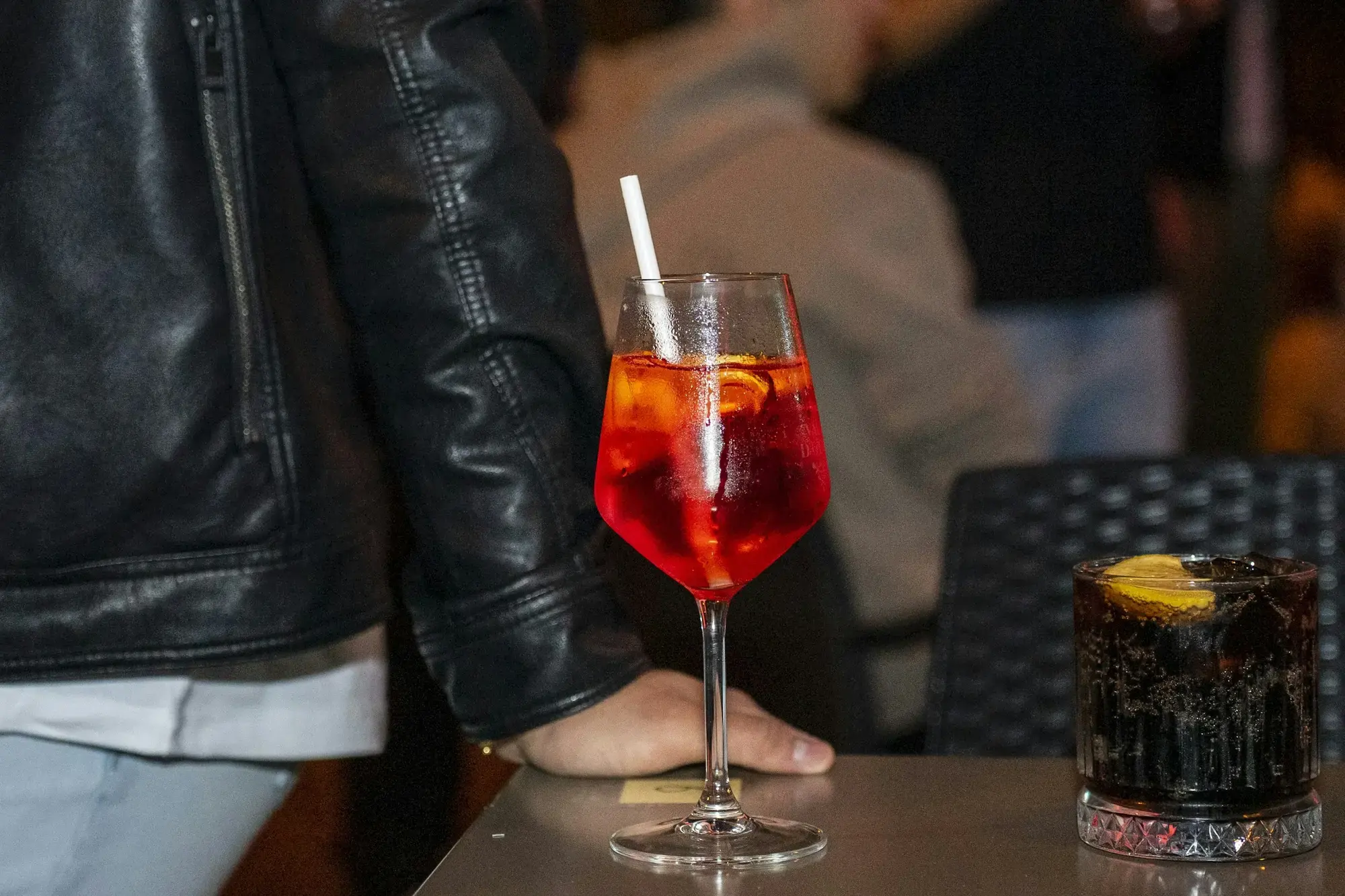
The spritz is the most familiar aperitivo drink today: sparkling wine, a bitter and a splash of soda, served over ice. Its roots are in the north-east. A commonly told story links the name to the nineteenth century, when the Veneto was under Habsburg rule and Austrian soldiers supposedly diluted local wine with a "spritz" of water; it's a plausible explanation of the word, but not a documented origin.
Aperol, a lighter, sweeter bitter, was launched by the Barbieri brothers at the Padua trade fair in 1919, according to the brand. The brand's own recipe for an Aperol Spritz is three parts Prosecco, two parts Aperol and one part soda; bartenders adjust it, and in Venice and the Veneto you'll also be offered spritzes made with Campari or other local bitters. Asking for uno spritz in the Veneto may get you the house version, so say which bitter you want if it matters to you.
Americano and Negroni
The Americano — Campari, sweet vermouth and soda — is often explained as a descendant of a simpler mix called the Milano-Torino, named for Campari's Milan and vermouth's Turin; how it came to be called "Americano" is told in several ways, and even Campari's own history dates it inconsistently.
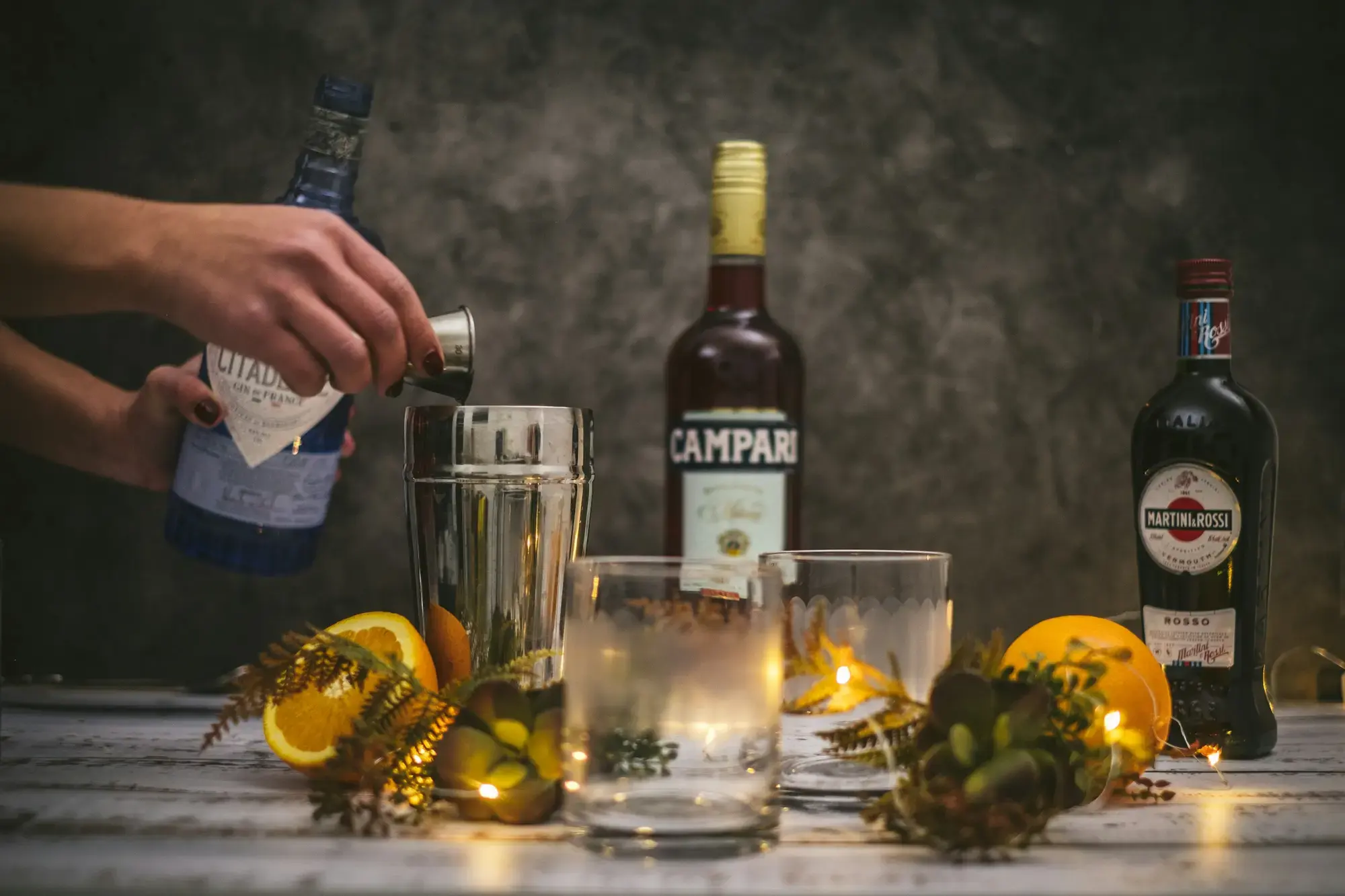
The Negroni — equal parts gin, Campari and sweet vermouth — has the most famous origin story: in Florence, around 1919 or 1920, Count Camillo Negroni is said to have asked for his Americano to be strengthened with gin instead of soda. It's the story Florence and Campari tell, but drinks historians have pointed out that the early documentation is thin, so treat it as tradition rather than settled fact.
Milan has its own variation: the Negroni sbagliato ("mistaken Negroni"), made with sparkling wine instead of gin, which Milan's Bar Basso says was born there by accident — in 1967, 1969 or 1972, depending on who tells the story.
Wine, Prosecco and beer
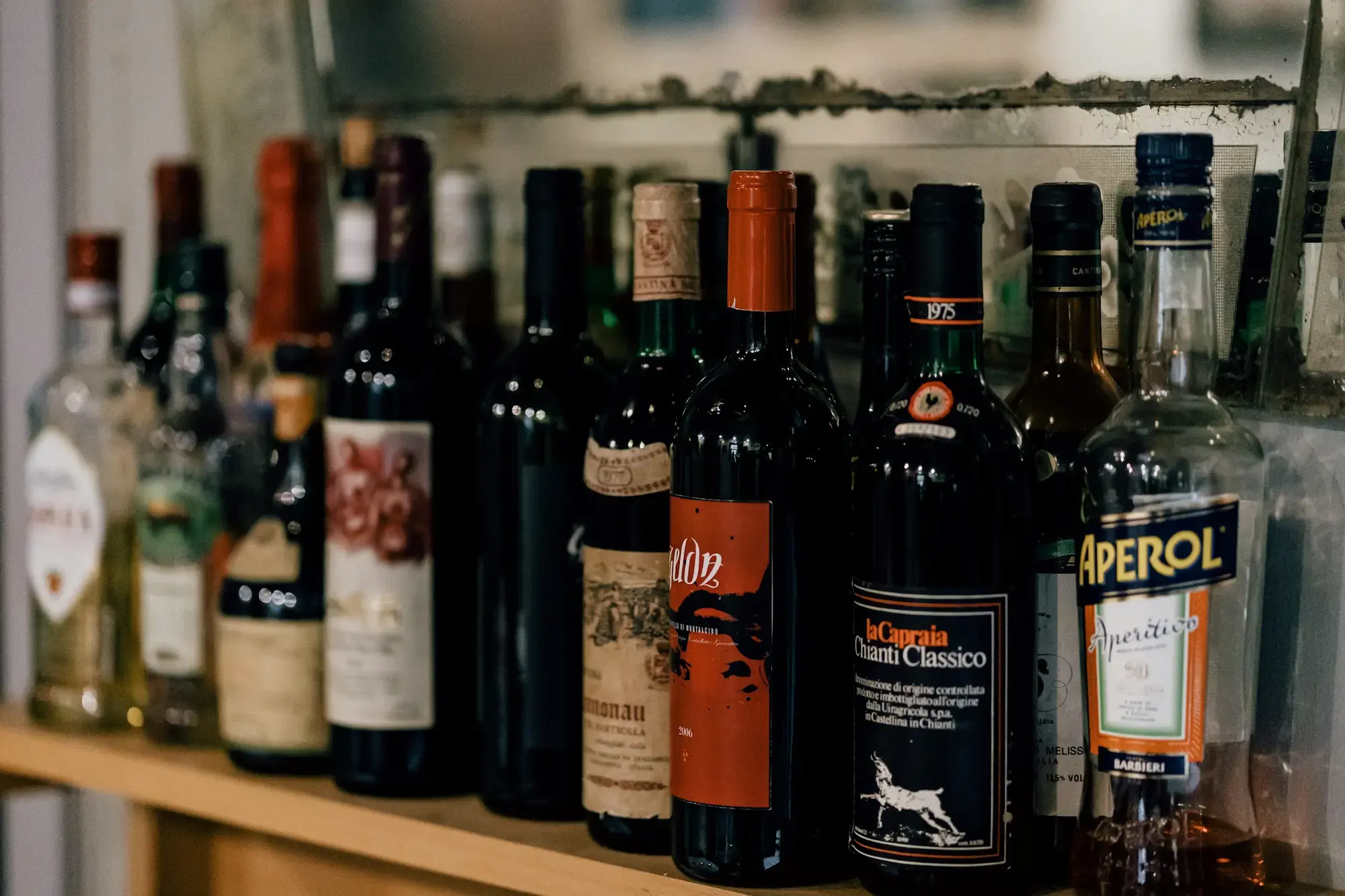
Plenty of Italians simply have a glass of wine. In the Veneto that may be Prosecco (a protected designation of origin) or a still white; in Lombardy, Franciacorta sparkling wine; elsewhere, whatever is local. Beer is common too, especially with heavier food. To order, ask for un calice (a glass) of bianco, rosso or bollicine (sparkling); many bars have a house wine and a short list by the glass, and it's fine to ask what's local. For the wine regions, see regional wines of Italy.
Non-alcoholic aperitivo
Aperitivo is a social ritual, not a drinking requirement. Ask for an analcolico and you'll usually be offered a non-alcoholic bitter in a small bottle — Italy has had them for decades; Crodino, for example, was launched in Piedmont in 1965 — or a fruit juice, a soft drink or sparkling water. Many bars now make alcohol-free spritzes and other zero-alcohol versions of classic drinks. What's on offer varies from bar to bar, so just ask: Cosa avete di analcolico?
What food is served with aperitivo?
The food is part of the point, but how much you get varies enormously — from a small bowl of crisps to a buffet that could be dinner. You might see:
- Simple snacks — olives, crisps, salted nuts, small crackers or taralli.
- Bread-based bites — pieces of focaccia or pizza, small sandwiches (tramezzini), crostini.
- Cured meats and cheese — especially in central and northern Italy, often on a shared board.
- Regional snacks — fried bites, small portions of pasta or rice salad, vegetables in oil.
- A buffet — in some bars, a self-service spread of hot and cold dishes included with the drink.
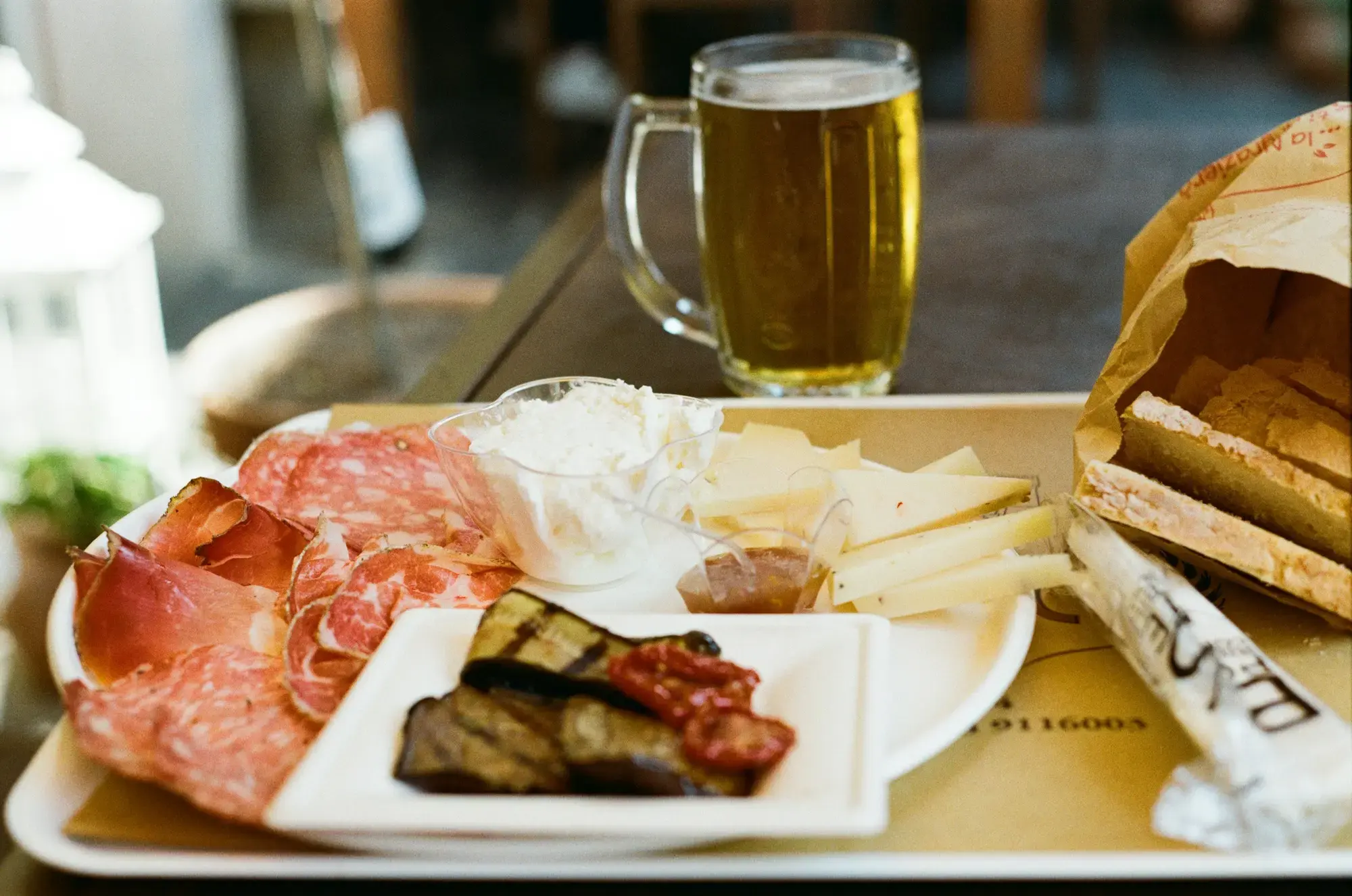
Some bars bring food to every table automatically; others put out a buffet; some charge for a board of cured meats separately. If you're not sure, ask whether food comes with the drink (Il cibo è incluso?) before you order.
Apericena: when aperitivo becomes dinner
Apericena blends aperitivo and cena, dinner. The Treccani dictionary records it as a newer word for an aperitivo served with a large spread of savoury and sweet dishes, eaten instead of dinner. It's usually traced to Milan around the turn of the millennium, when bars began competing with ever more generous buffets for the price of a drink.
An apericena can be good value and fun, and it's a popular choice for students and young people. But it isn't the same as traditional aperitivo, nor a substitute for a regional dinner. If you want to taste a city's cooking, use aperitivo as the prelude, not the meal.
| Experience | What it means | Typical setting | Food |
|---|---|---|---|
| Aperitivo | A pre-dinner drink and the social occasion around it | Bars, cafés, wine bars, some restaurants | From small snacks to more substantial plates |
| Apericena | A heavier aperitivo that replaces dinner | Bars and restaurants, often with a buffet | A full spread of savoury (and sometimes sweet) dishes |
| Cicchetti | Venice's small bar snacks | Bacari, Venice's wine bars | Small individual bites, usually paid for one by one |
Aperitivo across Italy
Milan
Milan is where aperitivo became a large-scale urban ritual. In the evening, bars in Brera, along the Navigli canals, in Porta Venezia and Isola fill with people after work, and many offer generous food with drinks. This is the city of Campari, the Camparino and the Negroni sbagliato, and of the buffet aperitivo that gave rise to apericena. See Milan beyond the Duomo.
Turin
Turin has the strongest historical claim to the aperitivo through vermouth, and its historic cafés under the arcades are part of the experience. A vermouth or an Americano at a café counter is the classic; many bars also serve larger spreads. See Turin for first-time visitors.
Venice: bacari and cicchetti
Venice does things its own way. A bacaro is a small, traditional wine bar; cicchetti are the bar snacks it serves — crostini topped with baccalà mantecato (whipped salt cod), meatballs, sardines in saor (sweet-and-sour onions), fried seafood, slices of salami. They're bought individually and usually eaten standing at the counter or outside, with an ombra, a small glass of wine — the word is popularly said to come from the shade (ombra) of St Mark's bell tower, where wine sellers once kept their wine cool.
A giro di ombre means drifting from one bacaro to the next, a glass and a bite at each. Cicchetti are often compared to tapas, and the comparison is only rough: they're Venetian in ingredients and habits, and a bacaro is a local wine bar rather than a restaurant. It overlaps with aperitivo — a spritz and a cicchetto before dinner is very Venetian — but cicchetti are eaten at other times of day too. See Venice for first-timers.
Rome
Rome has no single aperitivo format. You'll find wine bars with boards of cheese and cured meats, cocktail bars, neighbourhood bars with a few snacks, and squares in districts such as Trastevere and Monti that fill in the early evening. Dinner in Rome tends to be later than in the north, so aperitivo often stretches later too. See Rome in three days and, for what comes after, Roman pasta.
Bologna and other cities
In Bologna, aperitivo often means a glass of wine with mortadella, cheese and other cured meats in the osterie and bars around the Quadrilatero, Via del Pratello or the university quarter; see Bologna in two days. In Florence, the Negroni's home city, wine bars and squares such as Santo Spirito are popular in the evening; see Florence for first-timers. Smaller towns have their own rhythms, often centred on the main square.
Southern Italy
Aperitivo is part of life in the south too, though it's less formalised than in the north and often later in the evening. Drinks lean towards local wine, beer and spritzes, and food towards regional snacks: taralli in Campania and Puglia, fried street food in Naples or Palermo, local cheeses and vegetables. As everywhere, the best guide is what people around you are doing.
Aperitivo as part of food culture
It's easy to see aperitivo as just drinking, but its place in Italian life is broader. It's a bridge between work and evening: an hour to sit down, talk and eat a little before going home or out to dinner. Because the food comes in small portions and the drinks are usually light, it suits meeting friends, colleagues or a first date without the commitment of a meal.
It also shows regional food culture in miniature: Piedmontese vermouth, Venetian cicchetti, Bolognese mortadella, southern taralli. And it's a natural companion to the other daily rituals of the bar — the morning coffee at the same counter (Italian coffee) — and to the evening passeggiata, which may end with a gelato (Italian gelato).
How to order aperitivo
Every bar has its own system, but these are common patterns.
- Counter or table. At the counter you order and often pay straight away; at a table you're usually served and pay at the end. Table service can cost more.
- Sitting down. In most bars you can sit at any free table, but in busy or smarter places it's polite to ask first.
- Ask what's included. Food may arrive automatically, be on a buffet, or cost extra. Ask before you order.
- Choose your drink. A spritz, a vermouth, a glass of wine, an analcolico — or ask what the house recommends.
- The buffet. If there is one, you'll usually be given a plate with your drink; one or two trips is normal.
- Paying. Ask for the bill (il conto) when you're ready; many bars accept cards, but small amounts are often paid in cash.
| Italian | English |
|---|---|
| Vorrei uno spritz, per favore. | I'd like a spritz, please. |
| Un Negroni, per favore. | A Negroni, please. |
| Uno spritz con il Campari / con l'Aperol. | A spritz with Campari / with Aperol. |
| Posso avere un analcolico? | Could I have a non-alcoholic aperitivo? |
| Il cibo è incluso? | Is the food included? |
| Cosa è incluso nell'aperitivo? | What's included with the aperitivo? |
| Possiamo sederci qui? | Can we sit here? |
| Il conto, per favore. | The bill, please. |
Choosing where to go
There's no need for a ranking: the right place depends on what you want from the evening.
Classic
A historic café or bar
Counter service, vermouth and bitters, a few snacks. Best for a short, traditional aperitivo, especially in Turin and Milan.
Wine
A wine bar (enoteca) or osteria
A glass of local wine with cheese and cured meats. Good in Bologna, Florence, Rome and wine regions.
Venice
A bacaro
Standing at the counter with an ombra and a few cicchetti, then moving on to the next.
Big evening
A bar with a buffet
A drink with enough food to make an apericena. Common in Milan and university cities.
Drinks
A cocktail bar
Carefully made Negronis, spritzes and new creations; food is usually secondary.
Local
A neighbourhood bar
The same bar that serves breakfast coffee, with a few snacks in the evening and a local crowd.
A few practical signs help. A menu with prices shown before you sit down avoids surprises. Tables on the most famous squares and waterfronts cost more for the view; a few streets away, prices and crowds are often lower. A bar full of people from the neighbourhood is a good sign, though a busy tourist bar isn't automatically a bad one. And if the food matters to you, look at what's on other people's tables before you order.
Aperitivo etiquette for travellers
- Don't assume food is unlimited. Snacks with your drink are a courtesy; a buffet usually means a plate or two, not dinner for the evening.
- Ask what's included rather than helping yourself.
- Take modest portions from shared plates and buffets, and use the serving utensils.
- Don't occupy a table for hours with one drink when the bar is full.
- Tipping isn't expected. Leaving small change or rounding up for good service is appreciated but optional.
- Follow the bar's system for ordering and paying.
- Photograph considerately — other people are there to relax.
- Drink at your own pace. Aperitivo is about conversation; drinking heavily is out of place.
Aperitivo, alcohol and responsible travel
Alcohol is optional at aperitivo, and nobody will think it odd to order an analcolico or a soft drink.
- Driving. Italy's general legal blood-alcohol limit for drivers is 0.5 grams per litre, and it's zero for drivers in their first three years after passing their test, drivers under 21 and professional drivers. The simplest rule is not to drive after drinking.
- Getting back. Public transport, taxis and walking are the easy alternatives in cities; see getting between Italian cities for longer journeys and driving in Italy for the rules of the road.
- Age. Bars may not sell or serve alcohol to anyone under 18, and staff can ask for ID.
- Pace yourself. Spritzes are light, but Negroni-style drinks are strong.
Italian aperitivo vocabulary
| Italian | Meaning |
|---|---|
| Aperitivo | A pre-dinner drink, and the social occasion around it |
| Apericena | An aperitivo with enough food to replace dinner |
| Spritz | Sparkling wine, a bitter and soda; also a family of variations |
| Vermouth / vermut | Aromatised, fortified wine flavoured with wormwood and herbs |
| Bitter | A bitter-sweet aperitif liqueur |
| Amaro | A herbal bitter liqueur, more often drunk after dinner |
| Analcolico | Non-alcoholic; also a non-alcoholic bitter drink |
| Stuzzichini | Small snacks served with drinks |
| Tramezzino | A small, soft sandwich |
| Cicchetti | Venetian bar snacks, bought one by one |
| Bacaro | A traditional Venetian wine bar |
| Ombra | In Venice, a small glass of wine |
| Alla spina | On tap (beer) |
| Il conto | The bill |
Aperitivo is one of the easiest ways to feel part of an Italian evening: an hour at a table, a drink of the place, a few local bites, and the city going about its own business around you. Order something regional, ask what comes with it, take your time — and then go on to dinner. For the rest of your trip, see the complete Italy travel guide and Italian food traditions.
Frequently asked questions
Editorial note
Information such as transport schedules, prices, opening hours and entry requirements can change. Check the relevant official source before making a booking or travelling. Read our editorial policy or report a correction.
Sources
- Treccani — aperitivo (opens in a new tab) — definition and etymology; in Italian
- Treccani — apericena (neologismi) (opens in a new tab) — in Italian
- eAmbrosia — EU geographical indications register (opens in a new tab) — Vermouth di Torino (GI since 1991); Prosecco PDO
- Gazzetta Ufficiale — Decree of 22 March 2017, Vermouth di Torino production rules (opens in a new tab) — in Italian
- Campari — Our history (opens in a new tab) — brand history
- Camparino in Galleria — History (opens in a new tab) — 1867 and 1915
- YesMilano — "Milano da bere": the swinging '80s (opens in a new tab) — Milan's official tourism site
- Aperol — brand history and Aperol Spritz recipe (opens in a new tab) — brand information
- AGI — Il compleanno del Crodino e la storia dell'aperitivo "biondo" (29 July 2022) (opens in a new tab) — launched 1965; in Italian
- Codice della Strada, art. 186 and 186-bis (opens in a new tab) — drink-driving limits; in Italian
- D.L. 13 settembre 2012, n. 158 (decreto Balduzzi) (opens in a new tab) — no sale of alcohol to under-18s; in Italian
About the author
Editorial Team
Editorial Team
Researches, writes and updates stories and guides about Italy.
More from Editorial TeamWas this article useful?
Keep reading

Food & Drink
Italian Coffee: How Coffee Became Part of Everyday Life
What Italians drink, how the bar works and why a small cup matters so much — from the counter espresso to the moka at home, Turin's bicerin and Trieste's own vocabulary.
Updated 18 min read
Food & Drink
Regional Wines of Italy: Grapes, Places and Traditions
Why Italy has many wine cultures rather than one — the regions, local grapes and denominations, how classifications work, and how to taste and order wine in Italy.
Updated 19 min read
Food & Drink
Italian Food Traditions: A Regional Guide to Eating in Italy
Why Italian food changes from region to region and town to town — and how to read menus, markets, seasons and festivals as a visitor.
Updated 18 min read
Cities
Milan Beyond the Duomo: What to See, Where to Stay and How to Experience the City
How long to stay, how to book the Last Supper, which neighbourhoods to explore and how to add Lake Como — a practical plan for Milan.
Updated 18 min read
Cities
Turin for First-Time Visitors: What to See, Eat and Know Before You Go
How long to stay, which museums to book, what to eat and drink and how to add Piedmont — a practical first-time guide to Turin.
Updated 19 min read
Food & Drink
Italian Food Markets: What to Eat, Buy and Know Before You Go
What Italian markets are for, what to buy and eat, how they change from Turin to Palermo, and how to shop at a stall without a word out of place.
Updated 21 min read
Explore more food & drink
More stories and guides from Life in Italia.