Neapolitan Pizza: The Story, Tradition and Culture of Naples
What makes Naples' pizza different — the dough, the oven and the craft — plus the real story of the margherita and how to order, eat and fold it in Naples.
Editorial Team
- Published
- Updated
- Reading time
- 22 min read
What is Neapolitan pizza?
Short answer
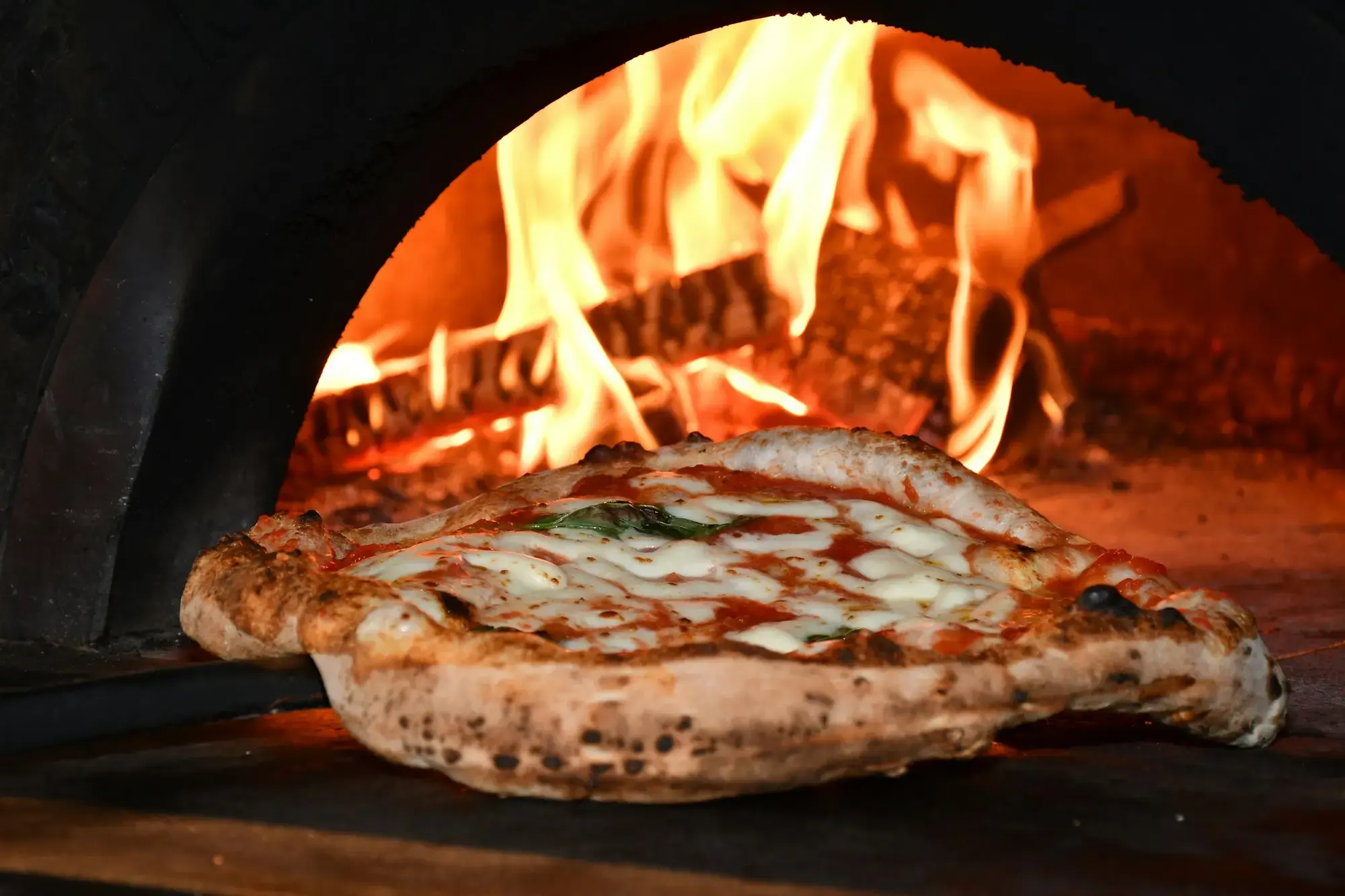
Neapolitan pizza is the round, soft pizza of Naples: a hand-stretched disc of simple dough with a puffy, blistered rim, a thin and slightly wet centre, a few toppings, and a bake of about a minute in a very hot wood-fired oven. Its two classic forms are the marinara — tomato, garlic, oregano and olive oil — and the margherita — tomato, mozzarella, basil and olive oil. It's meant to be eaten as soon as it leaves the oven.
What sets it apart is less a secret ingredient than a way of working. The dough is left to rise for hours, shaped by hand without a rolling pin, topped sparingly and baked so fast that the rim swells and chars while the middle stays tender. The result is soft enough to fold, which is how it's often eaten in Naples.
Neapolitan pizza at a glance
- Home
- Naples, the capital of Campania
- Dough
- Wheat flour, water, salt and yeast — nothing else
- Shaping
- By hand, pressing from the centre outwards; no rolling pin
- Baking
- Wood-fired oven, roughly 430–485 °C, for 60–90 seconds
- The classics
- Marinara and margherita
- Recognition
- UNESCO intangible heritage (the pizzaiuolo's craft, 2017); EU Traditional Speciality Guaranteed (Pizza Napoletana, 2010)
This is our guide to the pizza itself: where it comes from, what the rules say, how it's made and how to eat it in Naples. For the city, see Naples for first-time visitors; for food across Italy, Italian food traditions.
Why Naples became the home of pizza
Flat breads baked with something on top are as old as bread ovens, and they exist all around the Mediterranean. So it's more accurate to say that Naples made pizza as the world now knows it than that it invented the idea of putting food on dough.
Several things came together in the city. Naples was for centuries one of Europe's largest and most crowded cities, with a great many people who ate cheaply, outside the home and on their feet. Pizza was ideal for them: made from inexpensive ingredients, baked in minutes and sold by the slice or whole. Campania supplied what went on top — tomatoes, cheese from buffalo and cow's milk, olive oil and herbs. And over the eighteenth and nineteenth centuries the city developed a dedicated trade, the pizzaiuolo, and a dedicated place to eat, the pizzeria.
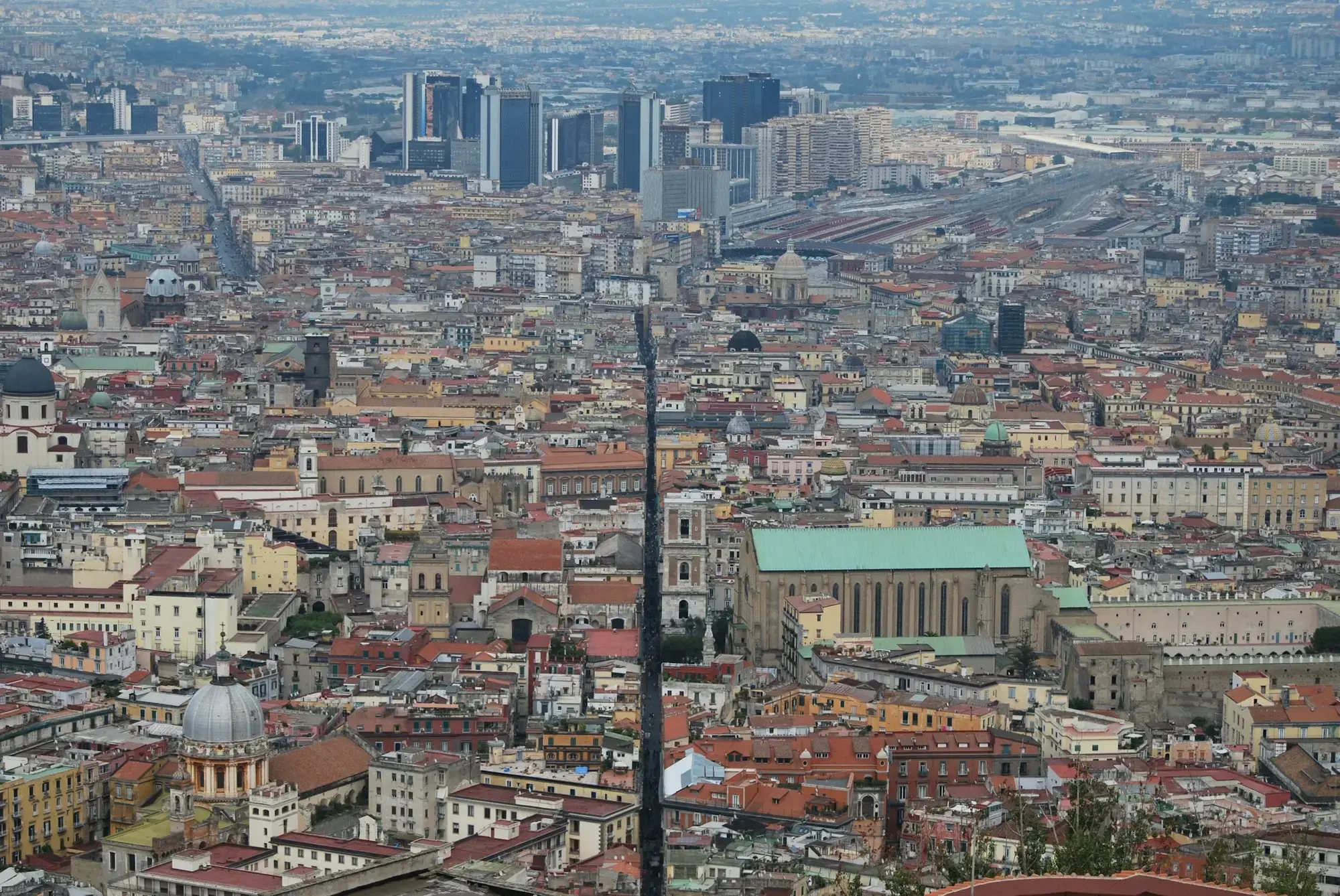
That trade is still at the heart of things. Pizzaiuoli learn mostly by working beside more experienced ones, and the skill is in the hands: judging the dough, shaping it in seconds, and managing a fire that's hotter in some parts of the oven than others.
A short history of pizza in Naples
The word
The word pizza appears in a Latin document from Gaeta, on the coast north of Naples, dated 997: a tenant agreed to give the local bishop twelve pizze at Christmas and twelve at Easter. It's a striking early record, but it tells us about a word, not about the dish served in Naples today. Where the word comes from is still debated.
Tomatoes arrive
Tomatoes came to Europe from the Americas in the sixteenth century and were adopted slowly. When exactly they first went onto pizza in Naples isn't precisely documented; the EU specification for Pizza Napoletana places it in the early eighteenth century. What's certain is that by the nineteenth century, tomato was one of the standard toppings.
The pizzeria and the street
The historian Antonio Mattozzi, working from city archives, traces the rise of the pizzeria — a shop with its own oven, where pizza was made, sold and increasingly eaten on the spot — through the late eighteenth and nineteenth centuries. Pizza was also sold in the street, and a good deal of it was eaten that way.
The writer Matilde Serao left a vivid account in Il ventre di Napoli (1884), her report on how the city's poor lived. She describes pizzas baked at night and cut into slices sold for a soldo, the smallest coin, from stalls on street corners; boys carrying trays of slices through the alleys after dark; and toppings of tomato and garlic, mozzarella, or salted anchovies. She is not romantic about it: for many Neapolitans, pizza was simply what they could afford for lunch or dinner. She also tells of a Neapolitan who opened a pizzeria in Rome, where it soon faded — pizza, she wrote, seemed out of place away from Naples.
From Naples to the world
In the twentieth century pizza spread through Italy and, with Italian emigration, abroad — above all to the United States, where it developed styles of its own. Over the same period Neapolitan pizzaiuoli began to write down and defend their methods. In 1984 a group of them set out the rules of "true" Neapolitan pizza and founded the Associazione Verace Pizza Napoletana (AVPN); later came EU registration as a traditional speciality and, in 2017, UNESCO recognition of the pizzaiuolo's craft.
What UNESCO recognised
In 2017 UNESCO inscribed the "Art of Neapolitan 'Pizzaiuolo'" on its Representative List of the Intangible Cultural Heritage of Humanity. It's worth being precise about what that means.
- It recognises a craft, not a food. UNESCO describes a culinary practice in four phases — preparing the dough and baking it in a wood-fired oven — with a characteristic rotating movement by the pizzaiuolo.
- It's about people. The listing names the master pizzaiuolo, the pizzaiuolo and the baker, together with Neapolitan families who make pizza at home, and stresses how skills pass from master to apprentice in the bottega, the pizzeria workshop. It puts the number of pizzaiuoli in Naples at about 3,000.
- It's intangible heritage, not a World Heritage Site. That's a different list: the historic centre of Naples has been a World Heritage Site since 1995, but pizza itself is not "a heritage site".
- It doesn't certify pizzas or pizzerias. A pizza labelled "Neapolitan" anywhere in the world isn't covered by the inscription, and no restaurant can claim to be "UNESCO-approved".
UNESCO's listing also notes that the Associazione Pizzaiuoli Napoletani runs annual courses on the history, tools and techniques of the craft, and that skills are passed on in specialised academies and in family homes as well as in the bottega.
What makes a traditional Neapolitan pizza
Two documents set out what a traditional Neapolitan pizza should be, and it's useful to know both.
- The EU specification for Pizza Napoletana, a Traditional Speciality Guaranteed (TSG, or STG in Italian). Registered in 2010 on an application from the AVPN and the Associazione Pizzaiuoli Napoletani, it has since December 2022 been registered with reservation of the name, so within the EU the name "Pizza Napoletana" belongs to pizza made to that specification. A TSG protects a recipe and method rather than a place: it can be made anywhere, provided the rules are followed. The specification covers only the marinara and the margherita.
- The AVPN's International Regulation, the private standard the association uses to certify member pizzerias in Italy and abroad.
The two agree on the essentials — hand shaping, a wood-fired oven, a short bake, a soft pizza with a raised rim — but differ on some numbers, as the table below shows. Neither is a description of every pizza made in Naples: many pizzerias follow the tradition without being certified, and many go their own way.
| EU specification (TSG) | AVPN International Regulation | |
|---|---|---|
| Flour | Soft wheat flour with set technical characteristics | Type 00 or 0 soft wheat flour |
| Yeast | Brewer's yeast | Fresh or dry brewer's yeast, or sourdough starter |
| Rising | About 2 hours in bulk, then 4–6 hours as dough balls | Recommended 8–24 hours in total |
| Dough ball | 180–250 g | 200–280 g |
| Diameter | Up to 35 cm | 22–35 cm |
| Centre | 0.4 cm thick (±10%) | No more than about 0.25 cm (±10%) |
| Rim | 1–2 cm | 1–2 cm, puffy and free of burns |
| Oven | Wood-fired; cooking floor about 485 °C | Wood-fired; 430–480 °C |
| Baking time | 60–90 seconds | 60–90 seconds |
The dough
The dough is just wheat flour, water, salt and yeast — no oil, no sugar, no milk. It's mixed until smooth and elastic, left to rise, divided into balls by hand and left to rise again. The long rise matters: it develops flavour and makes the dough easier to digest and to stretch. Many pizzerias now ferment their dough for longer than the older rules required.
The tomato
Both standards call for peeled tomatoes, crushed rather than cooked into a sauce, and allow fresh small tomatoes as well. The tomato goes on raw and cooks only in the oven, which is why it tastes bright rather than stewed.
You'll often hear that Neapolitan pizza must be made with San Marzano tomatoes. It doesn't. Pomodoro San Marzano dell'Agro Sarnese-Nocerino is an EU Protected Designation of Origin (since 1996) for peeled tomatoes of the San Marzano type grown and processed in a defined area of the provinces of Salerno, Naples and Avellino — a fine ingredient that many pizzerias use and advertise. But neither the EU specification nor the AVPN requires it, and the words "San Marzano" on a tin don't mean the contents are the PDO product: look for the full protected name and the EU's PDO logo. Many pizzerias use other tomatoes, including, sometimes, the small Pomodorino del Piennolo del Vesuvio, another Campanian PDO.
Mozzarella and other ingredients
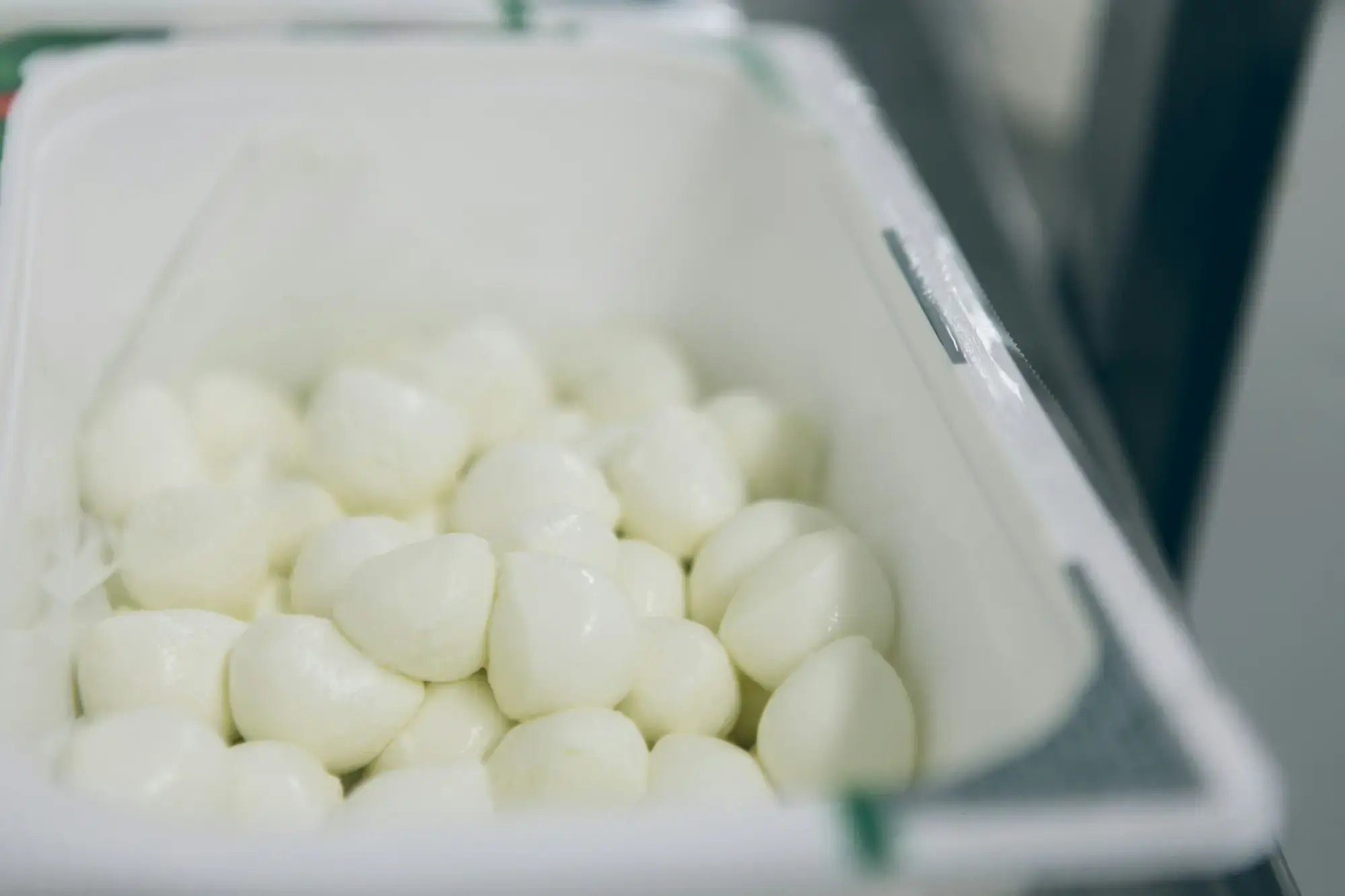
Two cheeses dominate. Mozzarella di Bufala Campana is a PDO buffalo-milk mozzarella from a defined area centred on Campania; it's rich and milky, and releases more liquid as it bakes. Fior di latte is mozzarella made from cow's milk, firmer and a little milder. The EU specification allows buffalo mozzarella or mozzarella made to the EU's separate "Mozzarella" TSG standard; the AVPN allows buffalo mozzarella or fior di latte. Neither standard insists on a single cheese, and on menus in Naples a margherita made with buffalo mozzarella is often listed separately, sometimes at a higher price.
The rest is short: fresh basil, extra virgin olive oil, poured in a spiral, and for the marinara garlic and oregano. Hard grated cheese is optional under the AVPN rules. The idea is a few ingredients, each in proportion — the EU specification measures the tomato in grams and the oil in single grams.
The wood-fired oven
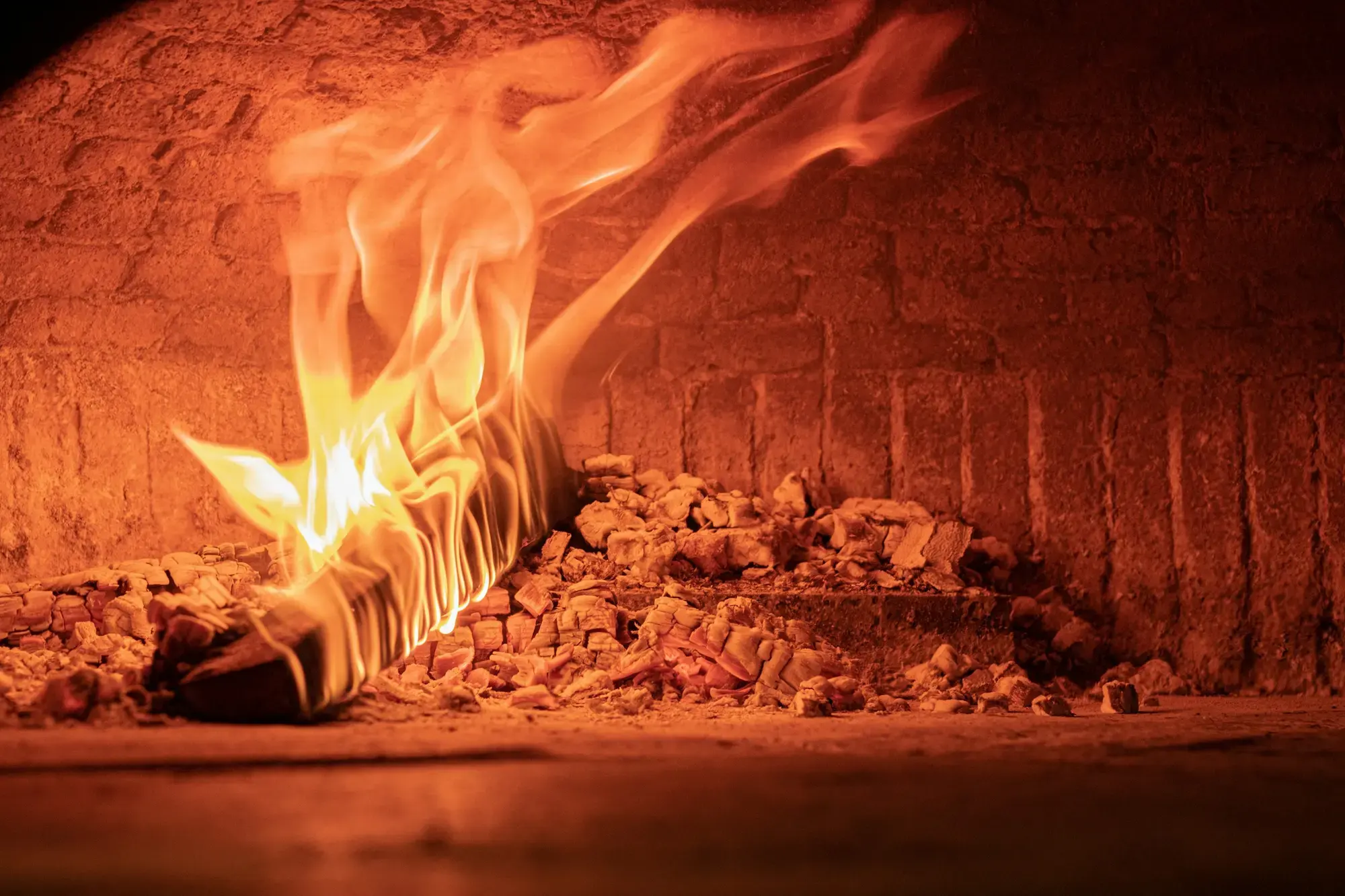
A traditional Neapolitan oven is a low dome of refractory material over a flat cooking floor, with the fire burning to one side. The heat is extreme by any kitchen standard: about 485 °C on the floor according to the EU specification, or 430–480 °C according to the AVPN. At that heat a pizza cooks in 60 to 90 seconds.
The speed is the point. The base sets almost instantly; steam inside the dough inflates the rim before it can dry out; the tomato loses its excess water but stays fresh; and the mozzarella melts without turning greasy. Bake the same dough for ten minutes in a domestic oven and you get something drier and crisper — pleasant, perhaps, but different.
Both standards require a wood-fired oven. In practice many pizzerias in and beyond Naples now bake in gas or electric ovens built to reach similar temperatures; they can make excellent pizza, but it isn't what the traditional specifications describe.
The cornicione
The cornicione is the raised rim — from cornice, a frame or ledge. It forms when the pizzaiuolo presses the dough from the centre outwards, pushing the air towards the edge, where it puffs up in the oven. A good cornicione is soft and light inside, with some charred spots on the outside, sometimes called leopardatura (leopard-spotting). Large blackened patches are another matter: the AVPN asks for a rim "free of burns".
The centre is meant to be thin and soft, and it can look slightly wet where tomato, oil and mozzarella meet. That isn't undercooking; it's how Neapolitan pizza is supposed to be. The EU specification describes the finished pizza as tender, elastic and easy to fold into four.
Marinara and margherita
The two pizzas covered by the EU specification are also the two you'll find on almost every menu in Naples.
| Pizza | Main characteristics | Typical ingredients | Cultural context |
|---|---|---|---|
| Marinara | No cheese; bright, garlicky and fragrant | Tomato, garlic, oregano, extra virgin olive oil, salt | Often described as the older of the two. The name is commonly linked to sailors or the seafront, but it contains no fish or seafood. |
| Margherita | Red, white and green; milky and mild | Tomato, mozzarella (buffalo or fior di latte), fresh basil, extra virgin olive oil, salt | The best-known pizza in the world, associated by tradition with Queen Margherita of Savoy — see below. |
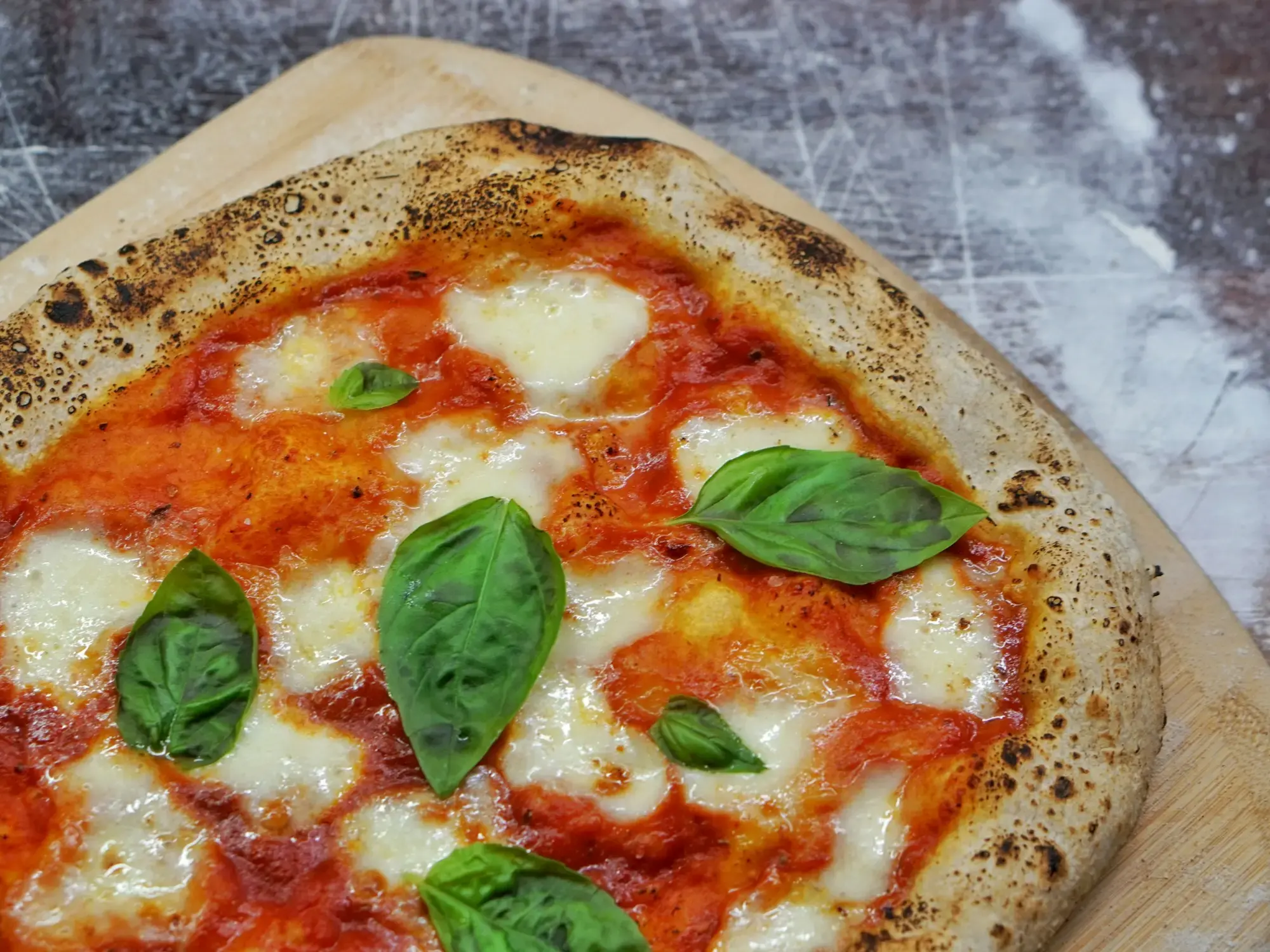
The marinara has no seafood. Visitors are sometimes surprised to find no fish on a pizza called marinara. The name is usually explained by its association with mariners — a simple pizza of ingredients that kept well — but that is a tradition rather than a documented fact. On a Naples menu, a marinara means tomato, garlic, oregano and oil.
The margherita is not the only "real" pizza. It's the yardstick by which many Neapolitans judge a pizzeria, precisely because there is nowhere to hide. But Neapolitan menus are long, with pizzas topped with ricotta, salami, mushrooms, anchovies, provola (a smoked cheese) and, in season, friarielli, the bitter greens often paired with sausage.
The story behind the margherita
The famous version goes like this. In June 1889, during a royal visit to Naples, the pizzaiuolo Raffaele Esposito made pizzas for Queen Margherita; the one she liked best was topped with tomato, mozzarella and basil — the red, white and green of the Italian flag — and he named it after her. A letter from the royal household, thanking him, is still displayed at the pizzeria that claims the story.
Historians have found reasons to doubt it. In a 2014 study, the food historian Zachary Nowak pointed out that no newspaper of the time reported the episode, questioned the authenticity of the letter, and argued that the story and the name were promoted decades later. Antonio Mattozzi's archive-based history of Neapolitan pizzerias, which Nowak edited and translated into English, likewise counts the queen's pizza among the myths around pizza's origins. And pizzas topped with tomato, mozzarella and basil seem to have existed before 1889: the EU specification itself dates the margherita to 1796–1810 while also repeating the royal story.
So the fair summary is this: tomato, mozzarella and basil were already a Neapolitan combination; the name "margherita" is genuinely associated with the queen; and the 1889 episode is a story that is widely told, firmly attached to one pizzeria, and not established by contemporary evidence. It's a good story — just not a documented one.
How a Neapolitan pizza is made
You'll see much of this from the counter in a Naples pizzeria, where the oven and the work bench are often in full view. This is the process as both traditional standards describe it, simplified for visitors.
Step 1: Mixing the dough
Water, salt, yeast and flour are mixed — starting from the water, adding the flour gradually — until the dough is smooth, soft and no longer sticky.
Step 2: First rise
The dough rests on the bench under a damp cloth so the surface doesn't dry and form a crust.
Step 3: Forming the balls
Portions are cut and shaped into balls by hand, in a movement that the AVPN compares to the way mozzarella is shaped. Each weighs roughly 180–280 g, depending on the standard.
Step 4: Second rise
The balls rise again in covered trays, for hours, until they're soft and full of air.
Step 5: Stretching by hand
The pizzaiuolo presses each ball from the centre outwards with the fingertips, turning it, then stretches it between the hands. No rolling pin and no press, which would squeeze out the air the rim needs.
Step 6: Tomato
Crushed tomato is spooned onto the centre and spread in a spiral, leaving the rim bare.
Step 7: Cheese, basil and oil
For a margherita, slices or strips of mozzarella and a few basil leaves; for a marinara, garlic and oregano. Then a spiral of olive oil.
Step 8: Into the oven
The pizza is slid onto a peel and into the oven with a quick flick of the wrist, then turned with a metal peel so it cooks evenly beside the fire.
Step 9: Out and onto the plate
After 60–90 seconds it comes out and goes straight to the table. Neapolitan pizza is made to be eaten at once.
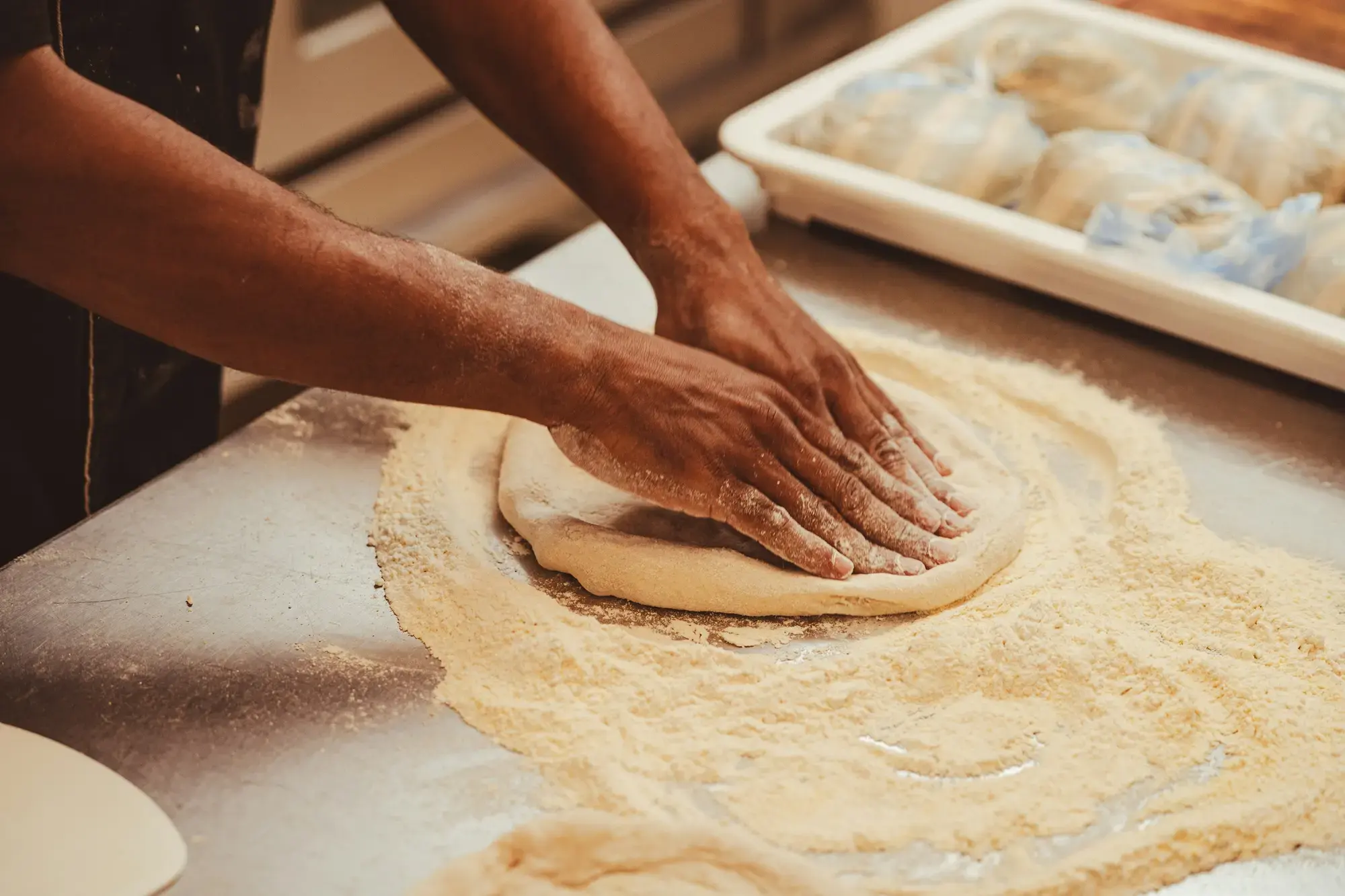
Watching a busy pizzeria at full speed is part of the pleasure: one person shaping and topping, another at the oven turning several pizzas at once, and a constant flow of plates. This is the craft UNESCO recognised — and why the same dough can turn out very differently from one pizzaiuolo to the next.
How to order and eat pizza in Naples
Habits vary from pizzeria to pizzeria, but these are things you're likely to encounter.
- One pizza each. In a sit-down pizzeria, pizza is usually ordered as an individual dish, one per person, rather than shared from the middle of the table. Sharing a starter of fried snacks is common; sharing one pizza between several people is less so.
- It arrives whole. Many pizzerias serve it uncut. Neapolitans often eat it with a knife and fork, especially at first, when the centre is softest; others cut it into wedges and fold them, or fold the whole pizza. Do whatever feels natural.
- Eat it straight away. Neapolitan pizza is at its best in the first few minutes. Waiting for everyone's to arrive is polite elsewhere; in a pizzeria, people usually start when theirs is hot.
- Read the menu by its classics. Most menus start with the marinara and the margherita, then list long variations. A margherita made with buffalo mozzarella is often a separate line.
- Drinks are simple. Beer, soft drinks and water are the usual companions; many pizzerias have a short wine list.
- The bill. Some places charge a per-person cover (coperto), which should be listed on the menu. Ask for the bill at the end; it won't usually come until you do.
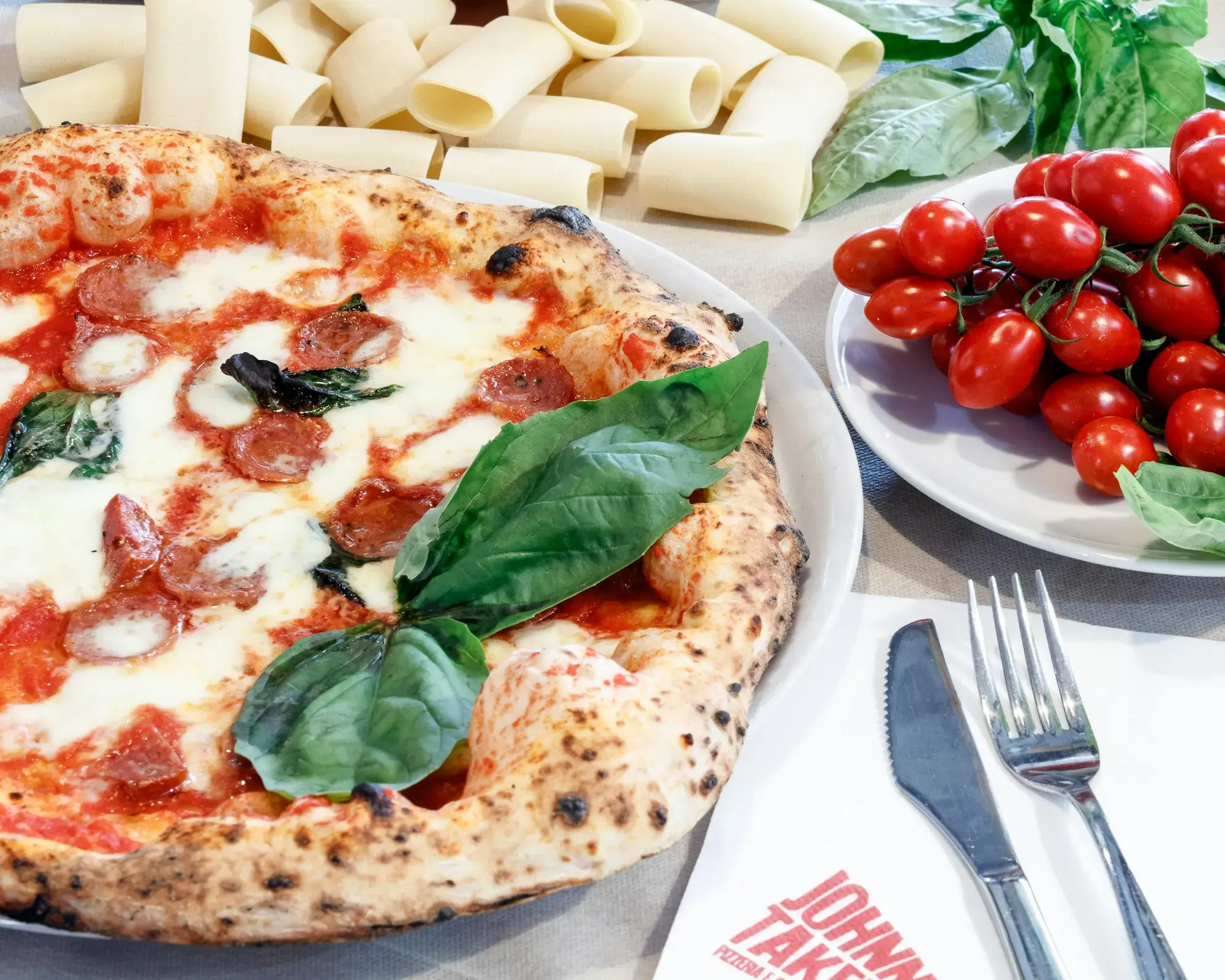
Queues and timing
Well-known pizzerias in the historic centre often have queues, especially at weekends and around dinner time. Many don't take bookings; you may be asked to give your name at the door and wait to be called. Arriving early in the evening or going at lunchtime helps. Neighbourhood pizzerias away from the main sights are usually calmer, and the pizza can be just as good.
Pizza a portafoglio: Naples' folded pizza
Pizza a portafoglio — "wallet pizza", also called pizza a libretto ("booklet pizza") — is a smaller pizza, folded in half and then in half again, and wrapped in paper so you can eat it standing up or walking. It's the classic street version of Neapolitan pizza.
- How it's served: freshly baked, usually as a simple margherita or marinara, often with lighter toppings so the tomato doesn't run out when it's folded. Some places hand it over open on a sheet of paper for you to fold; others fold it for you.
- Where you'll find it: at the street-facing counters of some pizzerias, and at some bakeries and rosticcerie (takeaway shops), especially in the historic centre.
- How it differs from a sit-down pizza: it's quicker, cheaper and more casual — a snack or a light lunch on the move rather than a meal at a table. It's the same dough and the same oven, eaten in a different way.
Its exact origins aren't documented, and we haven't found good evidence for the precise dates sometimes quoted. But eating pizza in the street is old in Naples: Serao's slices sold for a soldo in 1884 were street food, and the softness that the EU specification describes — easy to fold into four — makes folding an obvious thing to do.
Pizza fritta
Naples also has pizza fritta: dough filled — often with ricotta, provola, pork cracklings (cicoli) or tomato — and deep-fried rather than baked. It's a long-standing street food, celebrated in Vittorio De Sica's 1954 film L'oro di Napoli, whose episode "Pizze a credito" is set in a fried-pizza shop and refers to the old custom of eating now and paying in eight days, pizza a oggi a otto. You'll find it at friggitorie and specialist pizzerias.
Pizza in everyday Neapolitan life
In Naples, pizza is not a special-occasion food or a tourist attraction, though it can be both. It's an ordinary meal: a midweek dinner with friends, a family's weekend outing, a quick lunch from a counter. Neighbourhood pizzerias are part of daily life all over the city, not only in the centre.
That everyday quality has deep roots. In Serao's day pizza was food for people with little money, and it's still one of the most affordable ways to eat out in the city. Pizzerias are social places — loud, quick and busy — where groups of friends and whole families share a table, each with their own pizza.
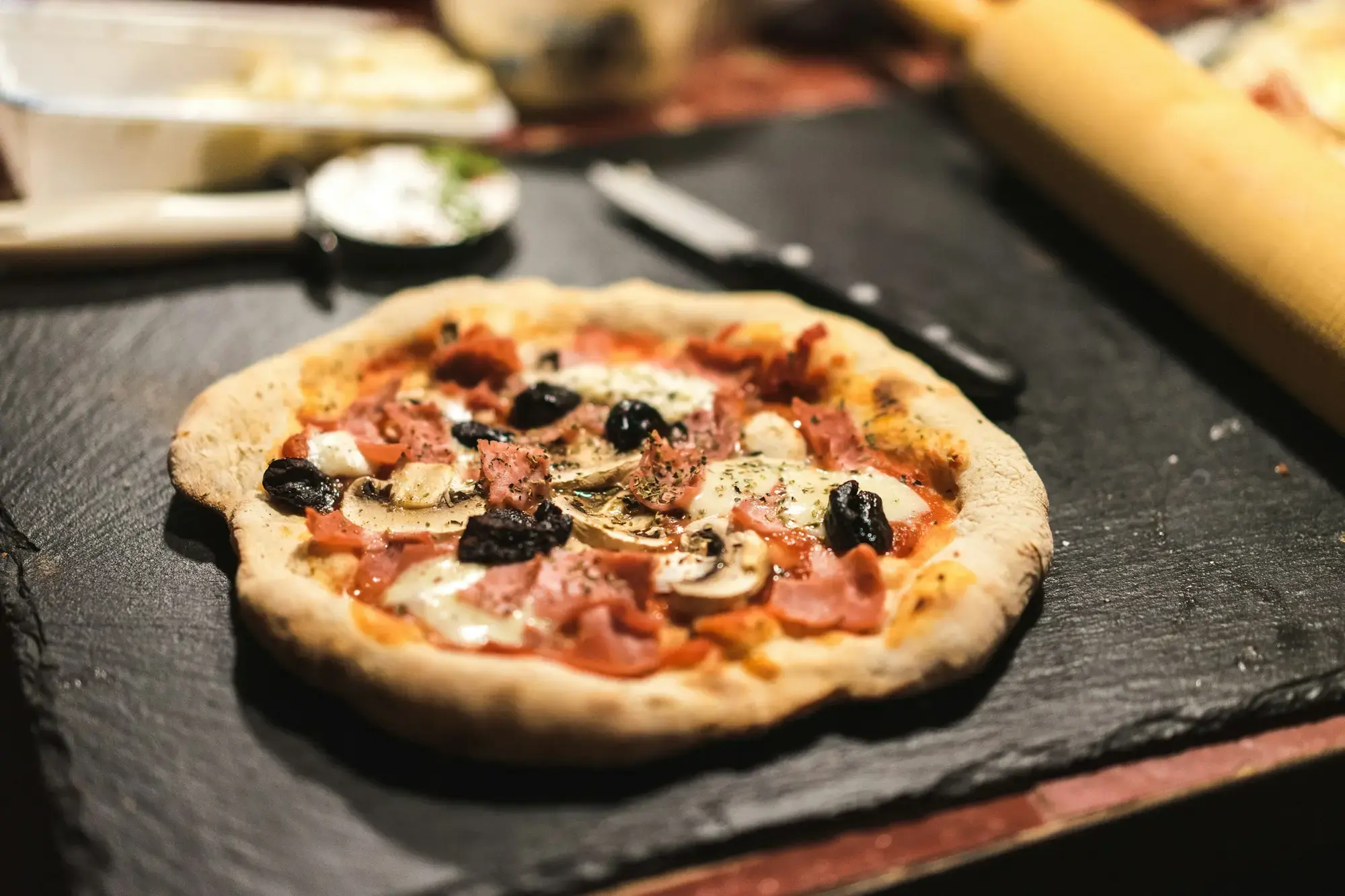
Pizza is also made at home — something UNESCO's listing explicitly mentions. Home pizza rarely follows the professional rules: it's baked in a domestic oven, sometimes rolled out, topped with whatever is in the fridge. It belongs to the same culture all the same.
After pizza, many Neapolitans finish at a bar or pastry shop rather than ordering dessert. For what comes next, see Italian coffee culture and traditional Italian desserts, which covers the sfogliatella and the babà.
Traditional pizza and modern Naples
Naples guards its pizza tradition, but it isn't frozen. Over the past two decades pizza-making in the city has changed a great deal.
- Different flours — some pizzaiuoli blend in wholemeal, stone-ground or other grains.
- Longer, slower fermentation — often far beyond the traditional minimums, for flavour and digestibility.
- Seasonal and regional toppings — Campanian vegetables, cheeses and cured meats, used with a chef's eye.
- Bigger rims — the airy, very tall cornicione of what's often called pizza contemporanea, nicknamed pizza canotto ("rubber-dinghy pizza"), a label popularised by the Italian food site Scatti di Gusto.
- New equipment — modern gas and electric ovens, and carefully controlled, refrigerated fermentation.
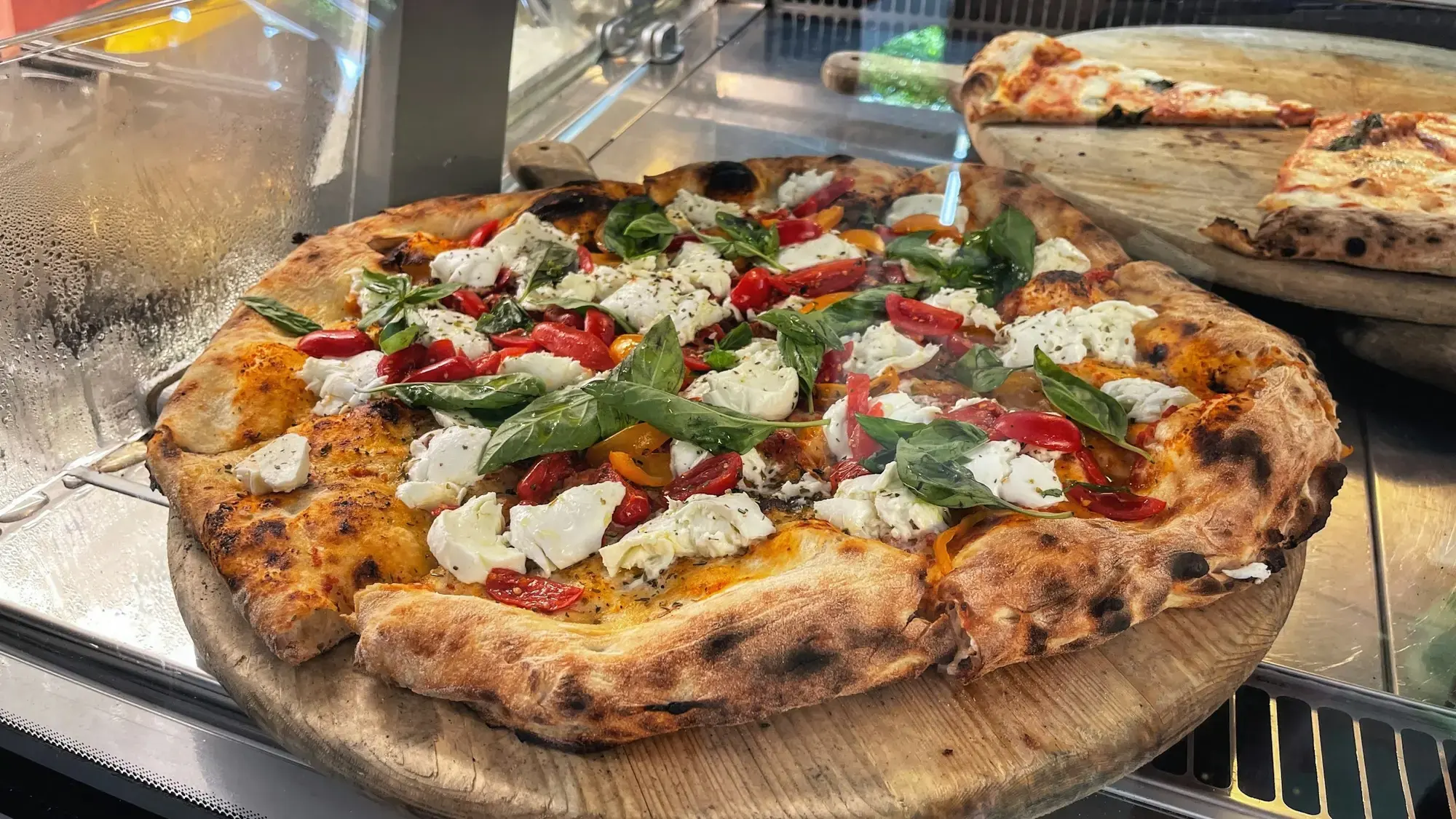
None of this is automatically less authentic. Neapolitan pizza has always changed — the tomato itself was once a novelty. What's useful is to know the difference: a pizza can follow the traditional specifications, follow the tradition loosely, or be a contemporary creation built on it. Some pizzerias offer traditional and contemporary pizzas side by side, and arguments about which is better are part of Neapolitan food culture.
Can you find Neapolitan pizza outside Naples?
Yes — the style has spread around the world, and you can eat excellent Neapolitan-style pizza far from Campania. But the word "Neapolitan" can mean three different things.
Inspired
Neapolitan-style
A pizza made in the Neapolitan manner — soft, with a puffy rim, baked hot and fast. Quality varies from superb to poor, and the label alone doesn't tell you which.
Certified
A specific standard
A pizzeria certified by the AVPN, which publishes a register of members, or a pizza sold as Pizza Napoletana TSG under the EU scheme.
Marketing
Just a word
"Neapolitan" used loosely on a menu. Within the EU, the name "Pizza Napoletana" is reserved for pizza made to the specification; outside the EU, the word is used freely.
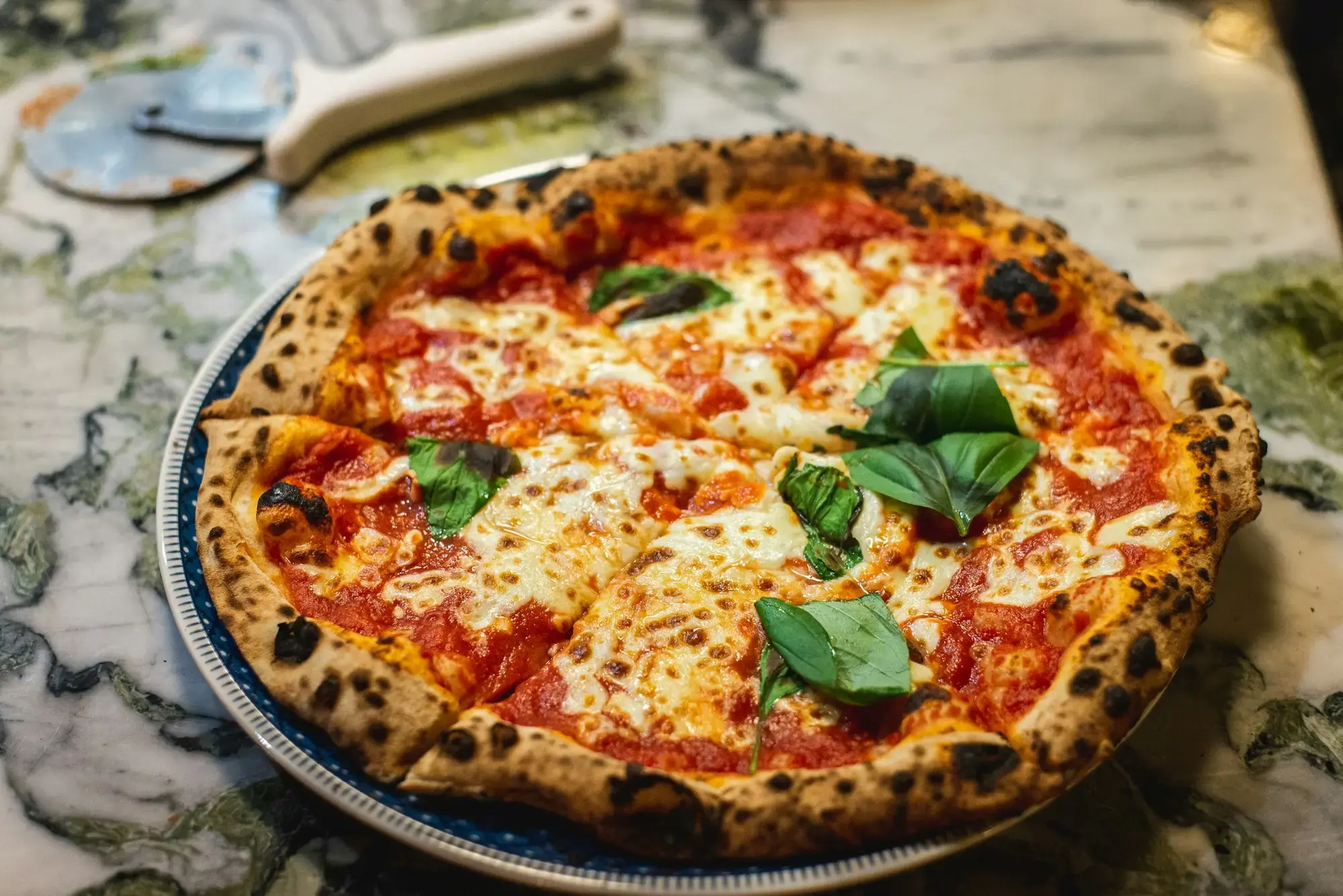
If you want to judge a pizza outside Naples, look at the things the tradition cares about: a dough that is soft and light rather than dense or crisp, a rim that's risen and spotted rather than flat or burnt, a centre that's thin and tender, a few good ingredients rather than many, and a very short bake. Whether the oven burns wood, gas or electricity, those are the signs of someone who has learned the craft.
Italy has many other pizza traditions too: Roman pizza by the slice, sold by weight, and the very thin, crisp round pizza of Rome; Sicilian sfincione in Palermo; and countless local variations. See Italian food traditions and Sicilian food traditions.
What to know before visiting a Naples pizzeria
- Don't expect crunch. A soft, foldable pizza with a wet centre is right, not a mistake.
- Try a marinara as well as a margherita. It's the clearest test of dough, tomato and oven.
- Go early or late. Famous pizzerias have queues at peak times; neighbourhood places often don't.
- One each, eaten hot. Order your own and start when it arrives.
- Knife and fork, or fold it. Both are normal.
- Look past the famous names. Good pizza is made all over the city.
- Check the menu for the cover charge, and ask for the bill when you're ready.
- Try it in the street too — a pizza a portafoglio or a pizza fritta.
- Be sceptical of claims. "UNESCO pizza", "the original margherita" and "the oldest pizzeria" are marketing until shown otherwise.
Pizza fits easily into a day in the historic centre, where Via dei Tribunali and the streets around it have many pizzerias; our Naples guide has itineraries and neighbourhoods. For getting to Naples by train, see getting between Italian cities, and for planning the rest of the trip, the complete Italy travel guide.
Pizza words
| Word | Meaning |
|---|---|
| Pizzaiuolo / pizzaiolo | Pizza maker; pizzaiuolo is the traditional Neapolitan form, used by UNESCO |
| Cornicione | The raised rim |
| Verace | "True", as in the Associazione Verace Pizza Napoletana |
| Fior di latte | Cow's-milk mozzarella |
| Bufala | Buffalo mozzarella |
| Pomodoro pelato | Peeled tomato |
| Panetto | A dough ball |
| Pala | Peel, the long paddle used at the oven |
| A portafoglio / a libretto | Folded in four, for eating in the street |
| Pizza fritta | Filled, fried pizza |
| Coperto | Per-person cover charge |
Neapolitan pizza looks like the simplest food in the world, and in a sense it is: flour, water, tomato, cheese, fire. What makes it remarkable is the skill packed into that simplicity — and the fact that, in Naples, it's still everyday food, made fresh for whoever walks in.
Topics
Regions
Frequently asked questions
Editorial note
Information such as transport schedules, prices, opening hours and entry requirements can change. Check the relevant official source before making a booking or travelling. Read our editorial policy or report a correction.
Sources
- UNESCO — Art of Neapolitan 'Pizzaiuolo' (opens in a new tab) — inscribed 2017 (12.COM); description of the element
- Commission Regulation (EU) No 97/2010 — Pizza Napoletana TSG (opens in a new tab) — product specification
- Commission Implementing Regulation (EU) 2022/2313 — Pizza Napoletana TSG with reservation of name (opens in a new tab) — in force December 2022
- Associazione Verace Pizza Napoletana — International Regulation (opens in a new tab) — current standard, checked October 2026
- eAmbrosia — EU geographical indications register (opens in a new tab) — Mozzarella di Bufala Campana PDO; Pomodoro San Marzano dell'Agro Sarnese-Nocerino PDO; Pomodorino del Piennolo del Vesuvio PDO
- Commission Regulation (EC) No 2527/98 — Mozzarella TSG (opens in a new tab) — in Italian
- Matilde Serao, Il ventre di Napoli (1884) (opens in a new tab) — pizza in 1880s Naples; in Italian
- Antonio Mattozzi, Inventing the Pizzeria: A History of Pizza Making in Naples (Bloomsbury, 2015) (opens in a new tab) — archive-based history
- Zachary Nowak, "Folklore, Fakelore, History: Invented Tradition and the Origins of the Pizza Margherita", Food, Culture & Society 17:1 (2014) (opens in a new tab) — the 1889 story
About the author
Editorial Team
Editorial Team
Researches, writes and updates stories and guides about Italy.
More from Editorial TeamWas this article useful?
Keep reading
Cities
Naples for First-Time Visitors: What to See, Where to Stay and How to Plan Your Trip
How long to stay, what to see first, where to base yourself and how to reach Pompeii — a practical plan for a first visit to Naples.
Updated 19 min read
Food & Drink
Italian Food Traditions: A Regional Guide to Eating in Italy
Why Italian food changes from region to region and town to town — and how to read menus, markets, seasons and festivals as a visitor.
Updated 18 min read
Food & Drink
Traditional Italian Desserts: Regional Sweets and the Stories Behind Them
Why Italian sweets change from region to region — from Sicily's cannoli and Naples's sfogliatella to Siena's panforte, Turin's gianduiotti and Carnival fritters.
Updated 19 min read

Food & Drink
Italian Coffee: How Coffee Became Part of Everyday Life
What Italians drink, how the bar works and why a small cup matters so much — from the counter espresso to the moka at home, Turin's bicerin and Trieste's own vocabulary.
Updated 18 min read
Food & Drink
Sicilian Food Traditions: What to Eat and Why It Matters
What to eat in Sicily and why it tastes the way it does — from Palermo's street food to Catania's fish market, Trapani's couscous and a granita breakfast.
Updated 18 min read
Food & Drink
Regional Wines of Italy: Grapes, Places and Traditions
Why Italy has many wine cultures rather than one — the regions, local grapes and denominations, how classifications work, and how to taste and order wine in Italy.
Updated 19 min read
Explore more food & drink
More stories and guides from Life in Italia.